

 Türkçe
 Deutsch
 Français

What Is an Audiologist? Education, Qualifications and Career Path
An audiologist is a healthcare professional who diagnoses, evaluates, and treats hearing and balance disorders. [...]

Ménière’s Disease: Patient Reviews, Experiences and Complaints
Meniere’s disease is a severe condition characterized by hearing loss and attacks of dizziness. The [...]

Vertigo Patient Reviews, Experiences and Complaints
Vertigo patients’ complaints range from the expression “everything around me is spinning,” which describes an [...]
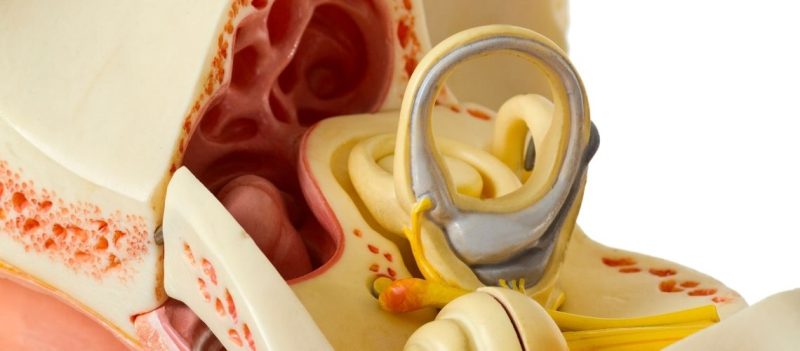
Cochlea Anatomy: Structure, Functions and Role in Hearing
The cochlea is a delicate, snail-shaped organ located in the inner ear that enables the [...]

Eustachian Tube Dysfunction: Causes, Symptoms and Treatment
The Eustachian tube is a narrow canal located between the middle ear and the nasopharynx [...]

Malleus, Incus and Stapes: Anatomy and Functions of the Middle Ear Bones
Hammer, anvil, and stirrup are the three tiny bones located in the middle ear that [...]

Eardrum (Tympanic Membrane): Anatomy, Functions and Common Disorders
The eardrum is a thin and flexible structure located between the outer ear and the [...]

Outer Ear Anatomy: Structure, Functions and Common Conditions
The outer ear is the anatomical structure that collects sound waves from the external environment [...]

Dislodged Ear Crystals (BPPV): Causes, Symptoms and Treatment
The ear crystals can become displaced due to many causes, including conditions affecting the balance [...]

Pure Tone Average (PTA): Calculation, Normal Range and Hearing Loss Levels
Pure Tone Average is a method used to determine the degree of hearing loss by [...]

Hyperacusis: Symptoms, Causes, Diagnosis and Treatment Options
Hyperacusis is an auditory disorder characterized by extreme sensitivity to environmental sounds. Even sounds at [...]

Dizziness While Lying Down: Causes, Symptoms and When to Seek Help
Dizziness while lying down is a common symptom of balance disorders originating from the inner [...]

Audiometry (Hearing Test): Types, Procedure, Uses and Results
Audiometry is a testing method that enables objective measurement of hearing ability. With this method, [...]

Vestibular Sensory System: Anatomy, Functions and Balance Control
The vestibular sensory system is the fundamental mechanism that provides balance and motion perception. The [...]

Vertigo and Menopause: Causes, Symptoms and Treatment Options
The relationship between vertigo and menopause is primarily linked to hormonal changes. Fluctuations in estrogen [...]

BPPV vs. Cervical Vertigo: Symptoms, Causes and Key Differences
Although BPPV and cervical vertigo show similar dizziness symptoms, they are based on different mechanisms. [...]

Dizziness vs. Vertigo: Symptoms, Causes and Key Differences
The concepts of dizziness and vertigo are often confused; however, dizziness generally describes a feeling [...]

Best Sleeping Positions for Vertigo: Tips to Reduce Dizziness
The sleeping position of vertigo patients may affect the frequency and severity of dizziness attacks. [...]

Alcohol and Vertigo: How Drinking Affects Dizziness and Balance
The question of how alcohol consumption affects vertigo is important for people experiencing balance disorders. [...]

Cupping Therapy for Vertigo: Does It Work? Benefits and Risks
Does cupping therapy help with vertigo? This is a question that is frequently raised among [...]

Tympanometry Test: Procedure, Purpose and Interpretation of Results
Tympanometry is an objective test that evaluates middle ear functions. By measuring the mobility of [...]