

 Türkçe
Otoacoustic emission (OAE) is an audiological test used to evaluate the function of the outer hair cells in the inner ear. Information about inner ear health is obtained by measuring the response to a sound stimulus.
The OAE test is a valuable, objective method that is painless, fast, and non-invasive. During the test, a small probe is placed inside the ear, and the inner ear’s response to the sounds presented is measured. The procedure is safe for both children and adults.
The OAE test alone is not sufficient to determine the type and degree of hearing loss. It is generally evaluated together with audiometry and other audiological tests. In this way, a more comprehensive and accurate diagnosis is made.
What Is Otoacoustic Emission and What Is It Used For?
Otoacoustic Emission is related to the measurement of very low-level sounds from the ear canal that can be summarized as a slight “rebound” or “tiny echo” created by the outer hair cells in our inner ear. In other words, when our ear receives a sound, it does not act only as a passive receiver; it also produces a very weak sound itself. This produced sound is called Otoacoustic Emission.
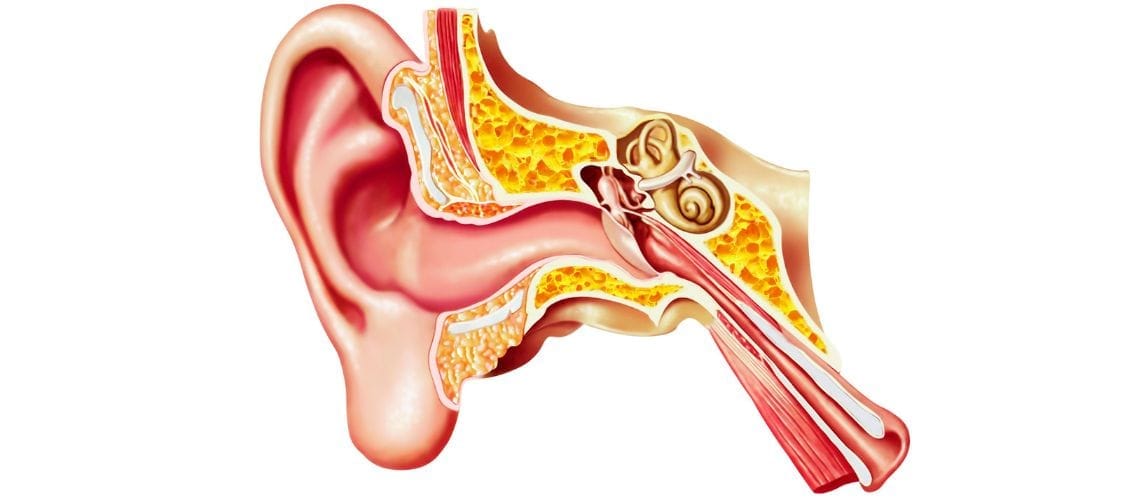
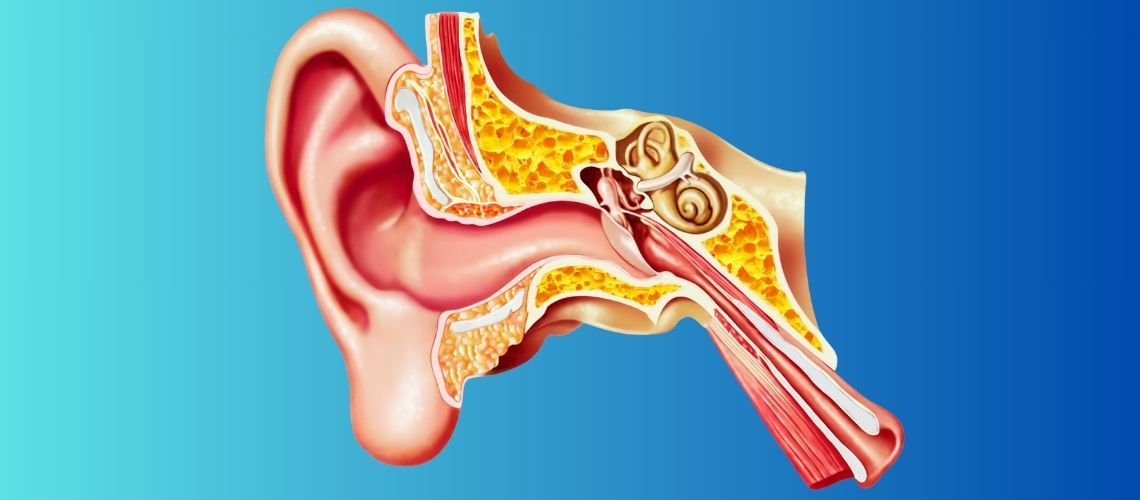
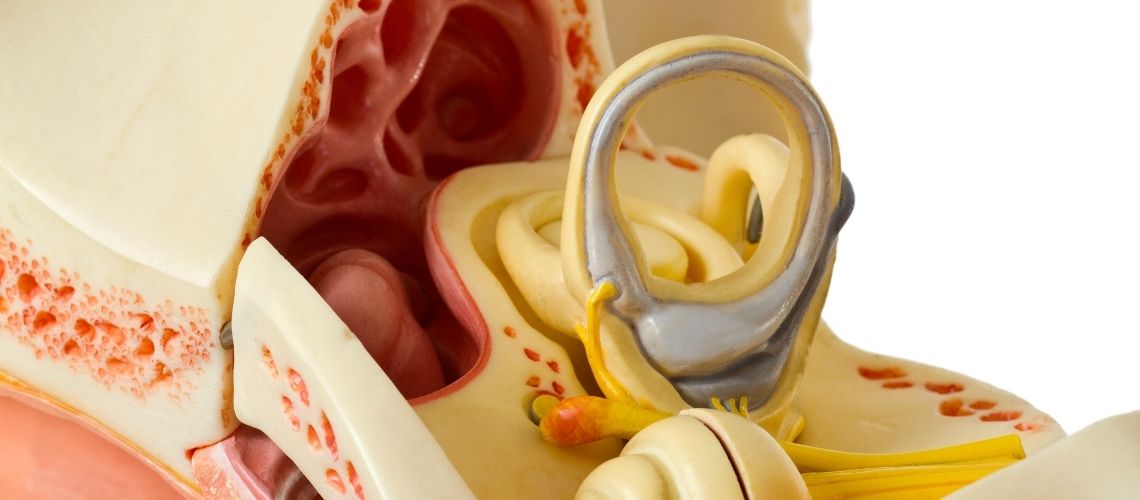
This phenomenon occurs as a result of a process that we can imagine as a tiny “orchestra” inside each ear. After the sound wave passes through the auricle and reaches the eardrum, it is transmitted to the inner ear through the ossicles in the middle ear. The inner ear contains a structure called the cochlea, which can analyze sounds at many different frequencies, just like a piano keyboard. The outer hair cells arranged inside the cochlea vibrate according to the frequencies of the incoming sounds and also amplify these vibrations, creating a type of feedback wave. Although this feedback wave is extremely low in intensity, it can be measured with a special microphone. This echo-like wave produced when sound is presented to the ear is considered one of the most important indicators of hearing health in the inner ear.
How Is the Otoacoustic Emission Test Performed and What Is It Like?
The Otoacoustic Emission Test is performed with the help of a small probe placed in the ear. This probe contains a tiny speaker capable of delivering small sound stimuli to the inner ear and a sensitive microphone that detects the returning very low-level sound. Since both systems are located in the same tip, the procedure may simply appear to involve placing a probe in the ear, but it actually uses advanced technology.
The way the test is performed can be compared to wearing an earphone: Just as you put on your earphones while listening to music and try to position them properly so that minimal sound leaks out, the probe used in this test must also fit correctly in the ear. Excessive earwax or fluid in the ear canal may block both the presented stimulus and the returning Otoacoustic Emission signal. Therefore, checking ear hygiene and ensuring correct probe placement before the test are important.
No response is expected from you during the Otoacoustic Emission Test. Simply sitting calmly or lying on your back improves the quality of the test. It is a very practical method, especially in babies, because the test can often be performed even while they are asleep. Moreover, since it is painless and does not cause discomfort, it generally does not create any complaints. When appropriate conditions are provided, results can be obtained within a few minutes for each ear.
What Are the Types of Otoacoustic Emission and What Is the Difference Between Them?
Otoacoustic Emission is divided into various categories using different test stimuli and measurement techniques. The two most commonly known types are called Transient Evoked Otoacoustic Emission (TEOAE) and Distortion Product Otoacoustic Emission (DPOAE).
TEOAE is performed using short “click” sounds or sudden sound bursts, such as a “pop.” These clicks stimulate the inner ear across a broad frequency range, and responses returning from many frequencies overlap. The resulting combination reflects the overall function of the outer hair cells. Data are generally obtained for frequencies up to 4 kHz. TEOAE measurements usually disappear or become very weak when hearing loss is present at levels above 30 dB HL. Therefore, it is highly sensitive in detecting mild hearing loss.
DPOAE, on the other hand, measures an additional “distortion” tone produced within the cochlea when two pure tones at different frequencies (f1 and f2) are presented to the ear simultaneously. The point at which this distortion tone is strongest is calculated using the 2f1-f2 formula. As the name suggests, the “distortion” originates from the ear’s naturally non-linear response. This type of measurement evaluates a wider frequency range, generally up to 8 kHz and even higher frequencies in some devices. It is especially advantageous for monitoring the risk of hearing loss at specific frequencies. DPOAE results provide the opportunity to observe the functional status of the outer hair cells in specific frequency bands.
What Do Otoacoustic Emission Test Results Mean and How Are They Evaluated?
As a result of the Otoacoustic Emission test, a specific “signal-to-noise ratio” is evaluated for each frequency range. In other words, the test device measures the difference between the “emission signal” and the “background noise.” If the difference, for example 6 dB or more, is sufficiently high, the test indicates an “emission present” result for that frequency or overall band. This result suggests that the outer hair cells responsible for that frequency band in the cochlea are active and healthy.
If Otoacoustic Emission cannot be detected for any reason, an “emission absent” or “refer” result is obtained. This does not necessarily mean that there is definite hearing loss. The following conditions may also cause the emission to disappear:
- Accumulation of cerumen (earwax) in the ear canal
- Presence of fluid or inflammation in the middle ear
- The probe not fitting properly in the ear canal
- Noise caused by the environment or the person’s movement during the measurement
If there is actual damage in the cochlea, the emission may also not be detected. However, it is not possible to understand exactly how much hearing loss is present or whether there is another problem based solely on the “absence of emission.” The Otoacoustic Emission test is like a “first-line screening” or “check-up.” If we identify the possibility of a problem, the cause and degree should be determined through a detailed audiological evaluation using tests such as audiometry and ABR.
What Are the Advantages of the Otoacoustic Emission Test?
The Otoacoustic Emission Test offers many advantages in the evaluation of hearing health. First of all, the fact that the test provides results very quickly offers great convenience, especially in newborn babies or individuals who have difficulty cooperating. Since it does not require a voluntary response from the patient, unlike some examination methods, it provides a completely objective approach.
- Quick and easy to perform
- Painless and does not cause discomfort
- Objective results
- Can be used especially in infant screenings
- Ability to detect outer hair cell damage at an early stage
Another important advantage is that it provides the opportunity to observe the performance of the cochlea not only “in general” but also at “specific frequencies,” especially with DPOAE. Thus, for example, hearing loss occurring at high frequencies, which are the higher-pitched sounds, or within a specific band may be detected before the patient notices it. Thanks to this early warning, faster action can be taken regarding the cause of any hearing problem.
Why Is Otoacoustic Emission So Important in Newborns?
Hearing screening performed during the newborn period is one of the most critical tests in a baby’s life because hearing forms the foundation of language and speech development. If a baby has a significant hearing problem after birth but this problem cannot be detected early, delays in speech and language development may occur. Early diagnosis, on the other hand, often brings much more successful rehabilitation and treatment processes.
In the current newborn hearing screening protocol in our country, the automated ABR (T-ABR) test is used. However, before the protocol was updated, the Otoacoustic Emission test was used. The OAE test is still a first-line test in many parts of the world. Both tests can be performed in the hospital when the baby is only a few days old after birth. It is generally easier to perform the test while the baby is calm or asleep. The T-ABR and TEOAE tests used in newborn screenings are evaluated with a “pass” or “refer” result. “Pass” means that the baby’s inner ear is most likely responding healthily. A “refer” result indicates the need for a second test or a more comprehensive examination. At this stage, parents do not need to be afraid. ABR is a more advanced test level in which we record the responses of the auditory nerve.
The approach of “let us wait, it will pass over time” regarding the hearing of newborn babies is not correct. This is because language and communication skills learned through hearing are of great importance during the period when brain development is fastest. The Otoacoustic Emission test provides the first critical signal regarding the hearing world of these little ones. However, it should be remembered that the OAE test is no longer actively used as a screening method in newborns in our country. The ABR test is actively used in our country, and when hearing loss is suspected, OAE is needed to support the findings.
In Which Situations Is Otoacoustic Emission Used and How Does It Help Us?
Otoacoustic Emission is an evaluation method that can be used across a wide range of situations. It can be used not only in newborn screening but also in many people suspected of having hearing loss. It is also highly useful for diagnosis and follow-up in certain special situations.
For example, in patients using ototoxic medications, the possible side effects of these drugs may damage the inner ear. Even before a significant loss is visible on the hearing test, a decline may be noticed in Otoacoustic Emission results. In this way, treatment can be adjusted and the risk of permanent damage can be minimized. Similarly, it is useful to perform Otoacoustic Emission testing at regular intervals in people who work in very noisy environments, such as factories, concert halls, and construction sites. This test can detect even the smallest signs of stress in the cochlea at an early stage.
In some individuals, conditions may be suspected in which it appears that there is “hearing loss,” although cochlear functions are normal. In conditions such as Auditory Neuropathy Spectrum Disorder, disruptions may occur in auditory nerve transmission even though the outer hair cells are intact. In these individuals, the Otoacoustic Emission test generally gives normal results. However, the person may have difficulty understanding speech. In this case, more advanced tests, such as ABR, are used and the diagnosis is clarified. In other words, Otoacoustic Emission may also guide us in distinguishing which part of the ear contains the problem.
What Should Be Considered During the Otoacoustic Emission Test?
The Otoacoustic Emission test is a short and generally effortless examination. Nevertheless, there are certain points that must be considered in order to obtain reliable results. First, the ear canal is expected to be clean and free of blockages before the test is performed. If there is accumulated earwax, known as cerumen, in your ear, it becomes difficult for the test to provide accurate results. Therefore, cleaning the ear canal by a specialist may be recommended before the test.
In addition, the environment in which the test is performed should be as quiet as possible. In adults, it is generally carried out in a quiet room. In babies, it is best to take the measurement while the baby is asleep or calm. Especially if the baby is crying, the resulting sound and movement may impair the clarity of the test. Vibrations caused by movement are detected as noise by the device’s microphone and may mask the emission signal.
OAE is a sensitive measurement, and although it is easy to perform, it is greatly affected by environmental conditions.
Frequently Asked Questions

Dr. Audiologist Emel Uğur was born in 1982 in Çanakkale. She specialized in Pediatric Audiology, Otologic Disorders, and Vestibular System Disorders, and served for 15 years at the Istanbul Training and Research Hospital. In 2015, she joined the Acıbadem Healthcare Group. She currently works as an Audiologist at the Acıbadem Altunizade Hospital and also serves as a faculty member and program director in the Acıbadem University Vocational School of Health Services Audiometry Program.









Location of our clinic in Istanbul, Turkey