

 Türkçe
The Roll Test is a clinical test used in the diagnosis of benign paroxysmal positional vertigo. It is performed by placing the patient in a supine position and turning the head to the right and left. The diagnosis is made by observing whether nystagmus occurs in the eyes during this movement.
The test is particularly important in the diagnosis of horizontal canal BPPV. Dizziness and eye movements triggered by head movements are considered signs of displaced crystals in the inner ear. This allows the affected canal to be identified correctly.
During the Roll Test, the patient may experience dizziness and a feeling of imbalance. This is an expected diagnostic finding and increases the reliability of the test. The patient is informed throughout the procedure to ensure safety.
Patients with a positive Roll Test result are treated with appropriate maneuvers to reposition the crystals. This significantly reduces vertigo complaints and improves quality of life.
What Is the Supine Head Roll Test?
The Supine Head Roll Test is used to diagnose horizontal canal benign paroxysmal positional vertigo (BPPV). This test particularly helps determine the source of dizziness and balance problems. Symptoms are observed while the patient’s head is moved in a controlled manner.
Important points to consider during this test include:
- The patient’s eyes should remain open while lying in the supine position.
- The head is turned first to one side and then to the other.
- Dizziness responses are observed in both directions.
The way the test is performed plays a critical role in accurately diagnosing the condition. Therefore, this test is an important diagnostic tool for patients showing symptoms of vertigo. The test results also provide useful information for treatment planning.
What Should Be Considered Before the Test?
To perform this test successfully and safely, clinicians should first consider any history of neck and spinal injuries. In addition, if neurological symptoms are observed during the test, the procedure should be stopped immediately and the patient should be referred for a more detailed neurological evaluation.
Previous Injuries:
- Consider any neck and spinal injuries.
Neurological Symptoms:
- The test should be stopped if symptoms such as confusion, numbness, or blurred vision occur.
Sufficient time must be allowed in each position for the displacement of the otoconia and the proper evaluation of the vestibular system. The onset of nystagmus may be delayed during this period; therefore, patience and careful observation are important. Using Frenzel goggles or VNG goggles during positional maneuvers increases the accuracy of the test and allows even low-amplitude nystagmus to be detected easily.
How Is the Roll Test Performed?
The Roll Test is a diagnostic method used in patients with horizontal canal benign paroxysmal positional vertigo. It is performed to evaluate the movement of the existing otoconia. During the test, nystagmus is observed together with the patient’s head movements. The procedure is performed as follows:
- The patient is asked to lie down on the examination table.
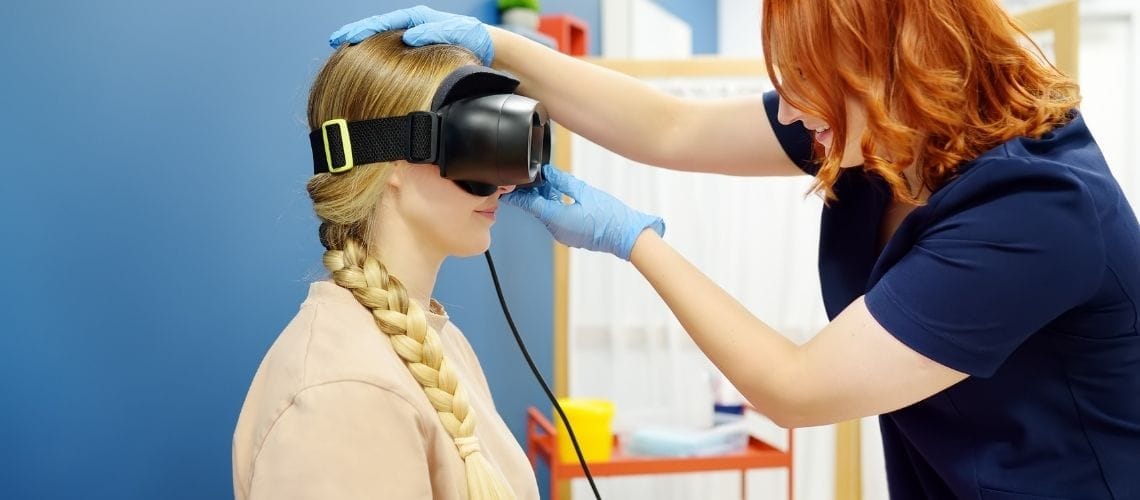
- Frenzel/VNG goggles are placed on the patient to make eye movements easier to observe.
- The patient’s head is slightly elevated and fixed at an angle of approximately 30 degrees. This position facilitates the movement of the otoconia.
- The patient is asked to turn the head first to one side and then to the other. If the patient does not have sufficient cervical flexibility, these turns are completed by rolling over the shoulder.
After the patient’s head has been turned in both directions, it is returned to the neutral position. These sequential movements may cause the otoconia to shift within the horizontal canal and trigger vertigo symptoms. These steps of the Roll Test are an effective method for diagnosing HC-BPPV.
What Are the Results of the Supine Head Roll Test?
Evaluating the results of the Supine Head Roll Test is a critical step in diagnosing vertigo. The nystagmus observed during the test determines the treatment approach. Recommended treatments according to the direction of nystagmus include:
- Lempert (BBQ) maneuver
- Gufoni maneuver
- Vannucchi-Asprella maneuver
These treatments are selected and performed by the clinician according to the direction and severity of the nystagmus. The treatment process is personalized to relieve the patient’s symptoms, address the source of vertigo accurately, and improve quality of life.
Frequently Asked Questions

Dr. Audiologist Emel Uğur was born in 1982 in Çanakkale. She specialized in Pediatric Audiology, Otologic Disorders, and Vestibular System Disorders, and served for 15 years at the Istanbul Training and Research Hospital. In 2015, she joined the Acıbadem Healthcare Group. She currently works as an Audiologist at the Acıbadem Altunizade Hospital and also serves as a faculty member and program director in the Acıbadem University Vocational School of Health Services Audiometry Program.











Location of our clinic in Istanbul, Turkey