

 Türkçe
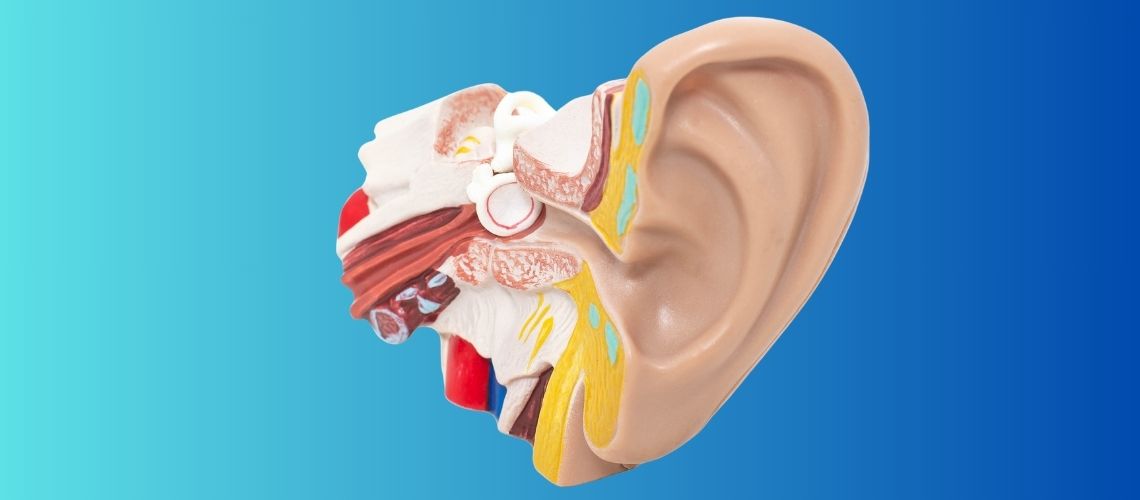
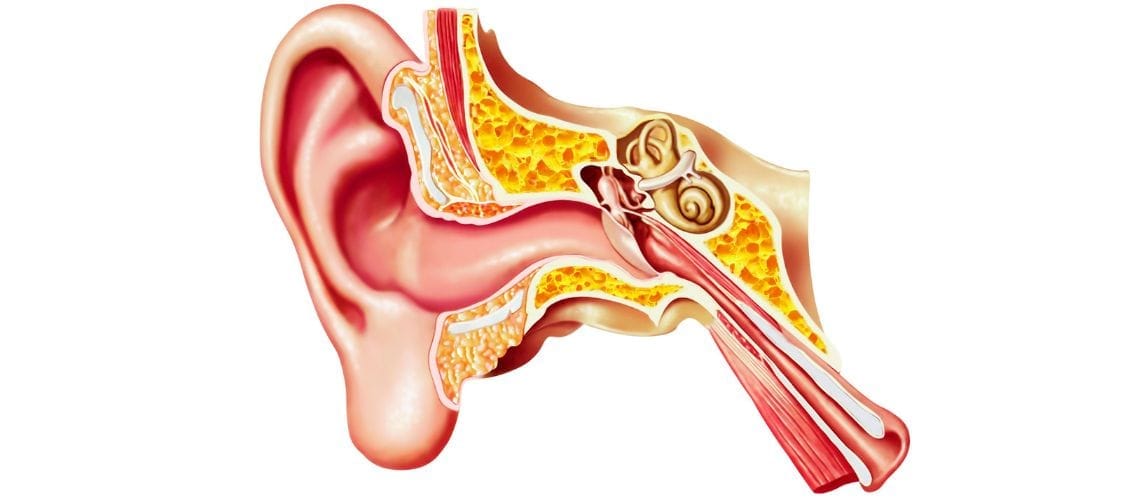
The parts of the ear consist of three main structures: the outer ear, middle ear, and inner ear. Each section performs different functions in hearing and balance. The coordinated function of these structures forms the foundation of healthy hearing.
The outer ear collects sound and directs it to the eardrum. The auricle and the external auditory canal are located in this section. The outer ear plays an important role in directing sound waves.
The middle ear consists of the eardrum and the chain of auditory ossicles. The malleus, incus, and stapes convert sound into mechanical vibrations and transmit them to the inner ear. This section also equalizes pressure through the Eustachian tube.
The inner ear is the center of hearing and balance. The cochlea enables hearing, while the vestibular system controls body balance. These structures allow environmental sounds to be perceived and movement coordination to be maintained.
What Is the Outer Ear and How Does It Function?
When we think of the outer ear, the first thing that comes to mind is the visible part of the ear, known as the auricle (auricula or pinna). This structure is responsible for capturing sound waves from our surroundings and directing them into the external auditory canal. You can think of it as an antenna that “collects sounds.” However, this antenna has ingeniously designed folds. These folds are not merely aesthetic details; they act as small acoustic reflectors that help our ears collect sounds more efficiently and distinguish the direction from which they originate.
- Auricle (Auricula / Pinna)
The auricle is made of cartilage and covered with skin. It is distinguished by its unique folds and contours. One of the primary functions of these folds is to reflect different sound frequencies depending on the angle at which they arrive, directing them into the ear. This enables our brain to determine whether a sound is coming from above or below, and from the front or behind. For example, when someone quietly calls your name from behind, your auricle helps your brain quickly recognize the direction of the sound, prompting you to turn around.
To better appreciate the importance of the auricle in everyday life, imagine placing your hand behind your ear and cupping it slightly forward. This increases the collecting effect of your ear, allowing sounds to seem louder or clearer. In fact, this is why older adults or people with hearing difficulties often cup a hand behind their ear during conversations—to achieve this natural “physical amplification.”
- External Auditory Canal
Following the auricle is the external auditory canal (meatus acusticus externus), a slightly curved canal approximately 2–3 cm long. This canal gathers sound waves and directs them toward the eardrum (tympanic membrane). The outer part of the canal is made of cartilage, while the inner portion consists of bone. The skin lining the canal contains specialized glands that produce earwax (cerumen).
Another important function of the external auditory canal is protection. It serves as the first line of defense, shielding the eardrum from dust, foreign objects, and microorganisms. If we imagine the auricle as a “satellite dish” collecting surrounding sounds, then the external auditory canal can be thought of as the “tunnel” or “entry hallway” leading those sounds inward.
How Does the Middle Ear Work?
At the end of the external auditory canal lies the thin eardrum (tympanic membrane), which separates the outer ear from the middle ear. The middle ear is a small, air-filled cavity containing three tiny auditory bones known as the ossicles: the malleus (hammer), incus (anvil), and stapes (stirrup). These three bones perform the remarkable task of transmitting sound, functioning together like a finely tuned mechanical system.
Eardrum (Tympanic Membrane)
The eardrum can be compared to the surface of a tightly stretched drum. Incoming sound waves cause it to vibrate. The intensity and frequency of these vibrations vary according to the characteristics of the sound, whether it is speech, music, loud, or soft. Imagine striking a drum: just as the drumhead vibrates, the eardrum also vibrates and transfers these vibrations into the middle ear.
The eardrum also acts as a protective barrier, shielding the middle and inner ear from harmful external elements such as bacteria, contaminated air, and water. Therefore, a torn, perforated, or damaged eardrum may lead to significant hearing loss and infections.
Auditory Ossicles: Malleus, Incus, and Stapes
The three tiny bones within the middle ear function like a system of levers or gear mechanisms. As sound waves cause the eardrum to vibrate, these vibrations are transmitted sequentially to the malleus, incus, and stapes. Their role is not only to pass along the vibrations but also to amplify them.
- Malleus (Hammer): One end is attached directly to the eardrum. It is the first ossicle to receive vibrations.
- Incus (Anvil): Transfers vibrations from the malleus to the stapes.
- Stapes (Stirrup): The final bone in the chain. It delivers vibrations to the inner ear through a small opening called the oval window.
This chain of ossicles also performs remarkable impedance matching. Vibrations collected over the relatively large surface area of the eardrum are concentrated onto the much smaller surface area of the stapes, increasing pressure. Imagine spraying water through a hose instead of trying to push it directly with your hand. Without these ossicles, sound waves traveling through air would have much greater difficulty entering the fluid-filled inner ear, resulting in significant sound loss.
Eustachian Tube
The middle ear is connected to the back of the throat (nasopharynx) by a narrow passage called the Eustachian tube. This tube normally remains closed but opens during swallowing or yawning to equalize the air pressure in the middle ear with the surrounding atmosphere.
For example, when flying in an airplane or climbing a mountain, rapid pressure changes can create pressure on the eardrum, producing a sensation of blocked ears. Swallowing opens the Eustachian tube, equalizing the pressure and relieving this sensation. This is why chewing gum or sucking on candy during altitude changes often helps.
What Structures Make Up the Inner Ear and How Do They Contribute to Hearing and Balance?
After passing through the outer and middle ear, sound waves finally reach the inner ear, one of the most complex structures in the human body. The inner ear has two primary responsibilities: hearing and balance.
Cochlea
The cochlea is a spiral-shaped structure resembling a snail shell. It contains fluid-filled chambers and sensory hair cells. Vibrations transmitted from the middle ear create waves within the cochlear fluids. These waves move the hair cells located on a specialized membrane called the basilar membrane.
- Sensitivity of Hair Cells: These cells function as mechanoelectrical transducers, converting mechanical vibrations into electrical signals, much like a microphone converts sound into electrical impulses.
- Tonotopic Organization: The base of the cochlea detects high-frequency sounds, while the apex responds to lower frequencies. This arrangement enables the brain to distinguish different pitches.
The cochlea analyzes vibrations along the basilar membrane, encoding each frequency at a specific location before transmitting this information to the brain through sensory nerve fibers. The brain then interprets these electrical signals as sound, allowing us to recognize whether we are hearing music, speech, or a car horn.
Vestibular System (The Balance Laboratory)
The inner ear is responsible not only for hearing but also for maintaining body balance. Its balance structures consist primarily of the vestibule and the semicircular canals.
- Vestibule (Utricle and Saccule): Detects linear movement and the position of the head relative to gravity. For example, the sensation you experience when an elevator rapidly ascends or suddenly stops is processed here.
- Semicircular Canals: These three fluid-filled canals detect rotational movements of the head, such as turning from side to side or nodding. Within them are gelatinous structures called cupulae containing hair cells. As head movement causes fluid to shift, these hair cells bend and generate nerve signals that inform the brain about the direction and speed of rotation.
Maintaining balance depends on close cooperation between the vestibular system, vision, and the muscles and joints. The brain integrates information from all these sources to coordinate movement. For instance, when you try to stand on one foot with your eyes closed, balance becomes more difficult because visual input is absent. Nevertheless, the vestibular system continues to help prevent you from falling immediately.
Why Is Earwax (Cerumen) Important?
When discussing the ear, earwax is often regarded as an unpleasant substance that should simply be removed. In reality, cerumen is one of the ear’s natural protective barriers. Produced by specialized ceruminous and sebaceous glands in the skin of the external auditory canal, this secretion performs several important functions despite often appearing excessive.
- Protective Barrier: Earwax traps dust, small insects, and foreign particles, preventing them from reaching the eardrum.
- Antimicrobial Properties: Earwax has a mildly acidic pH that inhibits the growth of bacteria and fungi, helping protect the ear canal from infections.
- Moisturizing Effect: It prevents the skin of the external auditory canal from drying out and becoming irritated.
Many people use cotton swabs to remove earwax. However, this practice can push wax deeper into the ear canal or even damage the canal itself. The ear has its own self-cleaning mechanism. Jaw movements such as chewing and talking naturally help move earwax outward. If excessive wax accumulation or blockage is suspected, professional removal by a healthcare provider is the safest approach.
How Can We Protect Ear Health?
Maintaining healthy ears is essential not only for hearing but also for overall quality of life and social interaction. Several simple daily habits can significantly support ear health.
- Avoid Loud Noise: Listening to loud music through headphones or failing to use hearing protection in noisy environments such as concerts or construction sites can lead to permanent hearing loss over time. Maintaining moderate volume levels and using hearing protection are essential.
- Regular Medical and Hearing Checkups: Hearing loss often develops gradually and may go unnoticed. Periodic hearing tests and ear examinations enable early detection of potential problems.
- Gentle Ear Care: Avoid excessive attempts to remove earwax or inserting objects such as cotton swabs deep into the ear. Professional care is the safest option when cleaning is necessary.
- Nutrition and General Health: A balanced diet, sufficient sleep, and regular exercise support circulation and tissue health, indirectly benefiting ear function. Research suggests that deficiencies in nutrients such as vitamin B12, magnesium, and zinc may affect hearing.
- Water Exposure: Swimming or bathing may occasionally allow water to enter the ear, increasing the risk of infection. Individuals with ear canal abnormalities or eardrum problems may benefit from protective earplugs or careful drying after water exposure.
- Medication Awareness: Some medications have ototoxic effects and may damage the inner ear when used improperly or at high doses. Examples include certain antibiotics and chemotherapy drugs. Always follow medical advice when using these medications.
How Do the Balance Structures of the Ear Work?
Our balance system coordinates every movement much like a well-rehearsed orchestra. A major part of this system is located within the inner ear. To better understand balance, let us revisit the two major components of the vestibular system.
- Otolith Organs (Vestibule – Utricle and Saccule): Detect linear movements. The sensation of your stomach “lifting” when an elevator descends rapidly or the pressure felt while climbing a steep hill is processed by these structures.
- Semicircular Canals: Detect rotational head movements. If you spin quickly and stop suddenly, the fluid within these canals continues moving briefly, sending signals to the brain that you are still turning. This creates the sensation of dizziness.
These structures work together with vision and the musculoskeletal system. The vestibulo-ocular reflex (VOR), for example, causes your eyes to move automatically in the opposite direction when you turn your head, allowing your gaze to remain stable and your vision clear.
Which Diseases Can Affect Ear Function?
Ear disorders may present as hearing loss, pain, balance disturbances, or other symptoms. Some common examples include:
- Otitis Media (Middle Ear Infection)
This condition is especially common in children. Fluid accumulation and infection within the middle ear increase pressure behind the eardrum, causing pain, hearing loss, and fever. Children’s shorter and more horizontal Eustachian tubes make infections more likely.
- Otitis Externa (Swimmer’s Ear)
Inflammation of the external auditory canal often develops after water enters the ear during swimming or bathing, promoting bacterial or fungal growth. Severe ear pain, itching, and discharge may occur. Treatment usually involves antibiotic or antifungal ear drops.
- Tinnitus
Tinnitus refers to hearing ringing, buzzing, or humming sounds without any external source. Stress, loud noise exposure, earwax blockage, age-related hearing loss, and certain medications may contribute. Managing the underlying cause and reducing stress may help relieve symptoms.
- Ménière’s Disease
This condition is associated with increased pressure of the endolymphatic fluid within the inner ear. It causes episodes of severe vertigo, ear fullness, tinnitus, and fluctuating hearing loss. Dietary salt restriction, medications, and sometimes surgery are used for management.
- Otosclerosis
Otosclerosis is characterized by abnormal bone growth around the stapes. This restricts its movement, impairing sound transmission to the inner ear and causing progressive hearing loss. Treatment options include stapedectomy or hearing aids.
- Acoustic Neuroma (Vestibular Schwannoma)
This is a benign tumor affecting the hearing and balance nerve. It typically grows slowly and may cause one-sided hearing loss, tinnitus, and balance problems. Treatment options include surgery or radiation therapy.
- Barotrauma
Barotrauma occurs when rapid pressure changes, such as during flying or diving, disrupt pressure balance within the ear. Symptoms include ear pain, hearing loss, and, in severe cases, eardrum rupture. Swallowing, yawning, or chewing gum often helps prevent it.
What Should We Do to Prevent or Detect Ear Diseases Early?
As with many health conditions, prevention and early diagnosis are the most effective approaches to ear disorders. The following recommendations help reduce risk and encourage early recognition.
- Protect Against Noise: Long-term exposure to loud sounds is one of the leading causes of hearing loss. Hearing protection such as earplugs or specialized earmuffs should be used in noisy workplaces and at concerts.
- Limit Cotton Swab Use: Excessive ear cleaning may injure the eardrum or push earwax deeper into the canal. Professional cleaning is recommended when necessary.
- Manage Water Exposure: Frequent swimming or showering increases the likelihood of trapped water, which can lead to swimmer’s ear. Protective earplugs may help prevent this.
- Do Not Ignore Pain or Discharge: Severe ear pain, drainage, foul odor, or sudden hearing loss require prompt evaluation by an ear, nose, and throat specialist.
- Have Regular Hearing Tests: Individuals who work in noisy environments or have a family history of hearing disorders should undergo periodic hearing evaluations. Early diagnosis significantly improves treatment outcomes.
- Support Your Immune System: Adequate sleep, balanced nutrition, stress management, and regular exercise help strengthen the body’s defenses, indirectly protecting ear health.
What Treatments and Procedures Are Used for Ear Disorders?
Treatment of ear conditions depends on the underlying cause and severity. Below are several commonly used medical approaches.
Medication Treatments:
- Antibiotics: Used for bacterial infections, particularly otitis media and otitis externa.
- Steroids: Sometimes prescribed to reduce inflammation in cases of severe tinnitus, sudden hearing loss, or inflammatory conditions.
- Ear Drops: May be prescribed to soften earwax, clean the ear canal, or treat infections.
Ear Irrigation / Cleaning
If hardened earwax has accumulated, it can be carefully removed by a physician using appropriate equipment.
Commercial ear irrigation solutions and devices are also available for home use. However, these should not be used if the eardrum is perforated or if an infection is present, making professional guidance important.
- Ventilation Tubes (Tympanostomy Tubes):
These are commonly used in children with chronic middle ear infections or persistent middle ear fluid (effusion).
A small tube is inserted into the eardrum to allow fluid drainage and improve ventilation, reducing infection risk and improving hearing.
- Surgical Procedures:
Mastoidectomy: Performed to remove infection within the mastoid bone in chronic ear infections.
Stapedectomy (Otosclerosis Surgery): Involves replacing the immobilized stapes with a prosthesis.
Tumor Surgery: Includes removal of tumors such as acoustic neuromas.
Tympanic Membrane Repair: Surgical repair of eardrum perforations (myringoplasty or tympanoplasty) is important for restoring hearing.
- Hearing Aids and Implants:
Hearing aids amplify sounds and are particularly beneficial for individuals with sensorineural hearing loss.
- Cochlear Implant:
A cochlear implant is an electronic device used in severe inner ear hearing loss. Electrodes placed within the cochlea convert sounds into electrical signals that directly stimulate the auditory nerve. This technology has transformed the lives of many children born with or developing early hearing loss.
How Is Rehabilitation Performed for Ear and Balance Disorders?
The ear is responsible not only for hearing but also for balance. Therefore, rehabilitation programs play an important role in managing balance disorders originating from the ear. Vestibular rehabilitation consists of exercises designed to retrain coordination between the brain and body. Examples include:
- Gaze Stabilization Exercises: These involve following a moving object with the eyes while keeping the head still, followed by moving the head while maintaining focus on a fixed target.
- Balance Board or Balance Cushion Exercises: These activities challenge balance on unstable surfaces, encouraging the brain to develop new balance strategies.
- Positional Maneuvers: Particularly useful in Benign Paroxysmal Positional Vertigo (BPPV), these maneuvers reposition displaced inner ear crystals back to their proper location.
- Virtual Reality Therapy: These exercises strengthen coordination between the ears and eyes, making daily activities easier. They are especially valuable in older adults with balance disorders by helping reduce the risk of falls.
What Is the Relationship Between Sound Perception and Hearing Loss?
Hearing consists of a series of mechanical, hydraulic, and electrical processes that transmit sound waves to the brain. A disruption at any stage may reduce hearing quality.
- Outer Ear Problems (Conductive Impairment): Earwax blockage, foreign bodies, or deformities of the auricle may prevent sound from reaching the eardrum.
- Middle Ear Problems (Restricted Ossicle Movement): Conditions such as otosclerosis or middle ear infections interfere with sound transmission to the inner ear.
- Inner Ear Problems (Cochlear or Nerve Damage): Damage to cochlear hair cells caused by aging, loud noise exposure, or genetic factors, as well as nerve disorders or acoustic neuromas, may result in sensorineural hearing loss.
To understand how people with hearing loss perceive sound, imagine watching a movie in a theater where the projector is dim and the speakers are malfunctioning. The picture is unclear, and the dialogue is difficult to understand. Hearing loss creates a similar experience, causing sounds to seem fragmented or muffled. The brain attempts to compensate for missing frequencies, but this process is tiring and often ineffective. Therefore, appropriate treatment or hearing aid use can greatly improve quality of life.
What Steps Should We Take to Protect Our Ear Health?
The ear is a remarkable organ responsible for both hearing and balance, serving as a bridge between our inner and outer worlds. Its three main parts—the outer, middle, and inner ear—work together harmoniously to allow us to hear surrounding sounds and maintain balance during daily activities.
- Outer Ear: Collects sound, directs it toward the eardrum, and protects against dirt and foreign objects.
- Middle Ear: Amplifies vibrations through the auditory ossicles and transmits them to the inner ear. The Eustachian tube maintains pressure balance.
- Inner Ear: The cochlea converts sound into electrical signals, while the vestibular system detects head movements and maintains body balance.
Despite this remarkable design, the ear is delicate and easily affected by external influences. Loud noise, infectious diseases, anatomical abnormalities, and even dietary habits can impair ear function. Therefore, preventive measures, routine checkups, and timely medical attention are essential whenever problems arise.
Advances in technology have also provided innovative solutions such as hearing aids and cochlear implants for individuals with hearing loss. These treatments help many people reconnect with the world of sound and improve balance-related difficulties.
Finally, here are some key recommendations for protecting ear health:
- Use hearing protection in noisy environments (earplugs or specialized hearing protectors).
- Be cautious with ear cleaning and avoid unnecessary use of cotton swabs.
- Maintain a balanced diet and adequate hydration, which benefit overall health as well as ear function.
- Take signs of infection seriously and seek early diagnosis and treatment.
- Have regular hearing tests and follow up with your physician when necessary.
Hearing and balance are two essential elements for both comfort and safety in everyday life. The ability to hear the rhythm of life, recognize the voices of loved ones, enjoy the richness of music, and remain balanced with every step we take is a remarkable gift provided by our ears. Taking good care of our ear health helps preserve our quality of life for years to come.
Frequently Asked Questions
The ear consists of three main sections: the outer ear, middle ear, and inner ear. These structures work together to detect sounds, transmit them to the brain, and maintain the normal function of the balance system.
The outer ear consists of the auricle and the external auditory canal. It collects sound waves and directs them toward the eardrum, forming the first stage of hearing. It also helps protect the ear canal from external factors.
The middle ear contains the eardrum and the malleus, incus, and stapes, which amplify sound vibrations and transmit them to the inner ear. The Eustachian tube equalizes middle ear pressure, supporting healthy hearing.
The cochlea converts sound vibrations into nerve impulses. The vestibular system detects head movements and body position to help maintain balance. The coordinated function of these structures is essential for normal hearing and balance.
The semicircular canals and otolith organs detect head movements and body position relative to gravity. This information is transmitted to the brain, working together with the eyes and muscles to maintain balance and coordinated movement.
Ear diseases may cause hearing loss, tinnitus, dizziness, balance problems, ear fullness, or ear pain. Specialist evaluation is important to determine the underlying cause of these symptoms.
Audiological evaluation provides a detailed assessment of hearing and balance function. Hearing tests and vestibular evaluations help identify the underlying cause and guide appropriate treatment or rehabilitation.
Avoiding excessive noise exposure, not inserting foreign objects into the ear, treating ear infections promptly, and having regular hearing checkups can all help protect ear health.
Hearing loss may result from disorders affecting the outer ear, middle ear, inner ear, or the auditory nerve. Accurate diagnosis of the type and cause of hearing loss is essential for appropriate treatment planning.
Anyone experiencing hearing loss, tinnitus, dizziness, balance problems, ear fullness, or sudden hearing changes should promptly undergo an audiological evaluation and be examined by an ear, nose, and throat specialist.

Dr. Audiologist Emel Uğur was born in 1982 in Çanakkale. She specialized in Pediatric Audiology, Otologic Disorders, and Vestibular System Disorders, and served for 15 years at the Istanbul Training and Research Hospital. In 2015, she joined the Acıbadem Healthcare Group. She currently works as an Audiologist at the Acıbadem Altunizade Hospital and also serves as a faculty member and program director in the Acıbadem University Vocational School of Health Services Audiometry Program.









Location of our clinic in Istanbul, Turkey