

 Türkçe
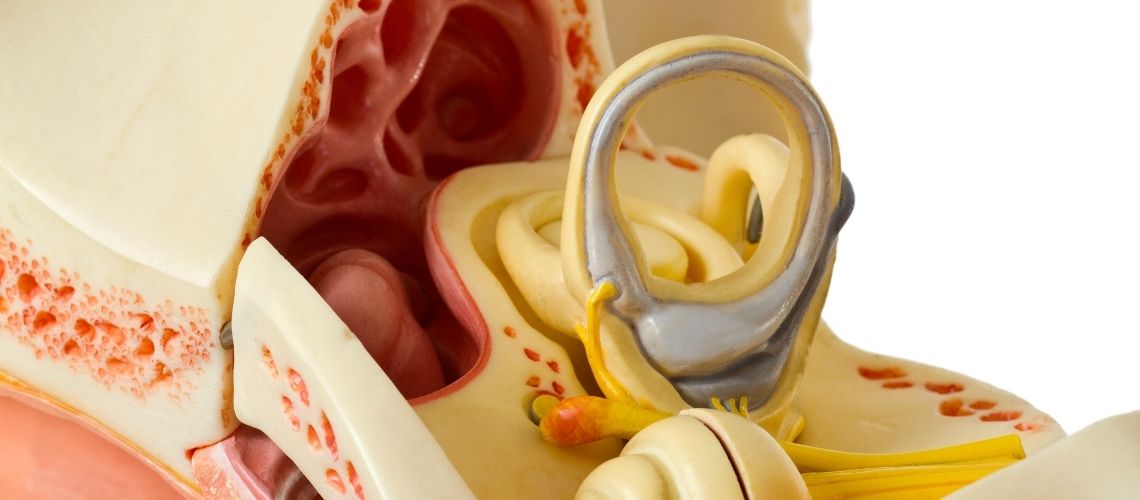
The utricle and saccule are the otolith organs of the vestibular system. They form the fundamental components of the balance mechanism by detecting gravity and linear movements. Through these structures, the body’s position in space is transmitted to the brain.
While the utricle detects movements in the horizontal plane, the saccule records accelerations in the vertical plane. Thanks to these different detection capabilities, the vestibular system transmits head movements to the brain in detail.
Both structures contain otolith crystals. These crystals, which shift with head movement, stimulate sensory cells and initiate neural transmission. In this way, the perception of balance and position is continuously regulated.
Dysfunction of the utricle and saccule leads to problems such as dizziness, imbalance, and loss of orientation. Early diagnosis of these conditions improves quality of life through vestibular rehabilitation and appropriate treatment.
What Is the Utricle and How Does It Contribute to Balance?
The utricle is one of the main components of the vestibular system in the inner ear and contributes significantly to balance. This organ detects head movements and supports the individual’s spatial orientation. The utricular macula is a specialized structure sensitive to horizontal movements. The structural characteristics of the utricle explain how the balance mechanism works:
- The utricle is one of the otolith organs and is effective in detecting the position of the head relative to gravity.
- The macula contains otoconia, which are calcium carbonate crystals.
- These crystals stimulate the hair cells beneath them when the head moves.
- Stimulation of the hair cells causes neurological signals to be generated and sent to the brain.
The functions of the utricle in maintaining balance are as follows:
- It detects linear movements of the head, particularly responding to changes in the horizontal plane.
- Signals traveling from the utricle to the brain combine with visual and other vestibular inputs. This integration continuously adjusts the body’s spatial orientation.
- These signals play a fundamental role in coordinating eye, head, and body movements.
The effectiveness of the utricle may be impaired in cases of injury or disease, which may result in reduced balance and orientation abilities. As a result, the utricle is a critical component of balance that enables the body to remain stable and precisely detects changes in head position.
What Is the Saccule and What Role Does It Play in Detecting Linear Movements?
The saccule is a fundamental component of the vestibular system located in the inner ear and is distinguished by its ability to detect movements in the vertical plane. It is particularly sensitive to upward and downward movements and changes in gravity. This sensitivity is made possible by a specialized region within the saccule called the macula. The macula contains thousands of hair cells (stereocilia).
- The stereocilia are embedded in a gelatinous layer called the otolithic membrane, which is weighted with otoliths.
- Otoliths are small calcium carbonate crystals and slide within the otolithic membrane due to their inertia during movement.
During vertical movement of the head, this sliding causes the stereocilia to bend. This bending triggers the production of excitatory or inhibitory signals that vary according to the direction of movement. The generated signals are transmitted to the brain through the vestibular nerve. This information, processed in the brain, determines the position of the person’s head relative to gravity and thereby contributes to the body’s overall balance.
The saccule works together with the utricle and plays a critical role in maintaining balance in the inner ear. Both otolith organs maintain balance during static conditions, including when the head is not moving. This sensitivity to vertical movements is particularly essential for maintaining body balance during daily activities such as walking and standing upright.
What Role Do the Utricle and Saccule Play in Motion Sickness and Fast Acceleration Syndrome, and How Can This Be Managed?
Motion Sickness, MdDS, VIMS, and Fast Acceleration Syndrome are sensory conflict conditions that occur during various movement patterns. In these pathologies, inputs obtained from the otolith organs may not correspond with other environmental inputs. Therefore, individuals may experience complex and complicated symptoms such as nausea, vomiting, imbalance, a sensation of falling or floating in space, fatigue, eye strain, and difficulty concentrating.
The otolith organs play an important role in these conditions that develop due to movement patterns. The utricle and saccule are specialized structures belonging to the vestibular system of the inner ear. These organs regulate balance and spatial orientation by detecting the position of the head in relation to gravitational forces and linear acceleration. Particularly during movement, the information detected by the utricle and saccule provides the brain with the signals necessary to maintain balance. If dysfunction occurs in these systems, incorrect information is sent to the brain and manifests through symptoms such as nausea, vomiting, imbalance, a sensation of falling or floating in space, fatigue, eye strain, and difficulty concentrating.
The rehabilitation of such balance problems is provided by audiologists. Audiologists undergo detailed theoretical and practical training in the field of balance disorders and plan and conduct individualized treatments and therapies aimed at improving the patient’s quality of life. The methods preferred for movement-related pathologies include:
- Vestibular Rehabilitation Therapy (VRT): It helps restore balance by supporting the brain’s adaptation to changing sensory input. This therapy process includes balance training, head movements, and gaze stabilization techniques. In this way, the individual is enabled to cope spontaneously with perceived conflicting movement signals. Conventional and technological methods are used together in treatments and therapies.
- Postural Control Training: The feeling of postural instability is a highly important problem that affects the individual’s ability to function independently. Therefore, a method that does not improve postural stability is not sustainable. Regardless of the pathology, postural stability exercises are indispensable components of vestibular rehabilitation. At this point, in disorders or problems originating from the utricle and saccule, aligning and repositioning the center of gravity increases the patient’s stability. In this way, the individual’s balance can be maintained under adverse movement conditions.
- Autogenic Feedback Training Exercises (AFTE): These help manage the autonomic symptoms caused by motion sickness. They provide control over physiological responses such as dizziness and nausea. These exercises are designed and applied specifically for the symptoms.
Frequently Asked Questions

Dr. Audiologist Emel Uğur was born in 1982 in Çanakkale. She specialized in Pediatric Audiology, Otologic Disorders, and Vestibular System Disorders, and served for 15 years at the Istanbul Training and Research Hospital. In 2015, she joined the Acıbadem Healthcare Group. She currently works as an Audiologist at the Acıbadem Altunizade Hospital and also serves as a faculty member and program director in the Acıbadem University Vocational School of Health Services Audiometry Program.









Location of our clinic in Istanbul, Turkey