

 Türkçe
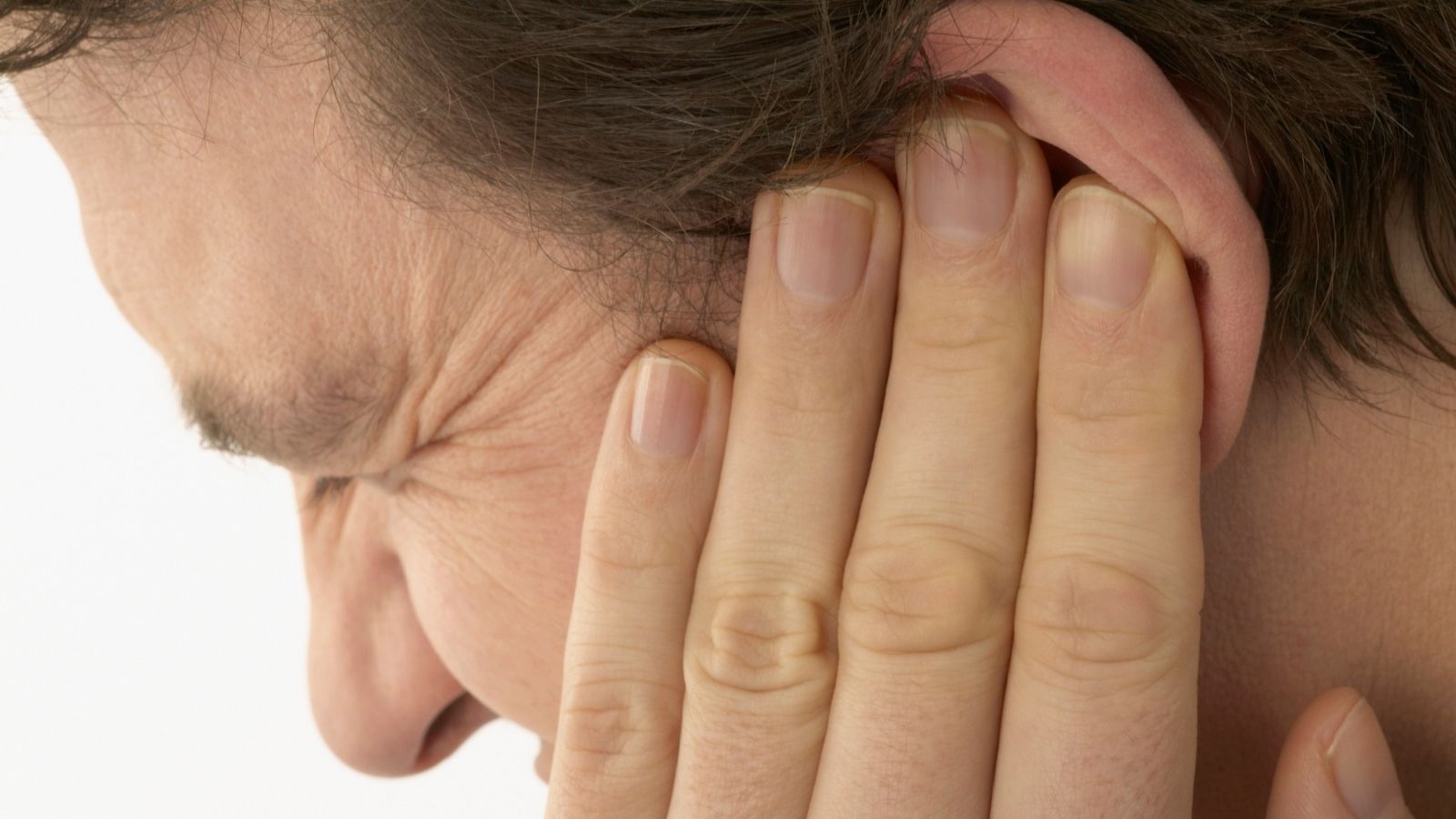
A feeling of fullness in the ear usually occurs due to changes in middle ear pressure or blockage. This sensation is associated with conditions such as air travel, sinusitis, allergies, or Eustachian tube dysfunction and may temporarily affect the person’s hearing quality.
Insufficient functioning of the Eustachian tube disrupts the pressure balance between the ear and the nasopharynx and leads to a feeling of pressure, blockage, or fullness in the ear. This condition is especially common during upper respiratory tract infections and is generally temporary.
Accumulation of earwax (cerumen plug) may also cause a feeling of fullness. A cerumen plug accumulated in the external ear blocks sound transmission and creates a sensation of pressure in the person’s ear. In this case, cleaning performed by an ear, nose, and throat specialist is generally sufficient.
Treatment varies according to the underlying cause. Nasal sprays, steam applications, and swallowing exercises support Eustachian tube function. Antihistamines may be used in allergy-related conditions, while appropriate antibiotic treatment may be planned in the presence of infection. Your physician determines which method is more appropriate.
| What You Need to Know | Information |
| Definition | A feeling of fullness in the ear is a common symptom that presents as the perception that the ear is blocked, a sensation of pressure, or sounds being heard as muffled. |
| Common Causes | Eustachian tube dysfunction, middle ear infection (otitis media), earwax (cerumen plug), air travel or altitude changes, allergic rhinitis, sinusitis, changes in inner ear fluid pressure. |
| Eustachian Tube Dysfunction | The Eustachian tube connects the middle ear and the nasopharynx. Blockage or incomplete functioning of this tube causes pressure and a feeling of fullness in the ear. |
| Middle Ear Infections | Otitis media, which is especially common in children, causes fluid accumulation in the ear, leading to fullness and reduced hearing. |
| Earwax Accumulation | Cerumen accumulated in the external ear canal may cause blockage, leading to fullness and muffled hearing. |
| Barotrauma | Sudden pressure changes during situations such as air travel or diving may cause fullness and pain in the ear. |
| Allergic and Viral Causes | Allergic rhinitis and upper respiratory tract infections may cause swelling of the Eustachian tube and create a sensation of blockage in the ear. |
| Meniere’s Disease | This disease, which involves increased fluid in the inner ear, may cause a feeling of fullness together with dizziness, tinnitus, and hearing loss. |
| Temporary Conditions | A temporary feeling of fullness may occur after sleeplessness, stress, fatigue, or prolonged exposure to loud sound. |
| Diagnostic Methods | Ear examination (otoscopy), tympanometry, pure-tone audiometry, ear pressure tests, and examination of the nasopharynx and sinuses may be required. |
| Treatment Methods | Depending on the cause, antibiotics, nasal decongestant sprays, allergy medications, Eustachian tube exercises (Valsalva maneuver), earwax removal, or surgical interventions such as tube insertion may be applied. |
| Measures That Can Be Taken at Home | Methods such as chewing gum, yawning, swallowing, inhaling steam, and cleaning the nose with saline may relieve pressure in the ear. |
| When to Consult a Doctor | If ear pain, hearing loss, ear discharge, dizziness, or loss of balance accompanies the condition, an ear, nose, and throat (ENT) specialist must be consulted. |
How Is a Feeling of Fullness in the Ear Described?
To understand this sensation, we first need to discuss a little about how the ear works. Your ear is not only an organ that hears sound; it also has an extraordinary pressure-balancing system within itself. In particular, the space immediately behind the eardrum, which we call the middle ear, must be filled with air. When the pressure of this air is equal to the atmospheric pressure in the outside world, the eardrum vibrates and you hear sounds clearly. However, when this balance is disrupted, meaning when the internal pressure decreases or increases, the eardrum becomes stretched. The “fullness” you feel is actually the sensation of the eardrum being stretched.
Our patients generally experience this condition together with muffled sounds. You may notice that your own voice echoes inside your ear, which we call autophony. While eating, chewing sounds may seem as though they are echoing inside your brain. Sometimes a faint ringing or mild dizziness may accompany the feeling of fullness. All of these symptoms give us clues as to whether the source of the fullness is in the external ear, middle ear, or deeper in the inner ear.
When Is a Feeling of Fullness in the Ear an Emergency?
This is perhaps the most vital part of this article. Ear fullness may not always be an innocent condition that we can say “will pass in a few days.” This is especially true if the sensation has appeared suddenly. You wake up in the morning and feel intense blockage in one ear. You touch your ear with your finger, yawn, but it does not go away. If hearing loss in that ear also accompanies this feeling of fullness, you should take the situation seriously.
We call this “Sudden Hearing Loss.” Our patients generally confuse it with a simple earwax blockage or a situation in which “water entered my ear” and delay going to the doctor. However, sudden hearing loss is an emergency that develops as a result of the nerve cells in the inner ear being deprived of oxygen or being attacked by a virus, and the first 72 hours are extremely valuable for treatment success. If you cannot hear the sound on the phone together with the feeling of fullness or cannot distinguish whispers, do not waste time. In this case, the fullness you feel is not caused by pressure but by a feeling of “lack of stimulation” resulting from loss of nerve cell function.
Some symptoms that may accompany this emergency condition are:
- Humming
- Severe ringing
- Dizziness
- Inability to determine the direction of sound
What Causes a Feeling of Fullness in the External Ear Canal?
Now let us move on to causes that are simpler but just as common. Sometimes the solution is much closer than you think, right in the external ear canal. The ear canal is an organ that has the ability to clean itself. The glands in our skin produce a yellowish secretion that we call “cerumen.” This secretion is actually not dirt but a kind of “natural antibiotic ointment” that protects the ear. Through jaw movements, this secretion is gradually expelled.
However, in some cases, especially in patients who try to clean their ears with cotton swabs, this natural mechanism is disrupted. While trying to clean with cotton, you push this secretion inward toward the eardrum. Over time, the cerumen plug that accumulates and hardens there may completely block the ear canal. In this case, the fullness you feel is entirely mechanical; in other words, there is a physical blockage there. Especially after bathing or swimming, the feeling of fullness may suddenly increase as the wax absorbs water and swells, and it may turn into a complete sensation of deafness.
Other factors that cause fullness in the external ear are:
- External ear canal inflammation
- Eczema
- Fungal infections
- Foreign bodies
- Bony growths
How Does Eustachian Tube Blockage Trigger a Feeling of Fullness?
In a very large proportion of patients who apply to outpatient clinics with the complaint “my ear is blocked,” the responsible organ is the Eustachian tube. This tube is a canal extending between the nasopharynx and the middle ear, normally remaining closed but opening during swallowing and yawning. Each time it opens, it sends some air into the middle ear and equalizes the pressure.
In conditions such as flu, the common cold, sinusitis, or allergic rhinitis, the opening of this tube in the nasopharynx becomes edematous and swollen. The tube becomes unable to open. The air in the middle ear is absorbed by the mucosa, and no new air can enter. The result? A vacuum forms in the middle ear. This vacuum pulls the eardrum inward. The fullness you feel at that moment is the vacuum itself. It creates a sensation as though you are constantly experiencing the moment when an airplane is descending. We call this condition “Obstructive Eustachian Tube Dysfunction.”
The factors that trigger this mechanism are:
- Seasonal allergies
- Enlarged adenoids
- Deviated nasal septum
- Reflux
- Smoking
- Upper respiratory tract infections
- Weight loss, etc.
Can Weight Loss Cause Ear Fullness?
It sounds strange, does it not? You may say, “What does losing weight have to do with the ear?” However, there are fat pads around the Eustachian tube that support it. When you lose weight rapidly and excessively, just as fat in other parts of your body melts away, the fatty tissue around this tube also decreases.
In this case, the tube cannot remain closed as it should and becomes constantly open. We call this “Patulous Eustachian Tube.” When the tube remains constantly open, all kinds of sounds and air coming from the nasopharynx enter the middle ear uncontrollably. The complaint of these patients is very typical: “Doctor, I hear myself breathing inside my ear, and my own voice echoes inside my head.” This condition also creates a feeling of fullness, but its mechanism is the exact opposite of blockage. This sensation may increase especially while exercising or when you are tired. Making this distinction is very important because trying to open a blocked tube and treating a tube that remains open require completely opposite approaches.
Conditions that may lead to patulous Eustachian tube are:
- Excessive weight loss
- Dehydration
- Pregnancy
- Rheumatic diseases
- Advanced age
- Some neurological medications
Do Meniere’s Disease and Inner Ear Pressure Cause Fullness?
If the problem is not in the external or middle ear, our journey continues toward the inner ear, into the cochlea. The inner ear is a closed system in which fluids circulate. The pressure of these fluids is maintained in a very delicate balance. However, sometimes, although the exact reason is not known, the production of these fluids increases or their absorption becomes impaired. Pressure begins to increase in the inner ear. This is called “Endolymphatic Hydrops” or, by its more familiar name, Meniere’s Disease.
For patients with Meniere’s disease, ear fullness is the first warning sign of an approaching storm. Hours or days before a severe dizziness (vertigo) attack arrives, an indescribable sensation of pressure and fullness begins in the ear. Patients may describe it as “it feels like my ear is going to burst.” This pressure is generally accompanied by a low-pitched humming sound. In Meniere’s disease, the feeling of fullness fluctuates; the attack passes, the pressure decreases, and then it returns. If your feeling of fullness increases and decreases during the day and is accompanied by dizziness attacks, inner ear pressure should be suspected.
Do Hidden Hearing Loss and Neurological Causes Create Fullness?
Sometimes our patients come with an intense complaint of fullness, we perform their tests, and everything appears “perfect.” The eardrum is intact, pressure is normal, and the hearing test is normal. Is the patient lying? Never. This may be where the condition we call “Hidden Hearing Loss” or “Cochlear Synaptopathy” comes into play.
In this condition, which we especially see in young people who work in noisy environments or listen to loud music very frequently, the actual damage is not in the cells that hear sound but in the nerve connection points that carry that sound to the brain. Standard tests cannot detect this subtle damage. However, because the brain cannot receive the signals clearly, it makes extra effort in order to “hear.” This neural fatigue and lack of signal are perceived by the person as a “blockage” or “fullness.” In other words, the ear is mechanically open, but neurologically there is a data flow problem:
How Does an Audiologist Diagnose a Feeling of Fullness?
When you enter the outpatient clinic, we Audiologists work almost like detectives to find the source of the feeling of fullness. Merely looking into your ear is not enough; we analyze each part of the ear separately with a series of technological tests.
Our first stop is generally Pure-Tone Audiometry. We take you into a soundproof booth and place headphones on you. Here, we determine your hearing thresholds. Is there hearing loss accompanying the feeling of fullness? If so, is this loss in low frequencies, suggesting Meniere’s disease, or in high frequencies? Is it conductive, indicating a middle ear problem, or sensorineural?
The next and perhaps most critical test for the feeling of fullness is Tympanometry. We place a soft plug in your ear and apply slight pressure. This test shows us how mobile the eardrum is and the middle ear pressure. If a flat line appears on the graph (Type B), this indicates that the middle ear is filled with fluid. If the graph shifts to the negative side (Type C), this proves that there is severe Eustachian tube blockage and vacuum. This test tells us within seconds whether the fullness has a “mechanical” cause.
We also check the health of the tiny muscles in the middle ear and the brainstem pathways with Acoustic Reflex tests. In cases of further suspicion, we apply the test called Electrocochleography (ECochG). With this test, we measure the pressure of the inner ear fluid; you can think of it as measuring eye pressure. If you have Meniere’s disease, we observe significant deviations in this test.
The tests used in the diagnostic process are:
- Pure-tone audiometry
- Speech audiometry
- Tympanometry
- Acoustic reflex test
- Otoacoustic emission
- VEMP test
- ECochG test
Which Maneuvers Are Performed to Relieve Ear Fullness?
If the tests reveal that the cause of the feeling of fullness is simple Eustachian dysfunction, meaning a pressure equalization problem, some physical maneuvers may be very helpful in addition to medications. However, before performing these maneuvers, you must obtain confirmation from your doctor that “there is no perforation in the eardrum” and “the infection is not active.”
The best-known is the Valsalva Maneuver. You take a deep breath, close your mouth, pinch your nose with your fingers, and gently push the air toward your nose, as though blowing your nose but without allowing air to escape. With this pressure, air enters the Eustachian tube from the nasopharynx and forces the tube open. When successful, you hear a “pop” sound from your ear and feel relief. However, if you perform it too forcefully, you may damage the eardrum, so being gentle is essential.
Another is the Toynbee Maneuver. You close your nose tightly with your hand and try to swallow. This movement uses the muscles to force the tube open. Chewing gum, inflating a balloon, or yawning are also natural exercises that activate the Eustachian tube. Performing these movements frequently is especially protective during air travel.
Do Lifestyle Changes Help with a Feeling of Fullness?
Especially in fullness related to inner ear pressure (Meniere’s disease) or Eustachian tube problems, what you eat and drink may become your medicine. Inner ear fluids are directly affected by the body’s overall water and salt balance. If you eat very salty foods, your body retains water; similarly, your inner ear also retains water and its pressure increases. This triggers the feeling of fullness.
Therefore, we always recommend salt restriction to our patients with Meniere’s disease or those who frequently experience fullness. Drinking plenty of water throughout the day to prevent dehydration and managing stress are also very important. Stress may alter the hormonal balance in the body, leading both to muscle tension and inner ear circulation disorders. Caffeine and alcohol may also worsen symptoms by affecting the inner ear vessels.
The foods you are advised to avoid are:
- Pickles
- Turnip juice
- Mineral water
- Chips
- Instant soups
- Canned foods
- Soy sauce
Do Hearing Aids and Rehabilitation Reduce the Feeling of Fullness?
In chronic feelings of fullness that do not completely go away no matter what we do, or in cases where permanent hearing loss develops, Audiological rehabilitation comes into play. When there is a frequency that the brain cannot hear, it tries to increase activity in that region, and this sometimes turns into tinnitus, which we call “the sound of silence,” or the perception of fullness.
Using a hearing aid in these patients may create remarkable effects. By sending “sound” back to the ear, the device ends the brain’s effort to fill that region. When the patient begins to hear environmental sounds, they stop focusing on their own internal sound and that pressure in the ear. In addition, with devices featuring “Tinnitus Masking,” soothing sounds such as ocean sounds or white noise are delivered to the ear, suppressing the feeling of fullness and ringing. Over time, the brain learns to label this sensation as “unimportant,” and the patient eventually stops feeling that fullness.
Does Third Window Syndrome Create a Feeling of Fullness in the Ear?
It is also necessary to mention a very rare but interesting condition that should not be overlooked: Superior Semicircular Canal Dehiscence (SSCD). Although its name is somewhat intimidating and long, its logic is simple. The balance canals in our inner ear are normally covered by bone. In some individuals, this bone is congenitally thin or gradually erodes over time. In other words, an “opening” or “third window” that should not exist forms in the inner ear.
This opening causes intracranial pressure to be transmitted directly to the inner ear. These patients describe a very specific type of fullness: “I hear my heartbeat in my ear,” “I hear sounds even when I move my eyes,” or “When I strike my heels on the ground, the sound booms in my ear.” They may even experience brief dizziness when they hear a loud sound, such as a door slamming. In this type of mechanical problem, the feeling of fullness is constant and can only be diagnosed with highly detailed tomography and VEMP tests. It may be the hidden cause underlying persistent fullness that does not respond to standard treatments.
- Although SSCD is the first condition that comes to mind when third window syndrome is mentioned, there are also other third window syndromes such as perilymph fistula and LVAS. The differential diagnosis of these conditions will be provided by your audiologist.
Do Neck and Jaw Problems Affect the Ear?
Your ear may hurt or feel full, but the culprit may not actually be your ear. The jaw joint, known as the Temporomandibular Joint, is located immediately in front of the external ear canal. If you place your finger in your ear and open and close your mouth, you can feel the joint moving. In people who clench or grind their teeth at night or have a jaw joint problem, edema and muscle spasm in this joint are directly reflected in the ear.
The patient comes to us saying, “My ear hurts and feels blocked.” We examine the ear, and it is completely clean. We perform a hearing test, and the result is excellent. However, when we examine the jaw joint, we observe tenderness. Likewise, a cervical disc herniation or tension in the neck muscles may cause a feeling of fullness radiating to the ear through nerve networks. In these cases, we conduct treatment jointly with Dentists or Physiotherapists.
Symptoms suggesting jaw-related fullness are:
- Waking up with ear pain in the morning
- Pain in the temples
- Clicking sound while eating
- Difficulty opening the mouth
Frequently Asked Questions

Dr. Audiologist Emel Uğur was born in 1982 in Çanakkale. She specialized in Pediatric Audiology, Otologic Disorders, and Vestibular System Disorders, and served for 15 years at the Istanbul Training and Research Hospital. In 2015, she joined the Acıbadem Healthcare Group. She currently works as an Audiologist at the Acıbadem Altunizade Hospital and also serves as a faculty member and program director in the Acıbadem University Vocational School of Health Services Audiometry Program.










Location of our clinic in Istanbul, Turkey