

 Türkçe
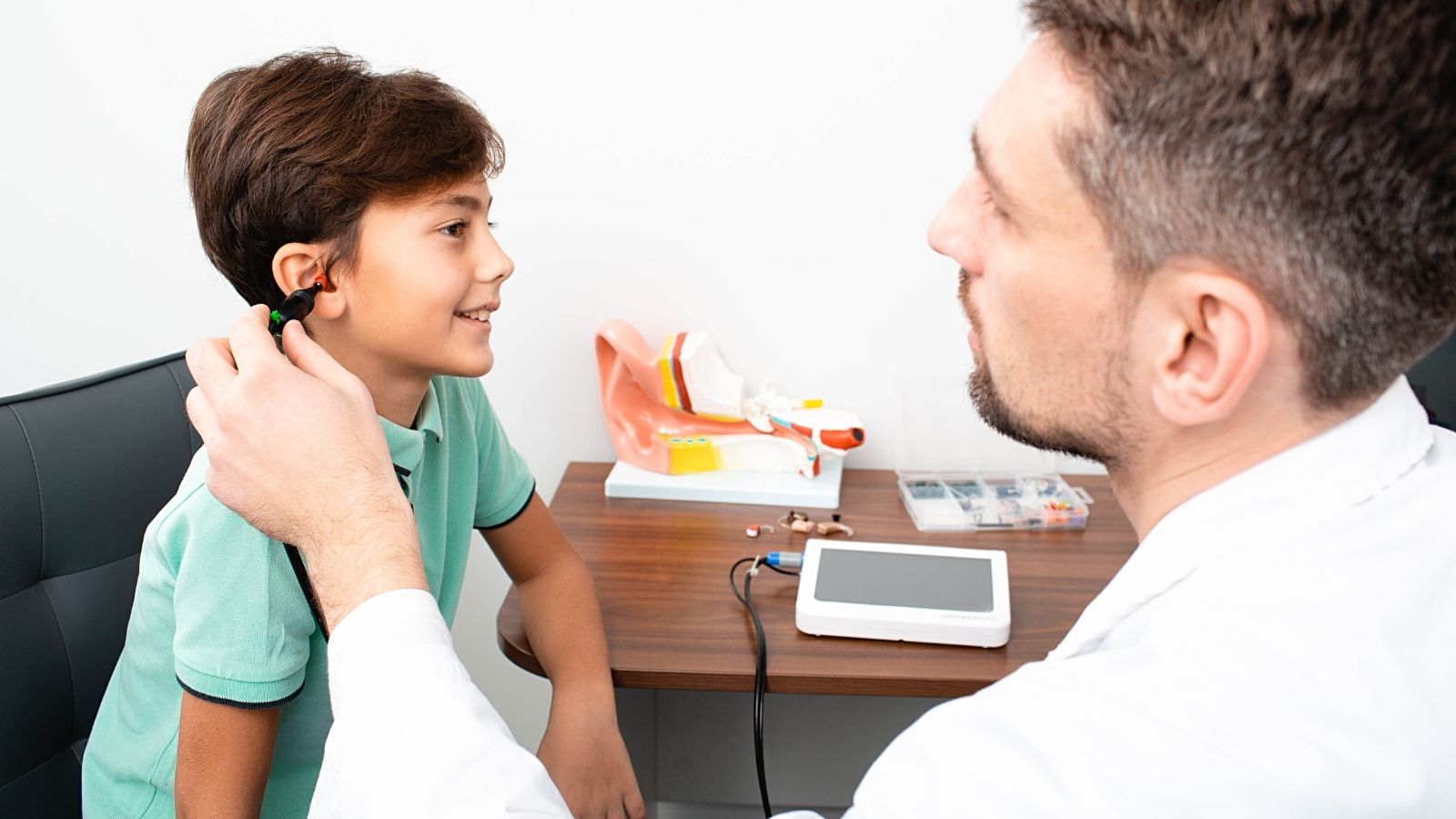
Audiology is the branch of science that examines hearing and balance disorders. Audiologists assess hearing loss by performing hearing tests and take part in the necessary treatment or rehabilitation processes. This field has an important place within multidisciplinary healthcare services.
Audiology covers not only hearing loss but also balance problems. Balance tests play a critical role in diagnosing vestibular system disorders. Complaints of dizziness such as vertigo can be analyzed through audiological evaluation.
Audiologists are healthcare professionals who provide individualized healthcare services and, based on their assessments, take part in the differential diagnosis of hearing and balance problems, the determination of treatment protocols, and the provision of rehabilitation services.
Devices used in the field of audiology include audiometers, tympanometers, and otoacoustic emission devices. These tools provide audiologists with scientific data during both the diagnosis and treatment processes.
Hearing aids and cochlear implant applications are also part of audiology practice. Audiologists ensure that these devices are adjusted appropriately and that the patient adapts to hearing rehabilitation. In this way, communication ability is preserved. In addition, the provision of vestibular rehabilitation services falls within the field of audiology, and audiologists plan and implement the diagnosis, treatment, and rehabilitation processes for vestibular system disorders.
What Is Audiology?
Audiology is the branch of science concerned with the diagnosis, treatment, and rehabilitation of hearing and balance disorders. Audiologists working in this field support patients through methods such as hearing tests, balance assessments, hearing aid fittings, and cochlear implant applications. Audiology is critically important both for the early diagnosis of congenital hearing loss in children and for managing hearing problems related to age or environmental factors in adults. The aim is to improve individuals’ communication skills and quality of life.
Which Conditions Does the Audiology Department Treat?
The audiology department diagnoses, evaluates, and rehabilitates disorders related to the hearing and balance systems. Hearing loss, tinnitus, balance disorders, dizziness (vertigo), childhood hearing problems, and auditory processing disorders are included within this field. Audiologists perform the necessary tests and determine and monitor hearing aids and other assistive listening systems.
Hearing Loss
- Conductive hearing loss
- Sensorineural hearing loss
- Mixed hearing loss
- Sudden hearing loss
- Noise-induced hearing loss
- Age-related hearing loss (Presbycusis)
- Congenital hearing loss
- Suspected hearing loss following newborn hearing screening
- Hearing loss caused by ototoxic medications
Tinnitus and Sound Sensitivity
- Tinnitus (Ringing in the Ears)
- Pulsatile tinnitus
- Hyperacusis (Excessive sensitivity to sound)
- Misophonia
Balance and Vestibular System Disorders
- Vertigo (Dizziness)
- Benign paroxysmal positional vertigo (BPPV)
- Meniere’s disease
- Vestibular neuritis
- Labyrinthitis
- Central and peripheral balance disorders
- Loss of balance and complaints of falling
Pediatric Audiology
- Newborn hearing screening test
- Hearing evaluation related to delayed speech
- Auditory problems associated with learning difficulties
- Auditory processing disorder
- Congenital ear anomalies
Conditions Related to Auditory Processing and Speech
- Auditory processing disorder
- Difficulty distinguishing speech
- Difficulty understanding speech in noisy environments
- Auditory problems associated with delayed language development
Hearing Aid and Implant Applications
- Hearing aid evaluation and fitting
- Cochlear implant evaluation
- Bone conduction implants
- Hearing aid checks and adjustments
- Rehabilitation and auditory training
Occupational and Environmental Hearing Assessments
- Hearing tests in noisy work environments
- Audiometric screenings
- Periodic hearing checks
Which Hearing Disorders Do Audiologists Treat?
Specialists working in the field of audiology treat hearing loss and related disorders. Sensorineural and conductive hearing loss are among the main types of hearing loss. Sensorineural hearing loss usually results from damage to the inner ear or auditory nerve. This type of hearing loss is permanent, and its most common causes include:
- Age-related changes
- Prolonged exposure to loud noise
- Use of certain medications (chemotherapy agents and some antibiotics)
Conductive hearing loss, on the other hand, occurs because of obstructions in the outer or middle ear. Conditions that prevent sound waves from reaching the inner ear include:
- Earwax buildup (cerumen impaction)
- Ear infections
- Fluid accumulation in the middle ear
- Damage to the small bones called ossicles
- Eustachian tube disorders
Mixed hearing loss includes both sensorineural and conductive hearing loss. It occurs when damage to the inner ear is combined with obstructions in the outer or middle ear.
What Types of Hearing Loss Occur in Children?
Hearing loss and hearing disorders can, of course, occur at any age and are important at every stage of life. However, hearing health in infants and children is not only an individual issue but also a societal concern. In this respect, it is one of the leading public health problems.
Because if a child with hearing loss is diagnosed correctly at the right time, hearing loss and all the negative conditions it may cause can be prevented. The infant or child reaches their individual potential, the individual benefits, and society benefits!
Hearing loss in infants and children may generally result from various causes. The earlier it is diagnosed and treated, the more beneficial it is for the child.
Hearing loss may have genetic or non-genetic causes. Genetic causes account for a large proportion of congenital hearing loss cases.
- Autosomal recessive inheritance is the most common form of genetic hearing loss.
- Genetic syndromes such as Usher and Waardenburg syndromes may also cause hearing loss.
Non-genetic causes include prenatal infections and birth complications, which are risk factors for hearing loss.
- Infections such as CMV and rubella may cause congenital hearing loss.
- Conditions such as low birth weight or premature birth may also cause hearing problems.
Hearing loss during childhood generally affects language development, academic performance, and social skills. Children with hearing loss may experience difficulties with language acquisition and speech development. Problems may also occur in cognitive processes such as abstract thinking and sequential memory. Therefore, early diagnosis and intervention are critically important. The type, degree, and configuration of hearing loss also shape the treatment and rehabilitation processes.
“Hearing Screening Programs” implemented in our country and worldwide play an important role in the early detection and intervention of hearing loss. Through these programs, newborns are screened by one month of age, and diagnoses are confirmed within three months. Interventions initiated within six months support the development of children’s language and social skills.
What Is Auditory Processing Disorder (APD)?
Auditory Processing Disorder (APD) refers to difficulties processing auditory information in individuals with normal hearing ability. This condition is particularly seen in children and negatively affects their ability to process speech and other sounds. As a result, it causes problems in communication, learning, and social interaction. The symptoms of APD often resemble those of other developmental disorders. Therefore, a comprehensive evaluation is essential for an accurate diagnosis.
Diagnostic Process:
- Case History and Interviews: Details about auditory communication difficulties and speech and language development are collected.
- Binaural listening: The brain’s ability to distinguish sounds received from both ears is evaluated.
- Temporal processing: The ability to understand the timing of sounds is tested.
- Auditory discrimination: The ability to distinguish between different sounds is examined.
- Electrophysiological Tests: Advanced diagnostic tests such as Auditory Brainstem Response (ABR), Middle Latency Response (MLR), and Late Latency Response (LLR) are used.
Management Techniques:
- Environmental Modifications: The burden on auditory processing is reduced by adjusting the learning environment.
- Auditory Training: Specialized training exercises are used to help the brain process sounds more effectively.
Compensatory Strategies:
- Note-taking techniques
- Dividing instructions into smaller steps
- Using visual aids to reinforce auditory information
- Multidisciplinary Support: A specialist team consisting of audiologists, speech-language pathologists, and educators works collaboratively.
Audiologists are healthcare professionals who receive the most comprehensive specialized training in the diagnosis, treatment, rehabilitation, and follow-up of hearing loss and hearing disorders.
What Are Balance Disorders and How Are They Treated?
The diagnosis and treatment of balance disorders are among the core areas of audiology. Although the inner ear is the primary balance organ involved in balance control, the system has a complex structure. Audiologists first provide laboratory services using diagnostic methods for balance disorders to investigate the origin of the existing condition. They use numerous diagnostic instruments for this purpose.
The best-known of these instruments include videonystagmography (VNG), v-HIT, and posturography. These devices make it possible to perform combined tests. Although their application and evaluation vary according to the patient’s complaints and condition, they are time-consuming procedures. Differential diagnosis and, consequently, treatment or rehabilitation cannot be planned without a detailed evaluation. Therefore, these tests must always and under all circumstances be performed and evaluated by audiologists.
Why Are the Best Audiologists in Türkiye?
Audiologists in Türkiye use advanced knowledge and technology in the diagnosis and treatment of conditions such as hearing loss, balance disorders, and tinnitus. Effective results are achieved with modern audiometry devices, vestibular testing systems, and personalized hearing aid fittings. Specialists with strong academic backgrounds provide patients with comprehensive support through a multidisciplinary approach. The combination of affordable and high-quality services makes Türkiye stand out in the field of audiology.
Why Are Audiology Units in Türkiye Among the Best in the Region?
Audiology units in Türkiye stand out among countries in the region because they use advanced technological devices in the diagnosis and rehabilitation of hearing and balance disorders and provide services through specialist audiologists. A wide range of services is offered, from newborn hearing screenings to cochlear implant fittings, while personalized hearing solutions and comprehensive follow-up processes contribute to high treatment success rates.
You can find reviews of audiologists in Türkiye on platforms such as DoktorTakvimi, Google Maps, Kadınlar Kulübü, or Ekşi Sözlük.
Frequently Asked Questions
Audiology is a healthcare science concerned with the evaluation, diagnosis, and rehabilitation of the hearing and balance systems. It aims to improve quality of life by helping detect hearing loss and balance disorders at an early stage.
Hearing loss, tinnitus, dizziness, balance disorders, auditory perception problems, and conditions requiring hearing aids fall within the scope of audiology. Both pediatric and adult patients can be evaluated.
Pure-tone audiometry, speech tests, tympanometry, and objective hearing assessments are commonly used methods. These tests help determine the type and degree of hearing loss.
Audiologists evaluate the functioning of the vestibular system by performing various balance tests. The results contribute to investigating the cause of dizziness and planning appropriate rehabilitation programs.
Delayed speech, failure to respond to sounds, frequently asking for repetition, learning difficulties, and behaviors suggesting possible hearing problems may require an audiological evaluation. Early diagnosis is highly important for development.
The relationship between tinnitus and the hearing system is evaluated, and comprehensive hearing tests may be performed. Based on the results, auditory rehabilitation, counseling, and support programs aimed at improving quality of life may be planned.
A device appropriate for the individual’s needs is selected based on hearing test results. The audiologist adjusts the device, provides training on its use, and aims to maintain optimal hearing performance through regular follow-up appointments.
Device activation, programming procedures, and auditory rehabilitation processes for individuals with cochlear implants may be carried out by audiologists. These follow-up procedures are important for the development of hearing skills.
Audiologists perform hearing and balance assessments, while ENT specialists manage the medical diagnosis and treatment processes. This teamwork helps establish a more accurate diagnosis and develop effective treatment plans.
Regular audiological evaluations may enable hearing loss and balance problems to be detected at an early stage. Early intervention expands treatment options and may reduce the negative effects on daily life.

Dr. Audiologist Emel Uğur was born in 1982 in Çanakkale. She specialized in Pediatric Audiology, Otologic Disorders, and Vestibular System Disorders, and served for 15 years at the Istanbul Training and Research Hospital. In 2015, she joined the Acıbadem Healthcare Group. She currently works as an Audiologist at the Acıbadem Altunizade Hospital and also serves as a faculty member and program director in the Acıbadem University Vocational School of Health Services Audiometry Program.









Location of our clinic in Istanbul, Turkey