

 Türkçe
Hearing is the process by which sound waves are transmitted to the brain through the ear and interpreted. Sound vibrations are collected by the auricle, amplified through the middle ear ossicles, and transferred to the cochlea in the inner ear. Neural impulses are then generated and perceived by the auditory center.
The physiology of hearing depends on the coordinated functioning of the outer, middle, and inner ear. While the outer ear collects sounds, the middle ear transmits vibrations, and the inner ear converts these vibrations into electrical signals. In this way, auditory signals are carried to the auditory cortex in the brain and acquire meaning.
During the hearing process, the Eustachian tube maintains pressure balance and enables the middle ear to function properly. The hair cells inside the cochlea are responsible for distinguishing sounds of different frequencies. The delicate structure of these cells is critically important for the quality of hearing.
Hearing impairment may occur as conductive or sensorineural hearing loss. Exposure to noise, aging, genetic factors, or infections may negatively affect hearing health. Early diagnosis and appropriate treatment methods can prevent hearing loss from progressing.
| What Is Speech Audiometry? | It is a hearing test that measures an individual’s ability to perceive, understand, and repeat speech sounds. |
| Who Is It Performed On? | – Individuals suspected of having hearing loss – Candidates for hearing aids or cochlear implants – Individuals who have difficulty understanding speech – Individuals who have difficulty distinguishing speech in noisy environments |
| How Is It Performed? | 1. Headphones are placed on the patient, and the test begins in a quiet environment. 2. Words or sentences are presented at different intensity levels. 3. The individual is asked to repeat the words they hear. 4. The responses are recorded, and hearing performance is evaluated. |
| Test Parameters | – SDT (Speech Detection Threshold): Measures the lowest sound level at which the person first detects speech. – SRT (Speech Recognition Threshold): Determines the lowest level at which the person can correctly repeat at least 50% of the words. – WRS (Word Recognition Score): Measures how well the individual understands speech, usually expressed as a percentage. |
| Normal Results | – SDT and SRT should be close to the hearing thresholds obtained in pure-tone audiometry. – If WRS is 90% or higher, speech understanding is considered normal. |
| Abnormal Results | – Low WRS (50% or below): There may be damage to the inner ear or auditory nerve. – If the difference between SDT and SRT is large: There may be an auditory processing disorder. |
| Advantages | – Evaluates the effect of hearing loss on everyday speech. – Helps determine the need for a hearing aid. – Tests the ability to understand speech in noisy environments. |
| When Should It Be Performed? | – If hearing loss is suspected – If there is difficulty distinguishing speech – If a hearing aid or cochlear implant is being planned |
What Is Hearing?
Hearing is essentially the process of perceiving sound waves and converting them into signals that can be interpreted by the brain. Sounds are waves created by the vibration of objects around us. For example, when you play a drum, the vibration of its stretched surface emits pressure waves into the surrounding environment. When these waves reach our ears, a complex series of processes begins, converting the vibrations into neural signals and ultimately allowing our brain to interpret them as sound.
This process is not merely a mechanical transmission of vibrations. It is also critically important for communicating, detecting danger, learning spoken language, enjoying music, and even enabling cooperation between the senses, such as vision and hearing. Individuals with hearing loss may sometimes withdraw from social interactions or experience difficulty during language acquisition. Therefore, hearing plays a leading role in human social and cognitive development.
How Do Sounds Begin Their Journey and Reach Our Ears?
Sound travels in the form of vibrations of air molecules. You can compare this to the rings formed when you throw a stone onto the surface of a calm lake. Just as the water rings spread across the lake, vibrations of air molecules also spread through the environment in waves. These waves are collected by the auricle, or pinna, which is the outer part of the ear.
The auricle resembles a funnel in shape and directs sound waves toward the ear canal. This is the first function of our ear: collecting sound waves. At this stage, we also detect many clues about the direction, elevation, and position of sounds in the environment. For example, sound waves coming from above strike the auricle at a different angle. These differences in angle help the brain answer questions such as, “Is the sound coming from above, below, the right, or the left?”
How Does the Outer Ear Contribute to the Hearing Process?
The outer ear consists of the auricle, or pinna, and the external auditory canal. In terms of the hearing process, the main functions of the outer ear are as follows:
- Collecting and Directing Sound
The auricle works like a satellite dish. It collects sound waves and focuses them toward the external auditory canal. This allows sounds, particularly those in the 2–5 kHz range where speech frequencies are concentrated, to be heard more effectively.
- Amplifying Frequencies to a Certain Degree
The external auditory canal is approximately 2–3 cm long and acts as a type of acoustic resonator. Just as the body of a guitar amplifies the sound when the strings vibrate, the ear canal increases the intensity of incoming sound waves by approximately 10–15 decibels. Speech frequencies benefit particularly from this amplification.
- Protective Barrier
The external auditory canal protects the eardrum, or tympanic membrane, and the delicate tissues of the inner structures. Its slightly curved shape and the secretion of earwax, or cerumen, prevent dust, insects, and microorganisms from progressing farther into the ear. This secretion may also have antibacterial properties.
- Maintaining Temperature and Humidity Balance
The external auditory canal helps keep the eardrum at an optimal temperature and humidity level. If temperature and humidity change excessively, the vibratory properties of the eardrum may be impaired, which can affect hearing quality.
You can think of these functions of the outer ear as the entrance hall of a concert venue. The outer ear is the part that “checks the admission ticket” of sounds and directs them inward. Sound is organized and filtered to a certain extent here before reaching the eardrum and passing into the middle ear.
How Is Sound Amplified in the Middle Ear?
The middle ear is a small, air-filled cavity located between the eardrum and the oval window of the inner ear. It contains three tiny ossicles arranged in a chain: the malleus, incus, and stapes. Their function is to transmit vibrations from the eardrum to the inner ear as efficiently as possible.
- Providing Impedance Matching
When sound waves traveling through the air encounter the fluid environment of the inner ear, a significant amount of reflection would normally occur because air and fluid have very different densities and resistances, which is referred to as “impedance” in physics. The middle ear acts as a “transformer” that improves the transmission of these waves.
Area Ratio Effect: The eardrum is larger than the oval window contacted by the stapes. The transition from a larger area to a smaller area increases pressure.
Lever Effect: Due to the difference in length between the malleus and incus, the movement of the ossicles acts like a lever, amplifying the vibrations before transmitting them to the inner ear.
- Protective Reflex of the Muscles
Two small muscles in the middle ear, the stapedius muscle that holds the stapes and the tensor tympani muscle that holds the malleus, are activated when very intense sound waves arrive and limit the movement of these ossicles. This reduces the risk of loud sounds damaging the inner ear.
- Pressure Equalization
The Eustachian tube, also known as the auditory tube, opens during swallowing or yawning and balances the air pressure in the middle ear with the pressure of the external environment. The sensation of your ears feeling “blocked” when flying or traveling to a high-altitude area occurs because of this pressure difference. When the Eustachian tube opens, the pressure equalizes, and the eardrum returns to its normal position and resumes vibrating.
You can imagine the middle ear as a small backstage area or the section containing the sound equipment in a theater. Sound is adjusted and amplified here. Like a performer preparing to go on stage, sound completes its necessary “makeup” before entering the inner ear.
How Does the Inner Ear Convert Sound into Electrical Signals?
The conversion of sound into electrical signals in the inner ear is perhaps the most delicate and fascinating stage of the hearing process. The inner ear contains the cochlea, a bony structure shaped like a snail. Inside the cochlea are fluid-filled canals and specialized cells located in the middle of these canals that convert sound waves into actual electrical signals.
- Formation of Pressure Waves
Movement from the middle ear is transmitted to the oval window through the stapes. The back-and-forth movement of the stapes creates pressure waves in the fluid called perilymph within the cochlea. Just as a piston moving in and out of water creates waves, this movement generates waves in the fluid.
- Basilar Membrane and Tonotopic Organization
The organ of Corti, which contains the auditory receptor cells, is located on the basilar membrane extending through the cochlea. The width and flexibility of the basilar membrane change as it extends from the base of the cochlea toward its apex. This allows different frequencies to produce maximum vibration at different points.
High-frequency sounds, or high-pitched sounds, create stronger resonance at the base of the cochlea.
Low-frequency sounds, or low-pitched sounds, reach their peak vibration closer to the tip, or apex, of the cochlea.
- Hair Cells and Mechanoelectrical Transduction
When the basilar membrane vibrates, the organ of Corti resting on it also moves. It contains “inner hair cells” and “outer hair cells.” On top of each hair cell are rows of hair-like projections called stereocilia. As the basilar membrane vibrates up and down in response to sound waves, these projections bend sideways.
During bending, tiny filaments called tip links between the stereocilia are stretched and open ion channels in the cell membrane.
Potassium and calcium ions entering the cell depolarize it, meaning they change its electrical potential.
The depolarized hair cell releases chemical transmitters, such as glutamate, onto the nerve endings, or auditory nerve fibers. These transmitters initiate action potentials in nerve cells and carry sound information to the brain.
- Differences Between Inner and Outer Hair Cells
Inner Hair Cells: These are the primary receptors that respond to sound. They act as the main gateway that converts mechanical movement into neural signals and transmits them to the brain.
Outer Hair Cells: These function like “amplifiers” that improve hearing sensitivity. Thanks to a special protein called prestin, they can shorten and lengthen in response to sound vibrations. In this way, they increase the vibration of the basilar membrane and improve hearing sensitivity, particularly at low sound levels.
The inner ear is like the “chemistry laboratory” of the hearing process. Mechanical vibrations are converted here into electrochemical signals, which are then carried to the brain through the auditory nerve. Thus, what we “hear” becomes electrical impulses, the language of our nerve cells.
How Does the Brain Interpret These Signals?
The brain is the “central control unit” where signals coming from the body acquire meaning. Auditory nerves leaving the cochlea reach the cochlear nuclei in the brainstem. The signal then travels sequentially to the superior olivary complex, inferior colliculus, medial geniculate body in the thalamus, and finally the primary auditory cortex, or A1, located in the temporal lobe.
- Brainstem and Basic Analysis of Sound
The auditory signal undergoes a rough preliminary analysis in the cochlear nuclei, its first stop. The superior olivary complex then compares the signals coming from both ears. This allows the brain to calculate the direction from which the sound is coming and the timing difference between the two ears. This is critical for determining whether the sound source is located to the right or left.
- Midbrain and Complex Processing
As the signals move to higher centers, such as the inferior colliculus, reflex control mechanisms and more complex sound analyses become active. For example, when we suddenly hear a loud sound, we startle and turn our head toward it. This rapid response is made possible with the help of these reflex centers in the midbrain.
- Thalamus (Medial Geniculate Body) and Selective Attention
The thalamus is a relay point for much of the sensory information traveling to the brain. It also filters auditory information and prioritizes important signals. Even in environments where we hear many sounds at the same time, we can focus on the sound that interests us. This “filtering” function is largely achieved through interaction between the thalamus and the cortex.
- Primary Auditory Cortex (A1) and Beyond
The primary auditory cortex, or A1, located in the temporal lobe, distinguishes sound frequencies while preserving the “tonotopic” arrangement found in the cochlea, where different frequencies are represented in different regions. Beyond this, information is transmitted to additional cortical areas for recognizing speech sounds, perceiving music, and performing more advanced auditory processing. Auditory pathways such as the “ventral stream,” which processes what is being said, and the “dorsal stream,” which processes where the sound is and how it relates to movement, become active.
You can think of the brain as a vast orchestra conductor. Every frequency coming from our ears acts like an “instrument” playing its own part. The brain brings all these instruments together and transforms them into a symphony. As a result, you can clearly recognize a song, hear a human voice, or focus on your friend’s voice even in a noisy environment.
Why Is Hearing So Important?
Hearing plays a fundamental role in human life.
- Language Development and Communication: Babies learn language by hearing the speech sounds around them. They imitate words, sentences, and intonation. Speech development may be disrupted in children with hearing loss.
- Social Connections and Emotional Well-Being: Talking with friends, hearing the voices of loved ones on the phone, and expressing your ideas in a meeting are all easier with healthy hearing. Increasing hearing loss may lead to social isolation and depression.
- Detecting Danger and Navigation: Hearing surrounding dangers, such as a barking dog, a car horn, or an approaching train, makes it possible to take precautions. Hearing is also closely related to our survival instincts.
- Music and Artistic Enjoyment: Music adds color to our lives. Rhythm, melody, and harmony are directly associated with hearing. Without our ears, we would be deprived of the melodies in our favorite songs that touch our souls.
What Factors Cause Hearing Disorders?
Unfortunately, because the hearing system is extremely delicate, it can be damaged easily. If certain factors are not taken into consideration, irreversible hearing loss may occur.
Over time, particularly the hair cells in the inner ear become worn. In older individuals, this condition appears as difficulty hearing high frequencies. Additional factors such as genetic predisposition, high blood pressure, and diabetes may accelerate age-related hearing loss.
- Noise-Induced Hearing Loss
Frequent exposure to loud environments, such as construction sites, mines, or continuously loud music, particularly damages the outer hair cells. This type of damage is generally permanent. Long-term exposure to noise above 85 dB is considered risky.
- Genetic Factors
Some individuals have genetic disorders that cause congenital hearing loss. Inherited conditions such as Usher syndrome, Waardenburg syndrome, or GJB2, also known as the Connexin 26 mutation, may cause hearing loss.
- Ototoxic Medications
Certain antibiotics, such as aminoglycosides, chemotherapy drugs such as cisplatin, high-dose aspirin, or some diuretics may damage the inner ear. If tinnitus or reduced hearing is noticed during treatment, a healthcare professional should be consulted immediately.
- Infections and Diseases
Infections such as meningitis may affect the neural pathways or hair cells in the inner ear. Diseases such as rubella, mumps, and CMV, or cytomegalovirus, during childhood may also lead to congenital or acquired hearing loss.
- Trauma and Injuries
Blows to the head or exposure to high-pressure explosions may damage the auditory system. Temporal bone fractures, in particular, may affect the middle or inner ear.
- Otosclerosis
In otosclerosis, abnormal bone growth develops around the footplate of the stapes, resulting in conductive hearing loss. It is one of the most common middle ear diseases.
- Inner Ear Diseases Such as Ménière’s Disease
In Ménière’s disease, fluid imbalance in the inner ear causes symptoms such as sudden hearing loss associated with attacks, pressure in the ear, and tinnitus. However, diagnosing Ménière’s disease is complex and requires detailed documentation.
How Can Hearing Loss Be Prevented?
Many types of hearing loss can be prevented, or at least their effects can be reduced. For example, using hearing protection in noisy environments is a simple but effective method. Other recommendations include:
- Avoiding or Reducing Noise: Avoid remaining for long periods in very loud environments, such as nightclubs, concert venues, and industrial settings, or use protective equipment such as earplugs or earmuffs.
- Safe Listening Habits: Avoid setting the volume too high when listening to music and limit the duration of listening. In particular, when using in-ear headphones, make an effort to remain at a moderate volume level.
- Caution with Ototoxic Medications: When their use is necessary, discuss possible hearing-related side effects with a healthcare professional and ask about alternative options.
- Regular Hearing Tests: Regular hearing tests, especially for people working in high-risk environments or those above a certain age, allow any hearing loss to be detected early.
- Protection Against Diseases: Childhood vaccinations, such as those against rubella and mumps, can prevent hearing loss caused by certain infections. Early treatment is also important for conditions such as meningitis.
- Healthy Lifestyle: Smoking and excessive alcohol consumption may indirectly damage hearing through circulatory disorders. A balanced diet, adequate sleep, and regular exercise positively affect hearing health as well as general health.
What Treatment Options Are Available for Hearing Disorders?
Hearing loss may require different treatment options depending on its type, whether conductive, sensorineural, or mixed, its severity, and the individual’s needs. Some of these options include:
- Hearing Aids
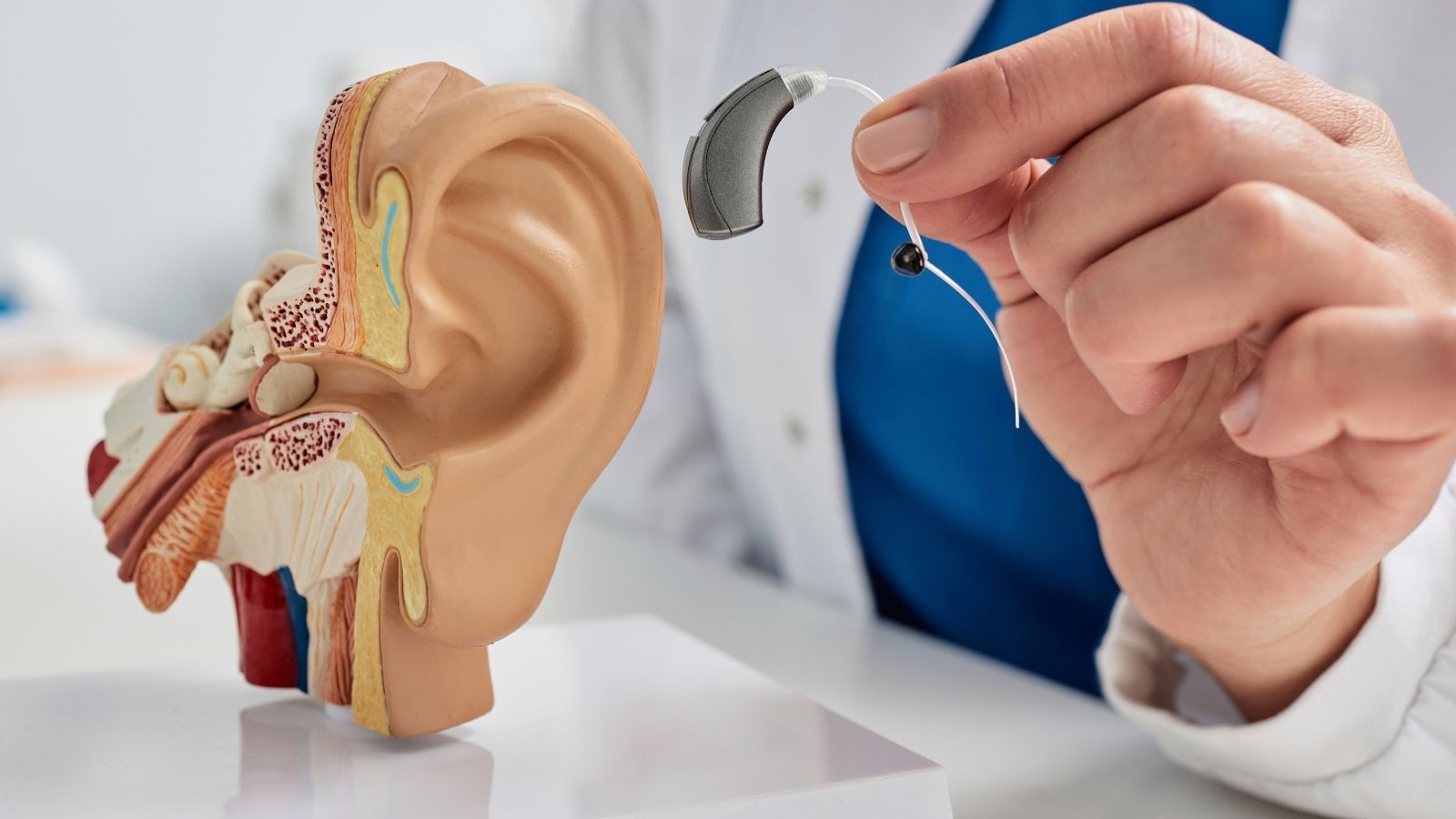
They are the most common treatment method for mild to moderate sensorineural hearing loss. Modern hearing aids are small, have advanced sound-processing technologies, and make sounds clearer in noisy environments. Some models can connect to devices such as phones or televisions through Bluetooth.
- Cochlear Implant
In severe or profound sensorineural hearing loss, hearing aids may not provide sufficient benefit, in which case a cochlear implant may be an appropriate solution. This device bypasses the damaged hair cells in the inner ear and directly stimulates the auditory nerves electrically. Bilateral cochlear implant applications have also become increasingly common. Patients who receive implants at an early age, particularly during childhood, may maintain healthier speech and language development.
- Bone-Conduction Hearing Systems
These are devices that transmit sound to the inner ear through the skull bone in patients with conductive hearing loss or single-sided deafness. They may be preferred when conventional hearing aids are unsuitable because of the patient’s anatomical structure.
- Surgical Interventions
In structural bone disorders of the middle ear, such as otosclerosis, a prosthesis may be placed in place of the stapes through surgical intervention, such as stapedectomy. This can significantly improve hearing levels.
- Pharmacological Treatments
In sudden sensorineural hearing loss, for example when caused by viral or autoimmune factors, corticosteroid treatment may be administered rapidly. In some cases, intratympanic steroid administration, meaning injection into the middle ear, may also be performed. However, there is currently no scientifically approved permanent medication treatment for noise-induced or age-related hearing loss.
- Stem Cell and Gene Therapy
Although still in the research stage, studies aiming to repair or regenerate damaged hair cells in the inner ear are continuing. Researchers are attempting to achieve hair cell regeneration through stem cells and the regulation of certain genes, such as Atoh1. Although these approaches remain experimental, they may lead to groundbreaking developments for permanent hearing loss in the future.
- Auditory Rehabilitation
The proper use of devices and the brain’s adaptation process are just as important as the presence of the devices themselves. Auditory rehabilitation strengthens the hearing process through speech therapy, listening exercises, lip-reading training, or computer-assisted educational programs. The goal is to improve quality after device fitting and help the individual adapt to daily life.
How Do Assistive Devices Improve Hearing Ability?
Assistive hearing devices are technologies that go beyond conventional hearing aids. These may include FM systems that transmit a speaker’s voice directly to the ear in noisy environments or special amplifiers that adjust sound intensity during telephone conversations. Some examples include:
- FM Systems
They have a wide range of uses, from microphone-receiver systems that transmit a teacher’s voice directly to a student in classrooms to systems that deliver a speaker’s voice clearly to everyone’s headphones in conference halls. In this way, they largely eliminate background noise and increase the signal-to-noise ratio.
- Wired or Wireless Transmission Systems
Modern hearing aids with Bluetooth or Wi-Fi support can connect to phones, tablets, or televisions and transmit sound directly to the ear. This reduces external noise and provides a clearer sound.
- Haptic Devices
Some systems transmit sound as vibration, providing an additional sensory channel for individuals whose hearing is far below the hearing threshold or who cannot hear at all. Receiving the signal through the skin makes it possible to experience music or environmental sounds in a different dimension.
- Smart Hearing Applications and Artificial Intelligence
Some software can separate speech from noise in real time or provide instant captioning for individuals with hearing loss. Advanced algorithms learn the ear’s sensitivity according to direction or frequency and create personalized sound profiles.
Today’s technology has reached a level that can help many people with hearing loss enjoy a higher quality of life. Over time, much more advanced solutions are expected to become available in this field through artificial intelligence-based sound processing and brain-computer interfaces.
Why Are Regular Hearing Checkups Necessary?
Every part of the human body, from the teeth to the eyes, requires regular care and examination. The ears deserve the same attention. In particular:
- Early Diagnosis: Mild hearing loss may progress and become a more serious problem if it is not detected in time.
- Age-Related Risks: Presbycusis is common in individuals over the age of 50. Regular testing helps monitor this process and allows support such as hearing aids to be started early when necessary.
- Occupational Risks: Hearing tests should become routine for people working in noisy environments, such as factories, mines, and musicians. Early signs of hearing loss can be detected, allowing workplace conditions to be adjusted or protective equipment to be optimized.
- Language Development in Children: Hearing screening tests during early childhood can help prevent problems in speech development.
Regular hearing examinations should be regarded as part of personal healthcare. Just like eye examinations or dental checkups, hearing assessments should be performed at regular intervals, especially once a year if you are in a high-risk group.
How Can We Protect Our Hearing Health in the Long Term?
Hearing is a unique sense that allows us to perceive the audible expression of life. It has a fascinating story extending from the tiny hair cells in the inner ear to the high-level processing areas of the cerebral cortex. This story begins with mechanical vibrations and transforms through chemical and electrical signals into interpretation by the brain, creating a system that functions quite literally like a “symphony.”
In a world where noise increasingly surrounds our lives, paying attention to hearing health has become essential. It is possible to protect hearing through preventive measures, such as using hearing protection and avoiding loud environments, regular hearing tests, and the solutions offered by technology. When hearing loss is present, modern medicine and engineering innovations provide a wide variety of options, ranging from hearing aids and cochlear implants to promising stem cell therapies.
The sense of hearing lies at the center of many functions that make us human, including communication, socialization, avoiding danger, and enjoying music. Protecting this highly sensitive and valuable sense, and taking prompt action when it is damaged, is one of the best investments we can make in our quality of life and emotional well-being. It should be remembered that there are many sounds in our world waiting to be heard and discovered, and each of them makes life more meaningful. Listening to these sounds is possible through a healthy auditory system. For a healthy and peaceful life, appreciating the value of our ears is more important than ever.
Frequently Asked Questions
Which structures in the ear initiate the hearing process?
Hearing begins when sound waves are collected through the outer ear and transmitted to the eardrum. The eardrum vibrates and transfers movement to the middle ear ossicles, and these vibrations are then transmitted to the inner ear.
What role does the middle ear play in the hearing process?
The malleus, incus, and stapes in the middle ear amplify sound vibrations and transmit them to the inner ear. This mechanism allows sound to reach the cochlea without losing strength.
Through which mechanism does hearing occur in the inner ear?
The inner ear contains a snail-shaped structure called the cochlea. Hair cells within the cochlea convert vibrations into electrical signals and transmit them to the brain through the auditory nerve.
How does the auditory nerve carry sounds to the brain?
Electrical impulses generated in the hair cells are transmitted through the auditory nerve to the brainstem. From there, they reach the auditory cortex through the thalamus, allowing sound to be perceived and interpreted.
Why is the difference between the two ears important during hearing?
Sounds coming from both ears help the brain determine direction. This makes it possible to identify the direction and distance of a sound. When hearing loss is present in one ear, sound localization becomes more difficult.
How does hearing develop from birth?
Babies begin hearing immediately after birth. During the first months, they distinguish their mother’s voice, and hearing plays a critical role in language development during later stages. Early hearing loss negatively affects language development.
How does noise damage the hearing mechanism?
Prolonged exposure to loud sounds damages the hair cells in the inner ear. This damage is irreversible and leads to hearing loss. Protection from noise is extremely important for hearing health.
What changes occur in hearing with aging?
In older age, the inner ear cells and neural pathways become worn. This causes age-related hearing loss known as presbycusis. High-frequency sounds in particular become difficult to perceive.
What is the relationship between hearing and the balance system?
The inner ear contains both the hearing and balance organs. While the cochlea provides hearing, the vestibular system controls balance. Therefore, certain inner ear diseases may cause both dizziness and hearing loss.
What precautions should be taken to protect hearing health?
Avoiding loud environments, maintaining ear hygiene, avoiding ototoxic medications, and undergoing regular audiological examinations are among the most important ways to protect hearing health.

Dr. Audiologist Emel Uğur was born in 1982 in Çanakkale. She specialized in Pediatric Audiology, Otologic Disorders, and Vestibular System Disorders, and served for 15 years at the Istanbul Training and Research Hospital. In 2015, she joined the Acıbadem Healthcare Group. She currently works as an Audiologist at the Acıbadem Altunizade Hospital and also serves as a faculty member and program director in the Acıbadem University Vocational School of Health Services Audiometry Program.









Location of our clinic in Istanbul, Turkey