

 Türkçe
The vestibular sensory system is the fundamental mechanism that provides balance and motion perception. The semicircular canals and otolith organs located in the inner ear detect changes in the position and speed of the head and transmit information to the brain. When this system is disrupted, dizziness and imbalance develop.
The vestibular system works in integration with visual and somatosensory inputs. In this way, the position of the body in space is perceived correctly. Coordination of eye movements and maintenance of posture are among the functions of the vestibular system.
Diseases or traumas may lead to loss of function in the vestibular system. Vestibular neuritis, Meniere’s disease, and migraine-related dizziness are some of the most common pathologies. Early diagnosis increases the success of the treatment process.
Healthy lifestyle habits are important for protecting the vestibular system. Regular exercise, measures that protect ear health, and regular medical check-ups reduce the risk of balance disorders. Rehabilitation programs play a complementary role in recovery.
What Is the Vestibular Sensory System?
The vestibular sensory system is the sensory system located in the inner ear that enables the body to perceive balance, head position, and movement. Through the semicircular canals and otolith organs, this system detects the direction, speed, and position of the head relative to gravity. By working in coordination with the brain, it keeps eye movements and posture balanced. When it is impaired, symptoms such as dizziness, imbalance, and nausea may occur.
Why Is the Vestibular Sensory System So Important for Our Lives?
The primary function of the vestibular system, as its name suggests, is to maintain balance. However, its functions are not limited to this. By providing our brain with a continuous flow of information about the position, speed, and direction of our head in space, this system makes our movements smooth and coordinated. Just imagine that even while traveling in a moving car, you can clearly read a sign outside with your eyes. This is thanks to the vestibulo-ocular reflex (VOR), a remarkable reflex controlled by the vestibular system. No matter how much your head moves, this reflex keeps your eyes fixed on the target and prevents the world from becoming blurred.
In addition, the vestibular system never works alone. It plays as a team with our other senses to maintain perfect balance. Visual information from our eyes and deep sensory information (proprioception) from our muscles and joints combine in the brain with data from the vestibular system. The brain analyzes the information from this trio and sends instant commands to our muscles to maintain balance. This flawless cooperation protects us from falling, especially while walking on uneven ground or making a sudden movement. Even the slightest disruption in this system may lead to dizziness and balance problems that seriously reduce a person’s quality of life, showing that its role extends far beyond simply standing upright.
Which Structures Make Up the Vestibular Sensory System?
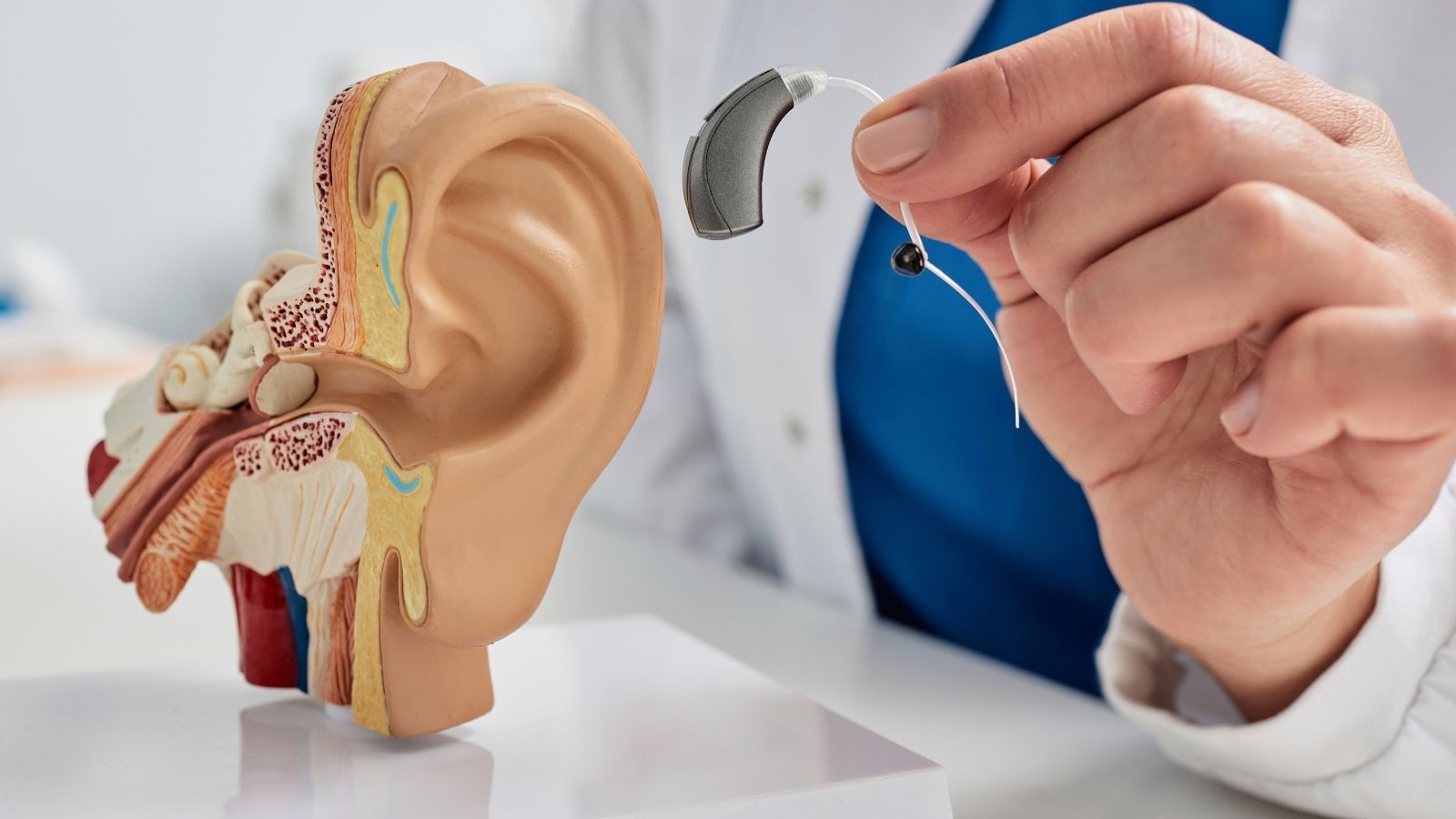
The sensory organs of this complex system are located inside the inner ear labyrinth, protected by the temporal bone within our skull. Its main components are:
- Three semicircular canals
- Utricle and saccule (otolith organs)
- Vestibular nerve (balance nerve)
The semicircular canals are three tiny fluid-filled tubes positioned at right angles to one another. Each detects rotational movement of the head in a different direction: one detects forward and backward nodding as if saying “yes,” another detects turning right and left as if saying “no,” and the third detects tilting the head toward the shoulder. When our head turns, the fluid inside these canals moves, and the hair cells that detect this movement send a signal to the brain.
The utricle and saccule are small sacs filled with tiny calcium carbonate crystals called otoconia. These structures mainly detect linear movements, such as accelerating in a car or moving upward in an elevator, as well as the position and acceleration of our head relative to gravity. The movement of these crystals stimulates the hair cells beneath them. All of this information is transmitted through the vestibular nerve to the brain and cerebellum for processing.
How Does the Vestibular Sensory System Understand Movements Around Us?
The vestibular system detects movement through an ingenious mechanism based on fundamental laws of physics. When you turn your head, the fluid in the semicircular canals lags behind for a moment because of inertia. This causes the hair cells to bend and sends a signal to the brain about the direction and speed of head rotation. When a car suddenly accelerates, the tiny crystals in the otolith organs shift backward, stimulating the hair cells and sending the message “you are accelerating forward” to the brain.
However, the brain does not make decisions based solely on this information. It also incorporates visual information from the eyes (“The trees around me are moving backward”) and deep sensory information from the muscles (“My back is pressing against the seat”) into the equation. When all of this data is combined, the brain forms a complete and consistent picture of the movement and enables the body to respond appropriately. These responses usually occur through extremely rapid reflexes that we are not even consciously aware of. The vestibulospinal reflex (VSR), which instantly moves one leg forward to prevent us from falling when we stumble, is one of the best examples.
How Does the Vestibular Sensory System Work as a Team with Other Senses?
Balance is often compared to a three-legged stool. The legs of this stool are:
- The vestibular system (balance information from the inner ear)
- The visual system (environmental information from the eyes)
- The proprioceptive system (body position information from the muscles and joints)
So, what is proprioceptive sense? It is like the body’s “deep sense” or “sixth sense.” It allows us to know where the tip of our finger is even when our eyes are closed. Thanks to special receptors in our muscles and joints, our brain constantly receives information about the position of our body in space.
For healthy balance, all three legs must be strong and work in harmony. The brain continuously combines and compares the information coming from these three systems. If there is a conflict between the information, such as the dizziness you feel when the car next to you moves while your own car remains still, the brain may become confused and balance problems may occur. The best aspect of these systems is that the others can compensate to some extent when one is deficient. For example, when vision is unavailable in a dark room, the brain relies more heavily on the inner ear and deep sensation to maintain balance.
How Do Vestibular Sensory System Disorders Manifest Themselves?
The symptoms that occur when there is a problem in the vestibular system are highly varied and may seriously affect a person’s quality of life. The most common symptoms are:
- Feeling of lightheadedness
- Illusion of spinning (Vertigo)
- Imbalance and difficulty walking
- Blurred vision (especially during head movements)
- A sensation of swaying or bouncing (Oscillopsia)
- Nausea and vomiting
- Ringing in the ears (Tinnitus)
- Hearing loss
- A feeling of fullness or pressure in the ear
- Difficulty concentrating
- Anxiety and panic
The best-known of these symptoms is vertigo. Unlike a simple feeling of lightheadedness, vertigo is a severe illusion of movement in which the person feels that they or their surroundings are spinning rapidly. Depending on the underlying cause, this condition may last for seconds, hours, or even days.
What Are the Most Common Vestibular Sensory System Disorders?
Although many conditions may affect the vestibular system, some are more common in the population.
- Benign Paroxysmal Positional Vertigo (BPPV): Commonly known as “displacement of the balance crystals,” it is the most frequent cause of vertigo.
- Main Problem: Tiny calcium crystals in the inner ear become dislodged and enter a place where they do not belong, namely one of the semicircular canals.
- Trigger: Certain positions of the head, such as turning in bed, looking upward, or bending forward.
- Symptom: Severe vertigo attacks that generally last less than one minute.
- Hearing: Not affected.
- Meniere’s Disease: A chronic condition generally known as “inner ear pressure.”
- Main Problem: Increased pressure of the fluid in the inner ear.
- Symptoms: Recurrent vertigo attacks that generally last from 20 minutes to 12 hours.
- Additional Findings: The attacks are accompanied by fluctuating hearing loss, tinnitus, and a feeling of fullness in the ear.
- Vestibular Neuritis: A condition that generally occurs after a viral infection.
- Main Problem: Inflammation of the balance nerve (vestibular nerve).
- Symptom: Sudden-onset, continuous, and severe vertigo that may last for hours or days.
- Hearing: Not affected. This is the most important difference from labyrinthitis.
- Labyrinthitis: Inflammation of both the balance-related and hearing-related parts of the inner ear.
- Main Problem: Inflammation of the labyrinth, generally due to infection.
- Symptoms: Sudden and continuous vertigo, similar to vestibular neuritis.
- Additional Findings: In addition to vertigo, unilateral hearing loss and tinnitus are also observed.
How Are Vestibular Sensory System Problems Diagnosed?
An accurate diagnosis is essential for proper treatment. Diagnosing vestibular problems is a comprehensive process that requires bringing clues together like a detective. The process always begins by carefully listening to the patient’s history. When, how, and how frequently the symptoms occur is highly valuable information. Following the physical examination, a series of special tests is performed to clarify the source of the problem. Some of these tests are:
- Comprehensive hearing tests (Audiometry)
- Videonystagmography (VNG)
- Video Head Impulse Test (v-HIT)
- Vestibular Evoked Myogenic Potentials (VEMP)
- Computerized Dynamic Posturography (CDP)
One of the most frequently used among these tests is VNG. In this test, special goggles that record your eye movements are used. Why eye movements? Because there is a very strong and rapid neural connection between the eyes and the inner ear. A problem in your inner ear generally causes specific and involuntary movements in your eyes called nystagmus. By analyzing these movements, we can objectively understand which part of your inner ear is affected and to what extent. In short, your eyes provide us with invaluable clues about the health of your inner ear.
What Are the Treatment Options for Vestibular Sensory System Disorders?
Fortunately, highly effective treatment methods are available for a large proportion of vestibular problems. Treatment is planned entirely according to the diagnosis. The main treatment approaches are as follows.
- Canalith Repositioning Maneuvers (Epley, BBQ, Gufoni, etc.): These are the gold standard treatment for BPPV, meaning displaced crystals. This is a simple, medication-free physical treatment. A specialized audiologist places the head and body in specific positions with the aim of returning the displaced crystals to where they belong. It often provides remarkable improvement even in a single session.
- Vestibular Rehabilitation Therapy (VRT): This is an exercise-based treatment program that enables the brain to relearn balance. It includes a series of personalized vestibular sensory activities. These exercises improve head-eye coordination, develop balance, and teach the brain to adapt to or ignore faulty signals coming from the damaged vestibular system. It is one of the most effective methods for improving quality of life in chronic balance disorders.
- Medication Treatment: Short-term medications may be used to suppress nausea and vertigo, especially during severe attacks of Meniere’s disease or vestibular neuritis. However, these generally provide temporary relief from symptoms rather than resolving the underlying problem.
- Lifestyle Changes: Particularly for people with Meniere’s disease, measures such as reducing salt in the diet and avoiding caffeine and alcohol may help control attacks.
What Can I Do to Protect My Vestibular Sensory System Health and How Can an Audiologist Help?
There are several general precautions that may be taken to protect vestibular system health. Some of these are:
- Protecting against head injuries by wearing a helmet while exercising or cycling.
- Having ear infections treated correctly and promptly.
- Avoiding medications that may harm the ear without a doctor’s recommendation.
- Maintaining a balanced diet and exercising regularly.
If you experience symptoms such as dizziness, vertigo, or imbalance, an audiologist will be one of your greatest sources of support during this process. Audiologists are healthcare professionals specialized in hearing and balance disorders. They perform and interpret the tests necessary to establish an accurate diagnosis. In conditions such as BPPV, they personally perform the treatment maneuvers. By planning programs such as Vestibular Rehabilitation Therapy (VRT) or referring you to the appropriate specialist, they guide your functional recovery. Most importantly, they educate you and your family about your condition, making it easier to cope with the process. Remember, the balance problems you experience are not your destiny. With the correct diagnosis and effective treatment methods, it is possible to regain your quality of life.
Frequently Asked Questions

Dr. Audiologist Emel Uğur was born in 1982 in Çanakkale. She specialized in Pediatric Audiology, Otologic Disorders, and Vestibular System Disorders, and served for 15 years at the Istanbul Training and Research Hospital. In 2015, she joined the Acıbadem Healthcare Group. She currently works as an Audiologist at the Acıbadem Altunizade Hospital and also serves as a faculty member and program director in the Acıbadem University Vocational School of Health Services Audiometry Program.








Location of our clinic in Istanbul, Turkey