

 Türkçe
 Deutsch
 Français
The relationship between speech delay and hearing in children is based on a perfectly functioning stimulus-response mechanism; a child can never learn, imitate, or transform sounds they cannot hear into meaningful speech. Complete hearing is the most fundamental prerequisite for healthy language development. In children whose verbal communication skills lag behind their peers, who do not produce words, or who try to communicate only with gestures, the most critical cause we encounter is often an unnoticed auditory deprivation. When sufficient and clear sound data does not reach the hearing center of the brain, speech production is neurologically disrupted. Therefore, examining auditory functions as soon as suspicion of speech delay arises is the most vital step that saves the child’s entire cognitive and social future.
What is speech delay and how is it noticed through hearing problems in children?
Speech delay is an extremely common developmental problem that today rightly causes parents great concern and directly affects a wide segment of children ranging from approximately three percent to ten percent. As a general clinical acceptance, if a child’s vocabulary, the way they produce sounds, or the level at which they bring these words together to form meaningful wholes is statistically significantly below that of other children of the same chronological age, this condition is called a delay.
Approximately 16% of children may experience various pauses, interruptions, or certain delays during those miraculous first stages of language learning. Unfortunately, about half of these children continue to show permanent difficulties not only in speech but also in areas such as reading, comprehension, and social communication later in life. When we look at statistical data, we see that boys carry this risk at a much higher rate than girls. However, this situation should definitely not be a reason for complacency or waiting by hiding behind false beliefs commonly heard among the public, such as “boys already speak late, his father was the same.” A child’s inability to communicate is not only a language problem but also a problem of perceiving the world and expressing oneself to the world.
What are the symptoms of speech delay due to hearing loss in children?
The most common and striking symptoms of this condition are as follows:
- Limited vocabulary
- Forming short sentences
- Using incorrect grammar
- Making meaningless sounds
- Crying while communicating
- Excessive irritability
- Tendency to hit
- Communicating only with gestures
- Chewing problems
- Swallowing difficulties
- Not making eye contact
- Unresponsiveness to their name
Why are the concepts of receptive language and expressive language so important in terms of speech delay?
When examining a child’s language development, one of the most critical points of distinction is being able to correctly read the difference between “receptive language” and “expressive language” skills. There is a major misconception that families often fall into; they think that their children understand everything that is said, follow given commands, and therefore their not speaking is only “stubbornness” or “laziness.” Receptive language is the child’s capacity to understand and process in their mind the words, sentences, instructions, and questions directed at them. Expressive language, on the other hand, is the child’s ability to verbally express the feelings, thoughts, needs, and wishes in their inner world by putting them into words.
In some children who show a picture of delayed speech, receptive language skills may remain completely within normal developmental limits. In other words, when you say to the child, “go bring your red cup from the kitchen,” they do it completely; when you say, “close the door and come to me,” they understand. However, when it comes to putting these actions into words by their own will, a great wall is encountered. Yet there is a very vital point here: If there is an undetected hearing loss, it is an inevitable outcome that both areas will be affected simultaneously and severely. Because the child cannot hear, they cannot understand the world and words, and naturally they cannot speak a language they do not understand. Therefore, the fact that the child follows instructions only with hand and arm movements does not mean that the hearing pathways are working perfectly; children are incredibly intelligent and can also manage the situation perfectly by reading visual cues, facial expressions, and lip movements.
What kind of anatomical connection is there in our body between hearing loss and speech delay?
The ability to speak is not a ready-made skill package that humans bring with them from birth, but an extremely complex neurological process that is learned, imitated, and developed later entirely through the sense of hearing. From birth, and even starting from the last months in the womb, sound waves coming from the environment are collected thanks to the magnificent structure of our ear, amplified in the middle ear, and converted into electrical signals by the tiny hair cells in the inner ear. These signals are transmitted to the hearing center of the brain through the auditory nerve in much less than a second. The brain decodes and stores these codes and, when the time comes, sends a command to the speech center, enabling the same sounds to be produced with the coordination of the mouth, tongue, and lips.
If there is a blockage, damage, or weakness at any point in this perfectly functioning system, the sound data going to the brain will be incomplete, blurred, or completely silent. Just as a computer without data input cannot produce output, a brain that cannot receive auditory input cannot produce speech output. When we evaluate it audiologically, the most basic, most concrete, and most devastating cause of speech delay when not intervened is sensorineural hearing loss that is congenital or occurs in the period immediately before language learning.
How do the degrees of hearing loss affect the picture of speech delay and daily life?
The decrease in hearing is not at the same level in every child; according to the threshold of sound perception, it is classified with very clear boundaries as mild, moderate, severe, and very severe (complete or profound) degrees. The general perception in society is that a child must be “completely deaf” in order not to speak. This is an extremely dangerous misconception. Even a mild degree of hearing loss can cause great storms in the child’s world. Especially high-frequency thin consonants such as “s,” “f,” “t,” “sh,” and “k,” which form a very important part of speech sounds, may become completely inaudible even in a mild loss.
The child hears sound as a general noise but can never clearly distinguish the fine details of words, suffixes, and plural endings. This “blurred” hearing causes the child’s auditory memory to remain very weak, to mispronounce what they hear (articulation disorders), and to be unable to express themselves. The child may say “apka” instead of “şapka” and “öpe” instead of “köpek.” Over time, this incorrect hearing gives rise to incorrect speech.
What are the daily difficulties experienced due to hearing loss?
The basic difficulties these children experience in daily life are as follows:
- Inability to hear consonants
- Dropping word endings
- Missing whispers
- Difficulty understanding in noise
- Distractibility
- Getting tired quickly
- Introversion
- Avoiding social environments
- Asking for what is said to be repeated
- Watching television at a high volume
How is speech delay due to hearing loss understood in the natural processes of infancy?
Carefully monitoring developmental milestones is life-saving in the early diagnosis of this problem. In the first three months of life, a human infant makes various sounds completely as a reflex. During this period, even a baby with profound hearing loss can make exactly the same sounds, the same cries, and the same throat sounds as peers with normal hearing. This situation can mislead parents into saying, “my child hears, look, they make sounds.” However, the real major test begins from the fourth month onward.
The period between four and six months is known as the “babbling” period in babies. A baby with normal development and healthy hearing hears both the sounds they make and the sounds of those around them, takes great pleasure from this, and almost begins to play sound games on their own. By combining vowels and consonants, they make rhythmic syllable repetitions such as “ba-ba-ba,” “ma-ma-ma,” and “da-da-da.” This is the first and most important training for speech. Hearing-impaired babies, however, give up these attempts after a while because they cannot hear these sounds they make with great enthusiasm with their own ears, that is, because they cannot receive auditory feedback and pleasure. The babbling period suddenly stops like a knife cut, and the baby gradually sinks into deep silence.
What are the other medical causes of speech delay in children besides hearing impairment?
If no anatomical or physiological problem is found in the child’s hearing pathways as a result of detailed tests, we need to broaden our evaluation spectrum. Intellectual disability (mental retardation) is one of the most common organic causes of speech delay after hearing. Slowness in mental processing speed and limited capacity directly slow language acquisition together with a general developmental stagnation. The more severe the child’s intellectual disability is, the harder and slower it becomes for them to make sense of the world around them, grasp abstract concepts, and create a communicative language.
In addition, in complex neurological diseases such as Cerebral Palsy, even if the child mentally wants and plans to speak, they cannot physically produce sound due to excessive contractions (spasticity) or coordination disorders in the motor nerves that control the tongue, lips, and laryngeal muscles. There is also the issue of “tongue-tie,” which is very well known among the public but whose effect is greatly exaggerated. It is true that a short frenulum under the tongue can make it difficult for the child to pronounce some sounds such as “r” and “l,” which are produced by touching the tongue to the palate. However, there is no scientific validity to the idea that tongue-tie completely prevents a child from starting to speak or prevents word production.
What are the destructive effects of environmental factors on speech delay in children?
The life dynamics of the modern age can unfortunately create serious barriers to children’s language development. Sometimes even a child who has a completely healthy anatomical structure, perfect hearing, and bright intelligence may experience a profound speech delay solely because of the poor quality of the environment they are in. Today’s biggest problem is that children are excessively exposed to technological screens during the critical first three years, when their brains are still the most hungry and learn the fastest. Television or a tablet offers the child a one-way, very fast, and passive visual bombardment; it does not expect a response from the child, does not make eye contact with them, and does not ask them questions. Communication is a living process learned only through mutual interaction.
In addition, overprotective attitudes of families also undermine language development. In the condition we call the “overprotected child” syndrome, parents hand the object to the child before the child even reaches for something, without giving them any opportunity to make a sound or make a request. A child looking at water is immediately given water, a child looking at the door is immediately taken outside. Everything in the child’s world is so ready and effortless that the child feels no motivation to perform a difficult action requiring a great deal of energy, such as “speaking.”
What are the negative situations caused by environmental factors?
The main environmental factors that suppress speech are as follows:
- Excessive screen time
- Insufficient communication
- Spending poor-quality time
- Low socioeconomic level
- Bilingual environment
- Overprotectiveness
- Lack of stimulation
- Incorrect pronunciation model
- Not providing communication opportunities
- Caregiver neglect
How does the newborn hearing screening program prevent the risk of speech delay in a life-saving way?
The only and strongest way to prevent the deep devastation that hearing loss can cause in a child’s life is early diagnosis. The National Newborn Hearing Screening Program, which has been carried out with great care in our country for many years, is our greatest assurance in this field. The gold standard of this program is called the “1-3-6 rule.” This is a very clear timeline: hearing screening must be performed before the baby completes the first month of life; if there is any suspicion, a definitive diagnosis must be made with advanced examinations by the third month at the latest; and if hearing loss is detected, amplification and special education must absolutely be started by the sixth month.
Screening tests are extremely harmless technological measurements that definitely do not hurt the baby, do not contain radiation, and are completed within just a few minutes while the baby is sleeping peacefully. Through a soft, tiny tip placed inside the ear, gentle clicking sounds are sent into the ear, and the natural echoes, that is, whispers, that the inner ear gives in response to these sounds are recorded by the computer. If the baby has risk factors (premature birth, jaundice, intensive care history, family history of hearing loss), a much more detailed screening method is put into use. The most vital rule that families should not forget here is this: “failing” these screening tests is not the end of the world, but not taking this result seriously and not going to advanced centers is a very great danger for the child’s future.
Which tests are applied in audiology clinics when investigating the connection between speech delay and hearing?
For every child referred to advanced referral centers, namely audiology clinics, with the suspicion that the child does not speak at all or does not look when called, a comprehensive examination process based on extremely meticulous, multidimensional, and cross-check principles is initiated. Based on the fact that children cannot say “I will press the button when I hear the sound” like adults, very special methods that use their physiology and age-specific reflexes are preferred.
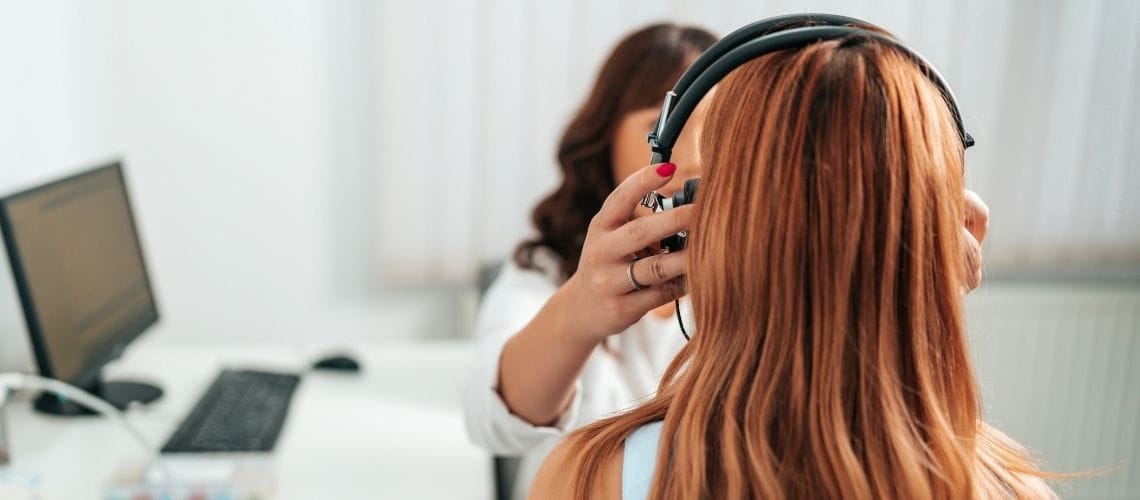
First, systems called objective tests are used, which measure the physiological responses given directly by the body without requiring any active participation, attention, or effort from the child. At this stage, special probes that measure the mechanical structure of the middle ear are used in babies younger than six months. Then, behavioral tests selected according to the child’s developmental age and attention span are performed. For example, “Play Audiometry” is an excellent tool for a child between two and a half and six years of age. The child is taken into a special soundproof room. The therapist teaches them a fun game; as soon as they hear a “beep” or “toot” sound through the headphones, they are asked to drop the colored cube in their hand into a large box or place a colored ring on a rod. Each time the child performs this action correctly, they are rewarded with a smile, applause, or a fun cartoon character appearing on the screen. In this way, exactly which high or low sounds the child can hear and at what intensity is determined with pinpoint accuracy.
What are the specific methods used in hearing tests?
The basic methods we use in clinics according to age group are as follows:
- Otoacoustic emission
- Auditory brainstem response
- Tympanometry
- Acoustic reflex measurement
- Behavioral observation audiometry
- Visual reinforcement audiometry
- Play audiometry
- Pure tone audiometry
- Speech audiometry
- Free field tests
How does the amplification process proceed when speech delay due to hearing loss is confirmed?
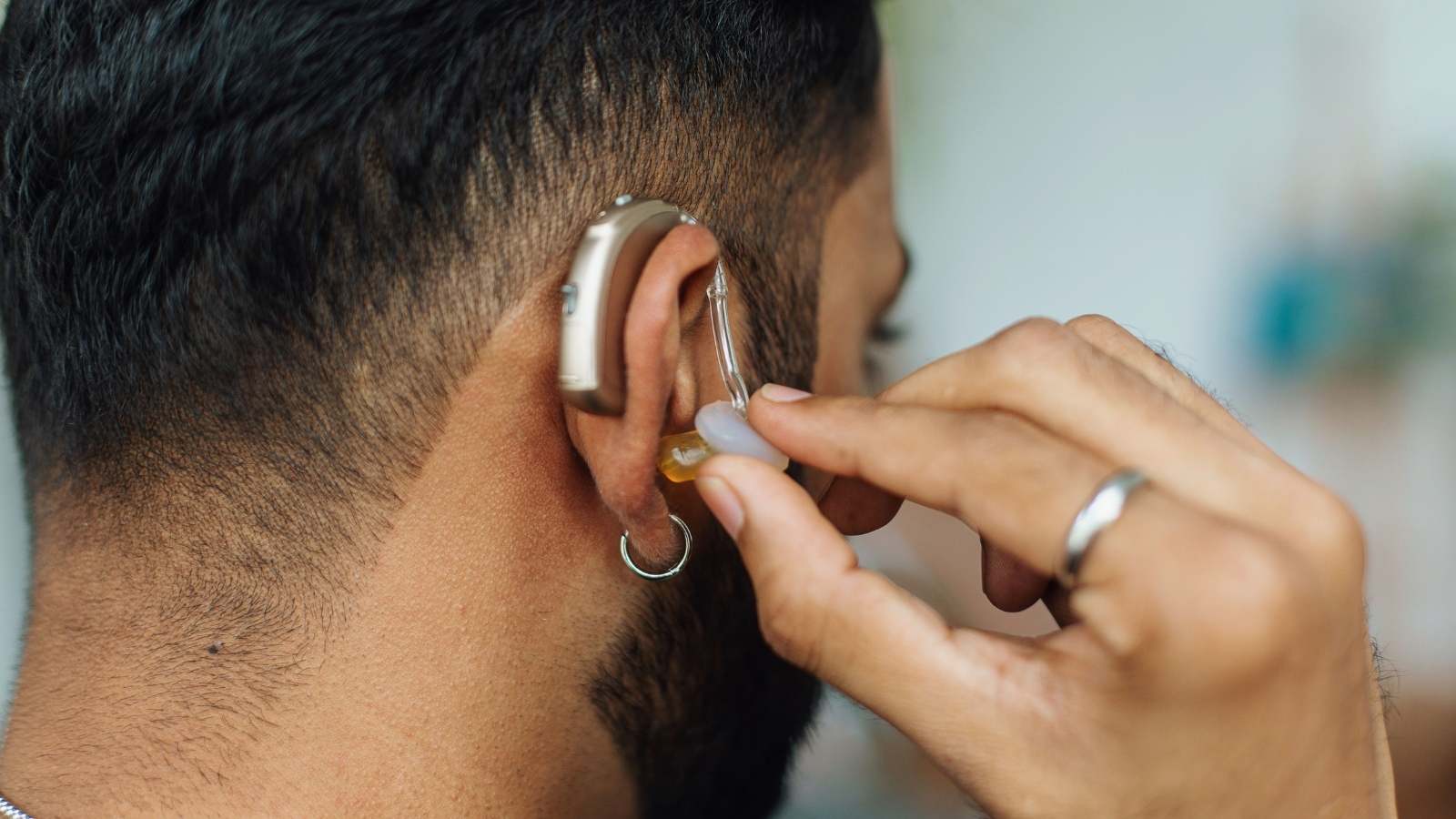
When all tests are completed and it is definitively documented that the child has a sensorineural (permanent) hearing loss, there is no longer even a single second to lose. Our focus is to immediately establish the technological bridge that will deliver sound to that tiny brain buried in silence. In mild to severe losses, special pediatric hearing aids with today’s advanced microchip technology, suitable for children’s active lives and resistant to falls, sweat, and moisture, are programmed.
However, if the hearing loss is very severe or profound, that is, if the hair cells in the inner ear are damaged enough that even if we mechanically amplify the sound they cannot transmit it to the brain, then Cochlear Implant (Bionic Ear) surgery, a miraculous solution, comes into play. This system consists of a processor placed under the skin behind the ear and an electrode array that extends into the inner ear by curling like a snail. The damaged mechanism is completely bypassed, and sounds coming from outside are converted into digital signals and transmitted directly to the auditory nerve. The candidacy process is subject to strict rules; it is very important that the child has received no benefit from a hearing aid for a certain period of time and is within certain age limits.
How is speech delay overcome after a hearing aid or implant is fitted, and how is rehabilitation performed?
Fitting the device to the ear or successfully completing the surgical operation is not the end of the process; on the contrary, it is only the starting line of a real marathon. The moment the device is fitted, the child does not suddenly begin to speak like a nightingale. That device only gives the child a raw “sound”; the brain needs intensive, tiring, and uninterrupted training to learn to “listen,” match the sounds it hears with words, and produce meaningful “speech”:
At this point, an extremely disciplined rehabilitation methodology called Auditory-Verbal Therapy is applied. The philosophy of this therapy is very clear: to enable the child to learn language using only the sense of hearing. Therefore, lip reading is definitely not allowed in the therapy room or at home, exaggerated hand and arm movements are not used, and sign language is not taught. The aim is for the child to focus their attention completely on the incoming sound. The real heroes of this process are the parents. The therapist is only a guide; they teach the mother and father how to turn ordinary life at home into a language school.
How is daily support provided at home for hearing and speech delay rehabilitation?
The basic supportive behaviors that the family should apply at home are as follows:
- Reading plenty of books
- Singing songs
- Narrating daily tasks aloud
- Making eye contact
- Providing a quiet environment
- Naming toys
- Asking questions
- Waiting patiently
- Being a correct pronunciation model
- Staying away from screens
- Playing listening games
- Repeating constantly
What can untreated speech delay and hearing loss lead to in the child’s future?
Speech delays and hidden hearing losses that are not noticed in time, are covered up, and are postponed by saying “they will speak anyway” cause a massive avalanche effect in the child’s life. This condition, which appears in the preschool period only as irritability, introversion, or incompatibility with playgroups, emerges with a much harsher face when primary school age begins. A child who has not properly established the basic building blocks of language and cannot distinguish sounds experiences tremendous difficulty while learning to read and write.
Because they cannot fully understand what is said, they quickly fall behind academically, their abstract thinking skills become blunted, and they cannot settle mathematical concepts in their mind. Because they cannot communicate, they become rapidly isolated from their social environment and friends, and their self-confidence suffers deep wounds. However, children who receive the correct diagnosis before the first six months of life, are fully fitted with devices, and are included in a strong rehabilitation process accompanied by a loving and conscious family can completely close that great gap between themselves and their normally hearing peers by the time they reach primary school desks. With a correct clinical approach, unwavering family support, and the right steps taken in a race against time, it is definitely possible for every child to reach their own potential and freely make their own voice heard in that colorful world of sounds.

Dr. Audiologist Emel Uğur was born in 1982 in Çanakkale. She specialized in Pediatric Audiology, Otologic Disorders, and Vestibular System Disorders, and served for 15 years at the Istanbul Training and Research Hospital. In 2015, she joined the Acıbadem Healthcare Group. She currently works as an Audiologist at the Acıbadem Altunizade Hospital and also serves as a faculty member and program director in the Acıbadem University Vocational School of Health Services Audiometry Program.

Location of our clinic in Istanbul, Turkey