

 Türkçe
Audiometry is a testing method that enables objective measurement of hearing ability. With this method, the level at which sounds at different frequencies are perceived is determined, and the degree of hearing loss is revealed. It is one of the fundamental diagnostic tools in the field of audiology.
Audiometry plays a critical role in treatment planning by identifying the type of hearing loss. Conductive, sensorineural, or mixed hearing loss can be differentiated. This distinction is important in determining surgical or medical treatment options.
During the audiometry test, pure tones are presented to the patient, and the lowest sound intensity the person can hear is recorded. These values are marked on an audiogram, and a hearing map is created. In this way, a detailed hearing profile is obtained.
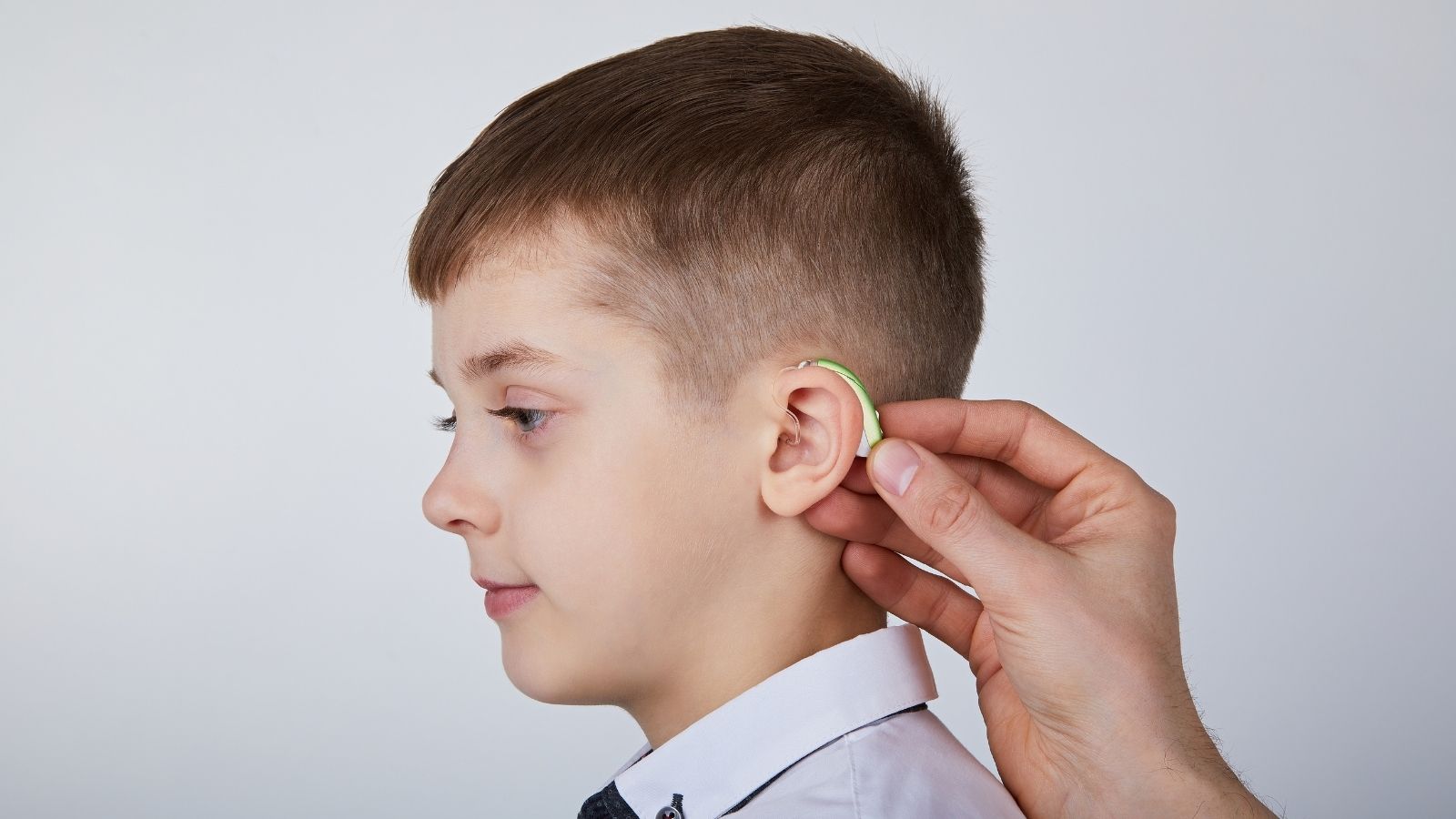
Audiometry can be applied not only to adults but also to children. Early detection of hearing problems in children is critically important for language development and communication skills. Regular check-ups provide developmental support.
What Is Audiometry?
Audiometry is the general name given to measurements and tests performed to evaluate hearing functions. One of the most commonly used methods is pure-tone audiometry, in which sounds of different frequencies and intensities are presented to determine the person’s hearing threshold. In addition, the degree and type of hearing loss can be identified through different tests such as speech audiometry and high-frequency audiometry. The results are displayed on a graph called an audiogram. Audiometry plays a fundamental role in diagnosing hearing problems and planning appropriate treatment.
What Is the Place of Audiometry in Hearing Science?
You can think of audiometry as a series of precise measurements that we use to understand how sharp and healthy your hearing ability is. It is at the heart of the science of hearing known as audiology. Our aim is to numerically determine how you hear sounds at different pitches, meaning how high or low they are, and at different intensities, meaning how loud they are. It does not consist of a single test; rather, it is made up of different tests that complement one another like pieces of a puzzle, and each test illuminates a different stop along the journey of sound through your ear.
The journey of sound begins in the outer ear, turns into a mechanical vibration through the tiny ossicles in the middle ear, and is converted into electrical signals in the inner ear (cochlea), reaching the brain through the auditory nerve. Our brain processes these signals and transforms them into meaningful sounds, such as a friend’s voice or your favorite song. Audiometric tests examine each stage of this pathway. In this way, if there is a problem, we can clearly understand whether its source is a simple blockage in the outer ear, a pressure problem in the middle ear, or the sensitive nerve cells in the inner ear. This detailed analysis is indispensable for making the correct diagnosis and finding the most effective personalized solution for you.
These measurements must be performed by a specially trained audiologist using technologically advanced devices that are calibrated regularly. This is because the results constitute a sensitive medical evaluation that may affect your entire life.
What Is the Main Purpose of Audiometry Tests and How Do They Contribute to Our Hearing Health?
The most fundamental purpose of audiometry tests is to determine your hearing level objectively. If hearing loss is present, they enable us to identify its degree, whether mild, moderate, or more advanced, and its type, meaning which part of the system the problem originates from. However, the mission of audiometry does not end there. The main goal is to take the most appropriate step for you based on these test results. This may sometimes involve simple monitoring, sometimes medical treatment, and often rehabilitation solutions such as hearing aids. The ultimate aim is to maximize your ability to communicate, prevent you from becoming disconnected from social life, and improve your quality of life.
Remember that hearing is not only perceiving sounds but also understanding them. Difficulty following conversations, especially in a noisy restaurant or at a family gathering, is one of the most common complaints associated with hearing loss. Audiometry also measures these functional difficulties and enables us to understand the impact of the loss on your daily life. In this way, if you need a hearing aid, it can be adjusted specifically for you not only to amplify sounds but also to improve speech clarity. In short, audiometry is more than a diagnostic tool for your hearing health; it is a guide that draws your roadmap toward a better quality of life.
For Whom Is an Audiometry Test Recommended and In Which Situations Should Audiometry Be Performed?
Audiometry is not limited to a specific age or complaint. In principle, anyone who has concerns about their hearing can undergo this test. However, this test is particularly important for certain situations and groups. The main situations and individuals for whom a hearing test is recommended are as follows:
- Those who feel that their hearing has decreased
- Those who have difficulty understanding speech
- Those with persistent tinnitus
- Those experiencing dizziness or balance problems
- Those who frequently experience ear infections
- Occupational groups exposed to high levels of noise (construction, factories, music, etc.)
- Those with noisy hobbies such as hunting or attending concerts
- Those with a family history of hereditary hearing loss
- Those using medications that may cause hearing loss
- Those with previously diagnosed ear problems, such as Meniere’s disease or otosclerosis
- Children with delayed speech and language development
- Children experiencing attention and learning difficulties at school
- All adults aged 40 and over (for routine screening)
- All newborn babies immediately after birth
What Should Be Considered When Preparing for an Audiometry Test?
An audiometry test generally does not require special preparation. It does not matter whether you are hungry or full when you arrive for your appointment. There are a few simple tips you can keep in mind to make the process more comfortable and efficient:
- Arrive a few minutes early for your appointment to become familiar with the environment.
- Try to remain as relaxed and still as possible during the test.
- Mention any medications you use or chronic conditions you have.
- Do not try to clean your ears yourself before the test.
- You can reduce children’s anxiety by explaining that the test is like a game.
- Since testing is easier when babies are naturally asleep, it is preferable for them to arrive at the appointment sleepy.
What Can Patients Expect Step by Step During an Audiometry Appointment?
An audiometry appointment is a carefully planned process aimed at understanding you and your hearing world. The steps awaiting you are generally as follows.
- Conversation and Medical History: First, we speak with you about your hearing complaints, general health condition, and lifestyle. This is the most important step for interpreting the test results correctly.
- Ear Examination (Otoscopy): Your ear canal and eardrum are examined with a lighted instrument called an otoscope to check whether there is any physical obstacle, such as wax or infection, that may prevent the tests from being performed. This procedure is completely painless.
- Tests in a Soundproof Booth: The tests are performed in a special booth insulated from external sounds. This is necessary so that even sounds at whisper level can be measured accurately.
- Listening to Sounds Through Headphones: Sounds at different tones are presented through headphones placed on your ears, and you are asked to press the button provided whenever you hear a sound.
- Repeating Words: Sometimes you are simply asked to repeat the words played to you. This measures your ability to understand sounds.
- Middle Ear Measurement: A soft probe placed in your ear measures the pressure in your middle ear and the mobility of your eardrum. This is also a simple procedure that takes only seconds.
- Explanation of Results: The results are usually available as soon as the tests are completed. All findings are explained to you in detail using your hearing graph, called an audiogram, and your questions are answered.
What Are the Main Types of Audiometry Tests and What Does Audiometry Evaluate Through These Tests?
A single test is not sufficient to evaluate a complex system such as hearing. Therefore, we use a combination of different tests according to your needs. The main audiometric test types most commonly performed are:
- Pure-Tone Audiometry
- Speech Audiometry
- Tympanometry
- Acoustic Reflex Test
- Otoacoustic Emissions (OAE)
- Auditory Brainstem Response (ABR)
Each of these tests completes a piece of the puzzle by evaluating a different part of the auditory pathway. For example, while pure-tone and speech tests require your active participation (behavioral tests), the others make completely objective measurements without expecting a response from you. This variety enables us to obtain reliable results, especially in babies, children, or adults who have difficulty communicating.
How Do Audiometry Applications in Children Differ According to Age?
Testing children’s hearing is a special art that requires the ability to communicate with them and attract their attention. Our testing methods are adapted according to the child’s age and development, and the aim is always to obtain accurate results by turning the process into a game.
There are basic approaches that we use for different age groups.
- 0-6 Months (Babies): During this period, objective tests such as OAE and ABR, which do not require the baby to respond, are generally performed while the baby is asleep. When we want to measure the response to live sound, an evaluation is performed using the BOA technique, one of the hearing test methods. This technique is based on examining behavioral responses such as dilation of the pupils, beginning to cry while quiet, or calming down while crying in response to sounds presented by the clinician while the baby is sitting on the mother’s lap.
- 6-30 Months (Young Children): Visual Reinforcement Audiometry (VRA) is used in babies who have gained head control, in which they are rewarded with an illuminated toy when they turn toward a sound.
- 30 Months – 4 Years (Preschool): The favorite method for this age group is Conditioned Play Audiometry (CPA), which includes tasks such as placing a block into a bucket when a sound is heard.
- 4 Years and Older (School Age): They can now follow simple instructions like adults, such as raising their hand or pressing a button when they hear a sound.
Why Is Audiometry Vital in Newborn Hearing Screening?
The Screening ABR test (newborn hearing screening), which is requested to be performed from the time a baby is born until the day of discharge, is a vital step that may affect the baby’s entire future. Hearing is the foundation of speech and language development. The brain’s auditory learning windows are fully open during the first years of life. If congenital hearing loss is not recognized, this window may close and leave permanent negative effects on the child’s language development, social skills, and academic success.
Simple, painless, and rapid audiometry tests such as T-ABR used in newborn hearing screening aim to eliminate this risk. The goal is to detect possible hearing loss at the earliest possible stage. Thanks to early diagnosis, if hearing loss or a condition involving risk factors is identified, the baby can be evaluated with advanced diagnostic tests, necessary interventions such as hearing aids can be provided during the critical period of 3-6 months, and special education programs can be started. This early beginning enables the child to close the developmental gap with normally hearing peers and reach their potential. Therefore, this screening performed after birth is one of the most valuable gifts that can be given to a child.
How Are Audiometry Results Evaluated: What Does the Audiogram Graph Tell Us?
The results of all audiometric tests are summarized in a graph called an audiogram. This graph is your personal hearing map and tells us a great deal about your hearing condition at a glance. When interpreting this graph, we look at the vertical axis showing sound intensity and the horizontal axis showing the pitch of sound, whether high or low.
The various symbols you see on the graph show how well each of your ears hears different sounds. Some basic symbols are as follows.
Red “O”: Right ear air-conduction hearing
Blue “X”: Left ear air-conduction hearing
“<” or “>”: Right and left ear bone-conduction hearing
By reading this map, we determine the degree of your hearing loss (mild, moderate, severe, profound) and its type (conductive, sensorineural, or mixed). For example, if the marks on the graph drop only in the high-frequency region, this usually indicates age-related or noise-induced hearing loss. If there is a general decline in both high- and low-frequency sounds, this suggests a different condition. This detailed analysis forms the basis for determining the most appropriate solution for you.
Which Types of Hearing Loss and Other Auditory Conditions Does Audiometry Help Diagnose?
Audiometry is a powerful tool with a very broad diagnostic range. It helps clarify many different conditions, from a simple ear infection to complex neurological disorders. The main conditions that we help diagnose or monitor through audiometric evaluation include:
- Conductive hearing loss
- Sensorineural (inner ear/nerve-type) hearing loss
- Mixed hearing loss
- Presbycusis (age-related hearing loss)
- Noise-induced hearing loss
- Sudden hearing loss
- Fluid accumulation in the middle ear (otitis media with effusion)
- Otosclerosis (calcification of the middle ear)
- Meniere’s disease
- Acoustic neuroma (auditory nerve tumor)
- Auditory neuropathy spectrum disorder
- Losses associated with tinnitus
- Auditory problems associated with dizziness
Which Treatment and Rehabilitation Methods Are Considered If Hearing Loss Is Detected as a Result of Audiometry?
Being diagnosed with hearing loss is not an end but a beginning toward hearing more clearly and connecting more strongly with life. The solution is fully personalized according to the characteristics of your hearing loss and your lifestyle.
The main treatment and rehabilitation methods that may be considered include:
- Medical or surgical intervention (by an ENT physician)
- Hearing aids
- Cochlear implants (bionic ear)
- Bone-conduction implant systems
- Auditory rehabilitation and counseling
- Communication strategy training
- Assistive listening devices (for telephones, televisions, etc.)
- Tinnitus management programs
What Is the Importance of Audiometry and Audiologists in Protecting and Improving Hearing Health?
As audiologists, our role extends far beyond performing tests with technological devices. By using audiometry as a tool, we accompany you on a journey to protect and improve your hearing health and enhance your quality of life. This process begins by emphasizing the critical importance of early diagnosis. Timely intervention can change everything, especially in children.
By making the correct diagnosis, we find the most appropriate and personalized solution for you. This may sometimes be a hearing aid and sometimes simple counseling. At the same time, we play an active role in preventing avoidable hearing loss by raising public awareness about issues such as the harmful effects of noise. We are aware of the social and psychological difficulties that hearing loss may cause, and we support you and your family throughout this process. This is because hearing well is a fundamental requirement for reaching your full potential in social, emotional, and professional life. If you have any concerns about your hearing, consulting an audiologist is one of the most important steps you can take toward a higher-quality life.
Frequently Asked Questions
Which hearing problems can be detected with an audiometry test?
Audiometry determines the degree and type of hearing loss and the frequencies at which it occurs. Conductive, sensorineural, or mixed hearing loss can be diagnosed through this test.
How is an audiometry test performed in children?
Audiometry in children is supported with games or visual stimuli. Objective tests are preferred in young children whose cooperation is limited. In this way, hearing loss can be detected at an early stage.
How does an audiometry test help with tinnitus?
In people experiencing tinnitus, audiometry can determine the presence and degree of hearing loss. This test is an important step in understanding the cause of tinnitus and planning appropriate treatment.
How are audiometry test results interpreted?
The audiogram obtained during the test shows hearing levels in decibels according to specific frequencies. The position of the curve reveals the severity and frequency distribution of hearing loss, and the treatment plan is made accordingly.
How long does an audiometry test take and is it difficult for the patient?
It generally takes 15–30 minutes and is painless. The patient is only asked to respond to the sounds they hear. It is a comfortable and safe test and does not affect daily life.
How does audiometry determine the need for a hearing aid?
The test shows the degree of hearing loss and the frequencies at which support is needed. These data guide the selection and adjustment of an appropriate hearing aid.
For which occupational groups should audiometry tests be performed regularly?
Audiometry should be performed regularly in occupational groups such as workers exposed to loud noise, musicians, and pilots. This is important for detecting hearing loss early.
Why is an audiometry test important in older adults?
Age-related presbycusis may not be noticed at an early stage. Audiometry helps detect hearing loss in older adults and improve quality of life and social communication.
Can a relationship between audiometry tests and balance disorders be established?
Although audiometry does not directly measure balance, the type of hearing loss provides clues about inner ear functions. In this way, the source of certain balance problems can be understood.
How often should an audiometry test be performed?
In people with hearing problems, it is performed according to the doctor’s recommendation. In healthy individuals who are not in a risk group, an audiometry test is recommended every 2–3 years after the age of 40.

Dr. Audiologist Emel Uğur was born in 1982 in Çanakkale. She specialized in Pediatric Audiology, Otologic Disorders, and Vestibular System Disorders, and served for 15 years at the Istanbul Training and Research Hospital. In 2015, she joined the Acıbadem Healthcare Group. She currently works as an Audiologist at the Acıbadem Altunizade Hospital and also serves as a faculty member and program director in the Acıbadem University Vocational School of Health Services Audiometry Program.










Location of our clinic in Istanbul, Turkey