

 Türkçe
Conductive hearing loss results from problems in transmitting sound waves from the outer or middle ear to the inner ear. Earwax, middle ear infections, eardrum perforation, or abnormalities of the ossicular chain may cause this condition. Hearing loss is generally temporary and treatable.
Symptoms of conductive hearing loss include hearing sounds as muffled, difficulty understanding speech, and difficulty hearing at low sound levels. This condition may negatively affect social communication. Audiometric and immittance tests are performed for diagnosis.
The treatment process is based on eliminating the underlying cause. Treating infections, surgically repairing the eardrum, or correcting ossicular chain problems may resolve the hearing loss. Hearing aids may also provide a supportive solution when necessary.
Protecting ear health is important for preventing conductive hearing loss. It is necessary to avoid excessive noise, maintain proper hygiene, and treat ear infections at an early stage. Regular check-ups reduce the risk of permanent hearing loss and support healthy hearing.
| Definition | A type of hearing loss caused by an obstruction or problem in the sound transmission pathway from the outer ear to the inner ear. |
| Causes | – Earwax blockage – Middle ear infections (otitis media), chronic otitis, and cholesteatoma – Eardrum perforation – Otosclerosis (hardening of the middle ear bones) and ossicular chain disorders – Congenital abnormalities of the ear canal. |
| Symptoms | – Sounds being heard at a lower volume – Hearing one’s own voice louder than normal (autophony) – Difficulty understanding speech. |
| Diagnostic Methods | – Pure-tone audiometry – Tympanometry – Bone and air conduction tests – Otoscopy (ear examination). |
| Treatment Methods | – Medical Treatment: Treatment of infections and removal of earwax. – Surgical Treatment: Eardrum repair (tympanoplasty), middle ear surgery (stapedectomy). – Use of hearing aids. |
| Who Is Affected? | It may occur in every age group; it is particularly more common in children due to infections. |
| Complications | If left untreated, chronic infection, permanent hearing loss, and social communication difficulties may occur. |
| Follow-up and Recommendations | Regular ENT examinations, attention to ear hygiene, and prompt treatment of infections. |
How Does Conductive Hearing Loss Differ from Other Types of Hearing Loss?
- Conductive hearing loss results from problems in the outer and middle ear. This condition may prevent sound waves from being transmitted efficiently to the inner ear. One of the most important characteristics of this type of hearing loss is that it can be treated. With available treatment methods, hearing ability may be partially or completely restored, and follow-up is important for these patients.
- Sensorineural hearing loss results from damage to the inner ear or auditory nerve and is generally permanent. It may occur due to many causes, including aging, exposure to noise, hearing loss caused by medication use, or tumors affecting the auditory nerve. In this type of hearing loss, in addition to problems with sound transmission, impairments in the ability to distinguish sounds are also observed.
- Mixed hearing loss is a type of hearing loss in which both the middle ear and inner ear are affected. Therefore, in addition to physical barriers to sound transmission, the neural processing of sound is also impaired.
What Are the Symptoms of Conductive Hearing Loss?
The symptoms of conductive hearing loss are not limited to changes in hearing ability. Perceiving sounds as muffled and distant is among the most common signs of this condition. This particularly makes it difficult to distinguish low-frequency sounds. Hearing loss is generally accompanied by a feeling of fullness in the ear, which may be described as a sensation of blockage or pressure. Ear pain or tenderness caused by conditions such as infection or injury is also a frequently observed symptom.
How Is Conductive Hearing Loss Diagnosed by Specialists?
The diagnosis of conductive hearing loss involves a meticulous process managed by audiologists and ear, nose, and throat specialists.
- Medical History: The first step is a careful review of the patient’s medical history. Important information is evaluated, including when and how the hearing loss began, how long it has continued, previous ear infections, whether the patient has received treatments requiring long-term medication use, and exposure to high noise levels in daily life.
- Physical Examination: The second stage is the physical examination performed by an ENT specialist. The examination conducted at this stage is an important part of accurate diagnosis and treatment. An otoscope is used to evaluate the ear canal and eardrum for any obstruction or signs of infection. Through these examinations, the physician attempts to identify potential causes of the hearing loss.
- Tuning Fork Tests: These tests help determine the type of hearing loss.
- Rinne Test: The tuning fork is first placed on the mastoid bone and then beside the ear canal, and the patient is asked how long they can hear the sound. The patient reports when the sound stops. This provides the clinician with information that helps determine the type of hearing loss.
- Weber Test: The tuning fork is placed in the middle of the forehead, and the patient is asked which ear hears the sound. This provides the clinician with important information regarding the type of hearing loss and the affected ear.
- Audiometric Tests: A two-stage evaluation consisting of pure-tone audiometry and speech audiometry is performed. Pure-tone audiometry determines the lowest sound levels the patient can hear across all frequencies. It provides important information regarding the degree, configuration, and type of hearing loss. Speech audiometry measures the patient’s ability to detect and distinguish speech.
- Immittance Evaluation: The patient’s middle ear findings are examined.
- Tympanometry: Pressure is applied to the middle ear to determine whether effusion is present and to measure the mobility of the eardrum.
- Acoustic Reflex Tests: These tests measure the reflexive response of the middle ear muscles to loud sounds.
- Imaging Studies: CT scanning or MRI is performed to check for structural abnormalities or tumors.
- Otoacoustic Emission Test: This test measures the activity of the outer hair cells in the inner ear. Although it is not the primary choice for conductive hearing loss, it is highly important for confirming and diagnosing hearing loss.
What Treatment Options Are Available for Conductive Hearing Loss?
Various treatment options are available for conductive hearing loss. The treatment applied depends on the condition causing the hearing loss. Therefore, there is no single method. For example, aspiration or earwax removal may be sufficient when cerumen is present, while chronic middle ear infections may require medical and surgical options, and otosclerosis may require surgical treatment.
The role of audiologists in conductive hearing loss is to monitor the effects of the existing hearing loss on development or quality of life, guide ear, nose, and throat physicians regarding amplification when necessary, and monitor and control the settings and effectiveness of the amplification method used.
Selecting and applying a hearing aid or implant according to the patient’s hearing needs is the responsibility of audiologists. Audiologists are the only professional group that receives advanced and specialized training in this field.
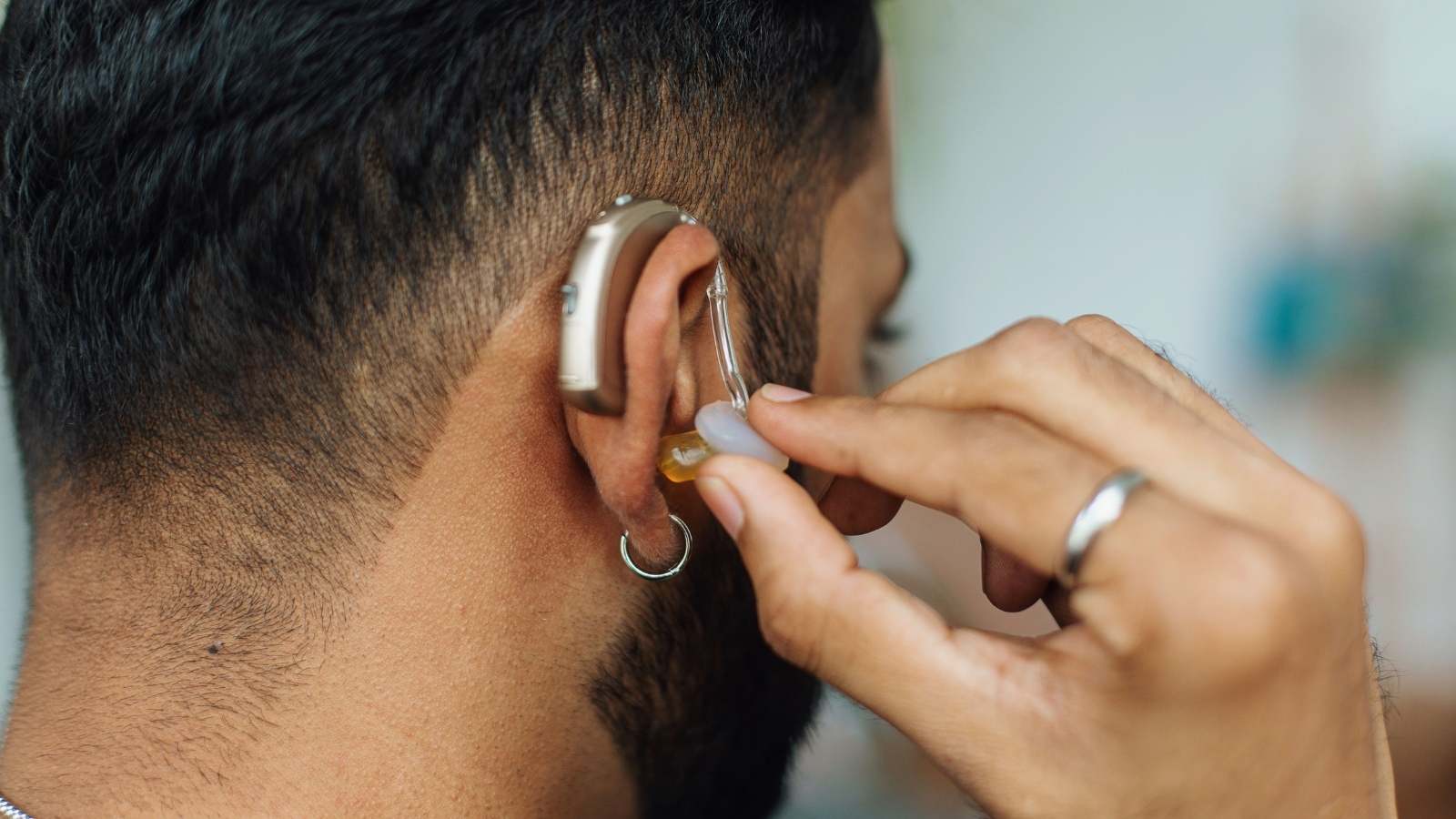
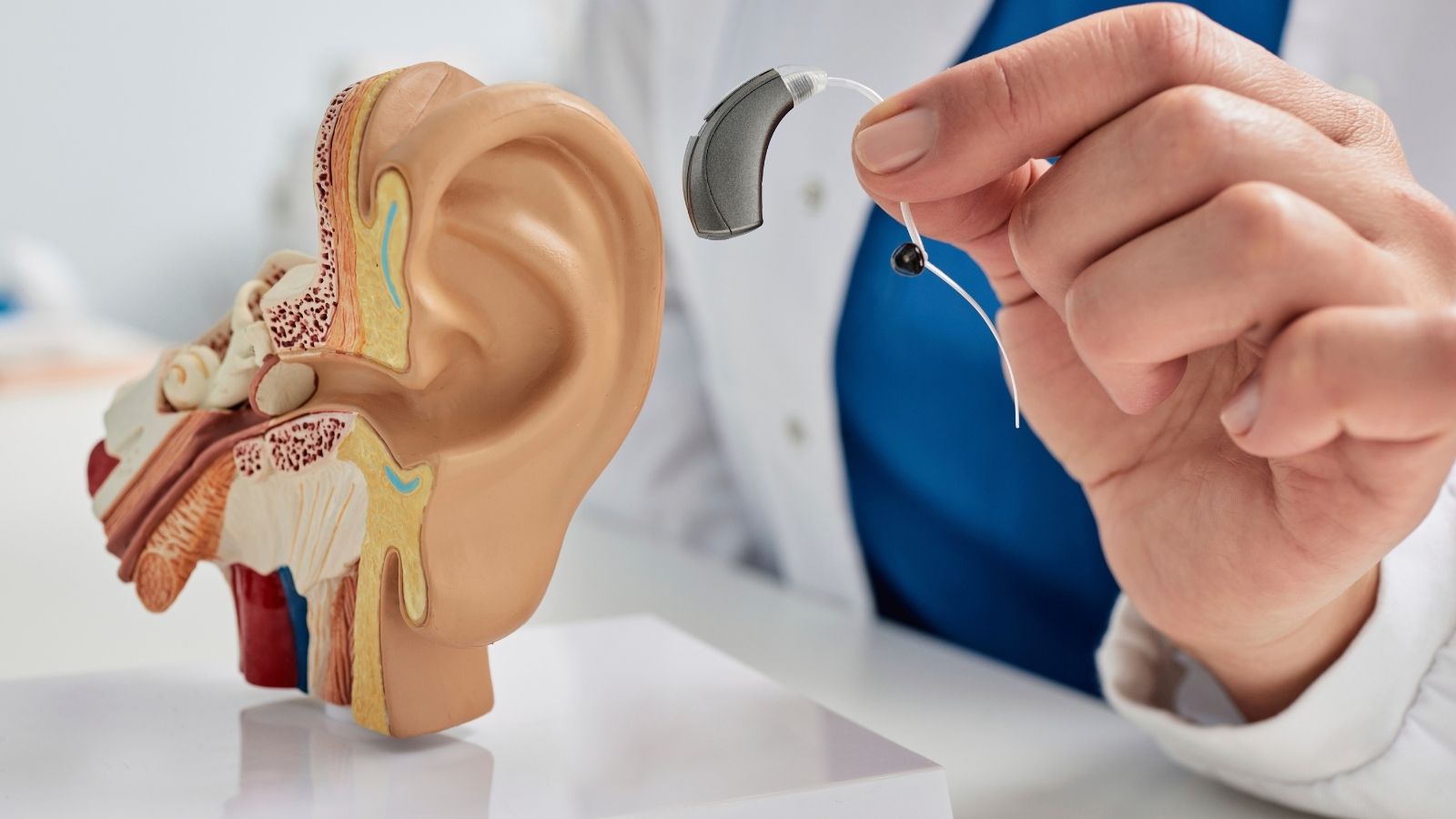
Conventional air-conduction or behind-the-ear hearing aids are not used for conductive pathologies. Bone-conduction devices should be used instead. Some of these devices are surgically implanted, while others are non-surgical systems attached to the skin or used with headbands.
Can Conductive Hearing Loss Be Prevented?
Conductive hearing loss may be prevented through various protective strategies. These strategies focus on reducing factors that affect the outer and middle ear. These protective measures for ear and hearing health contribute to preserving hearing ability in the long term.
- Effective management of colds and allergies helps control middle ear infections that may occur as a result.
- Foreign objects should be prevented from entering the ear canal, and the ears should be protected carefully. Cotton swabs should be avoided during ear cleaning because such tools may push wax deeper and cause problems. Proper ear hygiene is a fundamental method for preventing earwax accumulation.
- Protecting the ears from physical damage is particularly important for avoiding the harmful effects of loud sounds.
- Managing Eustachian tube dysfunction is important for preventing fluid accumulation in the middle ear. This generally requires addressing underlying causes such as allergies and sinus problems.
- Preventing chronic conditions is possible particularly through the early diagnosis and treatment of diseases such as otosclerosis. Regular hearing examinations are important for early diagnosis.
- Education and awareness-raising activities play an important role in increasing public awareness of ear health. Sharing accurate information about ear infections, ear trauma, and ear cleaning may be effective in preventing these health problems.
These protective measures provide an effective roadmap for preventing conductive hearing loss and help individuals protect their hearing health.
What Are the Long-Term Effects of Untreated Conductive Hearing Loss?
Untreated conductive hearing loss may have long-term effects on individuals. First, auditory processing abilities become impaired. The brain’s mechanism for processing auditory information is affected, making it difficult to distinguish sounds, particularly in noisy environments. As a result, deterioration is observed not only in speech perception but also in complex auditory tasks. This negatively affects the individual’s learning and communication abilities.
Effects on Auditory Processing:
- The brain may develop at a lower level of performance than expected due to inconsistent auditory input.
- Childhood development may be affected, causing difficulty processing sounds in noisy environments.
Second, a decline in cognitive functions is observed. The brain activates additional resources to compensate for hearing loss, and this process begins to neglect other important cognitive functions. Over time, this compensatory mechanism increases the risk of neurodegenerative diseases such as dementia.
Cognitive Decline:
- Hearing loss negatively affects memory and executive functions.
- The reallocation of brain resources increases the risk of dementia.
Third, social and emotional problems emerge. Communication difficulties may cause the individual to become isolated from their social environment and develop psychological disorders. This isolation is emotionally exhausting and may trigger conditions such as depression and anxiety.
Social and Emotional Consequences:
- Communication difficulties cause social isolation.
- Social withdrawal increases the risk of depression and anxiety.
Finally, the effects on physical health should not be overlooked. Hearing loss may cause balance problems and an increased risk of falling. It may also trigger cardiovascular stress and increase the risk of heart disease.
Physical Health Risks:
- Balance disorders lead to an increased risk of falling.
- Hearing loss may increase cardiovascular stress.
These effects apply to both children and adults and demonstrate that untreated hearing loss may have serious consequences.
Frequently Asked Questions

Dr. Audiologist Emel Uğur was born in 1982 in Çanakkale. She specialized in Pediatric Audiology, Otologic Disorders, and Vestibular System Disorders, and served for 15 years at the Istanbul Training and Research Hospital. In 2015, she joined the Acıbadem Healthcare Group. She currently works as an Audiologist at the Acıbadem Altunizade Hospital and also serves as a faculty member and program director in the Acıbadem University Vocational School of Health Services Audiometry Program.









Location of our clinic in Istanbul, Turkey