

 Türkçe
Speech audiometry is a method included among hearing tests that measures a person’s ability to perceive speech sounds. It plays an important role in evaluating the impact of hearing loss on daily communication.
During the test, specific sounds, words, or sentences are presented to the patient. Hearing capacity is determined by evaluating the patient’s rate of correct repetition. In this way, the need for a hearing aid can also be identified.
In addition to pure-tone audiometry, speech audiometry measures a person’s ability to understand speech. It provides more realistic results, particularly when evaluating hearing performance in noisy environments.
Speech audiometry results are guiding in hearing rehabilitation. The data obtained from this test are used in selecting an appropriate hearing aid and planning therapies.
What Exactly Does Speech Audiometry Mean?
Speech audiometry is an important testing method in hearing assessment. When we look at the origin of the word, “audiometry” generally means “hearing measurement.” Speech audiometry involves performing this measurement based on speech sounds rather than only “beep” sounds or pure tones. More clearly, it is a test that shows not how well our ears hear sounds, but how well we understand and distinguish the sounds we hear.
In traditional pure-tone audiometry, frequency-specific sounds such as “beep” sounds at different frequencies and intensity levels are presented to the person through headphones. Pure-tone audiometry is performed to determine the levels of our hearing thresholds. However, in real life, we do not hear only “beep” sounds; we perceive speech signals with a more complex structure, recognize words, and understand sentences. Therefore, speech audiometry provides a testing environment that is closer to real life. Just as we understand not only letters when reading a book, but also the words formed by those letters and the sentences formed by those words, speech audiometry evaluates our “ability to understand.”
We can compare daily life to driving a car. If pure-tone audiometry measures the vehicle’s basic components, engine, and capabilities, speech audiometry shows how successful we are when maneuvering in traffic, changing lanes, and following the rules. This is because we cannot fully understand how a vehicle will behave in traffic simply by looking at its engine power. Speech audiometry provides highly important data about how clearly our ears and brain perceive and interpret speech.
Why Is Measuring Speech Sounds So Important?
Speech is the most fundamental form of communication between people. Whether we are understanding what another person says during a conversation, speaking on the phone, or attending a meeting at work, the same ability is involved: distinguishing spoken words and interpreting them as a whole. The most common complaint among individuals with hearing loss is not that they cannot hear speech sounds, but that they have difficulty distinguishing speech. They sometimes describe this as, “It sounds as though people are mumbling, the words are unclear, or I can hear but I cannot understand.”
In pure-tone audiometry, hearing thresholds are measured at specific frequencies, for example from 125 Hz to 8,000 Hz. This reveals the sound level at which the ear is able to hear. However, in real life, speech consists of many different frequencies coming together simultaneously in a complex way. Words reach our ears across very different spectrums depending on vowels, consonants, syllable structure, stress, and even the speed of speech. It is difficult to capture all this complexity with a pure-tone test. For this reason, speech audiometry reflects hearing difficulties encountered in daily life more realistically.
Sometimes patients report experiencing serious difficulties in conversational environments even though they obtain relatively good results in pure-tone audiometry. This reflects the difference between a quantitative measurement of hearing and its qualitative reality. This is exactly where the value of speech audiometry becomes clear: it is an essential test both for understanding functional hearing ability in daily life and for determining how much benefit is provided by solutions such as hearing aids or cochlear implants.
How Is Speech Audiometry Performed?
Speech audiometry basically measures two main pieces of data: the Speech Reception Threshold (SRT) and the Word Recognition Score (WRS). Do not be intimidated by the technical names. Each one helps us understand the level at which the ear can detect a speech signal and how accurately it can distinguish it.
- Speech Reception Threshold (SRT):
In this section, three-syllable words with equal stress are generally used, such as “kapalı” and “gazete” in Turkish. These words are presented to the patient at different intensity levels. The level, measured in dB, at which the patient can correctly repeat half of the word group, meaning 50%, is recorded as the SRT. As a simple analogy, imagine that someone in front of you is gradually raising their voice while you keep your eyes closed, and you indicate the sound intensity at which you begin to understand the words correctly.
- Word Recognition Score (WRS/SD):
In this test, words are presented at a comfortable volume for the patient, generally 30–40 dB above the SRT. This time, the aim is to measure how accurately the patient can distinguish the words. Do they understand 100%, 90%, or 60%? In some clinics, short sentences may also be used alongside syllables or words. The basic idea is to understand more clearly the problem of a person who says, “I hear the words, but I do not understand them.”
The conditions during the test are very important. A soundproof booth, a calibrated sound system, an experienced examiner, and even the patient’s level of motivation before the test may affect the results. Therefore, performing the hearing test and speech audiometry using correct application protocols and appropriate test materials plays a key role in the reliability of the results.
What Are the Differences Between Pure-Tone Audiometry and Speech Audiometry?
Pure-tone audiometry (PTA) is often the first test used. This is because it is ideal for quickly identifying hearing thresholds at different frequencies, such as 250 Hz, 500 Hz, 1,000 Hz, 2,000 Hz, and 4,000 Hz. The beep sound heard during this test is a pure frequency that we are not commonly exposed to in daily life. The PTA result tells us about the “presence” and “degree” of hearing loss and how we are affected by it.
Speech audiometry focuses more on the “content” of the sounds we hear. It may be compared to exploring the life beneath the waves rather than simply looking at the surface of the ocean. These two tests complement each other. When pure-tone audiometry and speech audiometry are used together, they allow us to understand the auditory difficulties an individual encounters in daily life. When eating in a restaurant, walking on a crowded street, or attending a meeting at work, speech perception becomes extremely important. Simply hearing sounds is not enough; we also want to understand what is being said. It is similar to the relationship between watching a film trailer and watching the entire film. Pure-tone audiometry provides a general idea of hearing performance like a trailer, while speech audiometry allows us to examine hearing function in greater depth like the full film.
How Do These Test Results Affect Daily Life?
The result of speech audiometry provides direct information about how clearly a patient can understand speech. If low scores are obtained during the test, the person may miss what is being said in crowded environments, frequently ask family members to repeat themselves, or experience serious difficulty during telephone conversations. This is because speech discrimination performance is an ability we constantly need in real life.
Patients sometimes say, “I actually do not hear too badly, but I become completely lost in crowds.” This situation may be explained particularly by a low speech discrimination score. In other words, it may not be enough for the ear to hear certain tones; it must also distinguish the content of speech. Individuals with low speech discrimination scores can generally communicate reasonably well in quiet environments, but experience serious difficulty once background noise is introduced. This is why speech audiometry is one of the tests that best predicts hearing difficulties that arise in daily life.
Speech audiometry results also help predict how much benefit may be obtained from technological solutions such as hearing aids or cochlear implants. For example, if a person’s speech discrimination is very poor, the hearing aid may need not only to amplify sound but also to apply certain digital processing strategies. Therefore, the results guide both diagnosis and treatment planning.
In Which Situations Do Speech Audiometry Results Provide Clues?
Speech audiometry also plays a critical role in distinguishing different types of disorders within the hearing system. For example, it can help clarify the difference between conductive hearing loss, caused by a problem in the outer or middle ear, and sensorineural hearing loss, originating from the inner ear or auditory nerve. Although the primary distinction is made using pure-tone audiometry, tympanometry, and other tests, speech audiometry provides additional information that clarifies the overall picture.
- Conductive hearing loss: Increased thresholds are observed in pure-tone audiometry, but speech discrimination scores are generally at better levels. This is because once the speech signal reaches the inner ear, it is usually not distorted; the problem is only in the transmission of sound.
- Sensorineural hearing loss: Increasing sound intensity alone does not always guarantee better speech understanding. This is because if there is a problem in the inner ear hair cells or auditory nerve, the speech signal itself is directly distorted. This results in lower speech discrimination scores.
- Mixed hearing loss: In cases where both conductive and sensorineural components are present, speech discrimination scores produce a more complex picture.
Speech audiometry may also provide clues about conditions such as central auditory processing disorder (CAPD). In individuals who have normal pure-tone thresholds but experience difficulty understanding speech, particularly in noisy environments, central processing problems may be considered. Although comprehensive testing is required for a definitive diagnosis, speech audiometry provides a valuable initial perspective.
How Is Speech Understanding Evaluated in Noisy Environments?
We all sometimes have difficulty understanding conversations because of surrounding noise when sitting in a crowded café or attending a large family gathering. However, this problem may reach much more serious levels in people with hearing loss. Therefore, speech audiometry can be used to measure not only speech understanding in quiet environments but also performance in noisy environments.
There are several specialized tests. For example, protocols such as the Matrix Test, Speech-in-Noise (SIN) tests, QuickSIN, or HINT (Hearing in Noise Test) present sentences or words to the person together with background noise at different levels. The level of noise at which speech can still be understood is then evaluated. In this way, more realistic information is obtained about hearing ability in everyday environments such as restaurants, streets, and offices.
This is one of the most common complaints among individuals with hearing loss: “I can manage somewhat in quiet places, but in noisy environments I feel almost completely deaf.” Test results also shed light on how hearing aids or cochlear implants should be adjusted. For example, technologies that reduce background noise or emphasize sounds coming from specific directions become more important for patients with low speech-understanding scores in noise.
What Is the Relationship Between Speech Audiometry and Hearing Aid Settings?
Hearing aids are devices that require individualized adjustments. Everyone’s ear structure, type of hearing loss, and daily living needs are different. Some people mainly watch television and follow the news, while others attend frequent meetings or make numerous telephone calls. Therefore, expectations from a hearing aid will also differ.
Speech audiometry results provide details about the degree of loss at different frequencies and how well speech signals can be understood. Based on this information, the gain settings of the hearing aid, noise reduction algorithms, directional microphone features, and other digital processors are optimized. For example, if it is found that the person has difficulty distinguishing consonants such as “k” or “t,” emphasizing the relevant frequency ranges may be beneficial. For patients with low speech-understanding scores in noise, more advanced noise reduction technologies may be preferred.
This process can be compared to determining an eyeglass prescription. When purchasing glasses, an eye doctor identifies the degree of myopia, hyperopia, or astigmatism and recommends the appropriate lenses. Similarly, a hearing aid is “prescribed” based on data provided by tests such as speech audiometry. The goal is to help the person perceive speech as effectively as possible.
Which Factors Affect Speech Audiometry Results?
As with every test, speech audiometry may be affected by various factors. Several points must be considered to obtain accurate results:
- Test Environment:
The test should ideally be performed in a soundproof booth because sounds from the external environment may interfere with the test data. The better the acoustic arrangement of the booth, the more reliable the results will be.
- Test Materials Used:
Factors such as the linguistic characteristics of the words, their suitability for the patient’s native language, and their syllable structure are important. If the test material is not suitable for the patient’s language skills or cultural background, the rate of understanding may inevitably decrease.
- Patient Motivation and Attention:
If we think of it as an examination, a person who becomes distracted or tired halfway through the test may perform poorly. Therefore, it is important to communicate well with the patient, provide suitable rest conditions, and give clear instructions.
- Equipment and Calibration:
Ensuring that the audiometric equipment is periodically calibrated and that the headphones or speakers function correctly directly affects the results.
- Speech Rate and Stress:
The pronunciation of words and the examiner’s voice quality, speed, and stress may also influence the results. For this reason, most clinics prefer to use standardized, recorded speech materials.
All these factors are important for preventing concerns such as, “Speech audiometry was performed, but I do not trust the results.” When applied carefully and under controlled conditions using standardized protocols, speech audiometry provides highly valuable information.
How Is Speech Audiometry Performed in Children?
Children, particularly at a young age, may have difficulty participating in standardized tests designed for adults. Sitting quietly in a booth for a long time or repeating complex words may sometimes be very tiring or boring for children. In such cases, child-friendly test materials and methods specifically designed for speech audiometry are used.
- Play-based approaches: When a word is presented to the child, they may be asked to respond by pointing to a picture or selecting a toy. This makes the test more enjoyable and interactive.
- Simple word lists: Simpler, commonly used words appropriate for the child’s age and level of language development are selected.
- Short-duration tests: Because a child’s attention span may be more limited, it can be helpful to perform the test in shorter sections.
Speech audiometry in children is critically important for the early diagnosis of hearing loss and for supporting language and speech development. For example, speech audiometry may be performed at regular intervals to monitor the effectiveness of hearing aid or cochlear implant settings, allowing progress in the child’s language development to be followed with objective data.
What Is the Relationship Between Speech Audiometry, the Brain, and the Auditory Nerve?
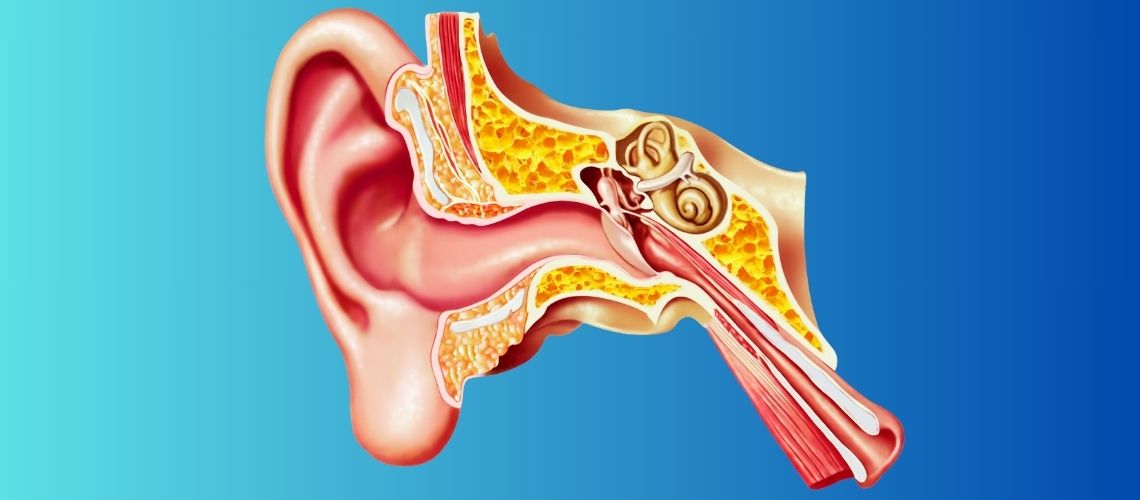
The hearing process does not consist only of the mechanical transmission of sounds entering the ear canal. The vibration of the eardrum, movement of the ossicles, fluid waves within the inner ear, and finally the signals carried to the brain through the auditory nerve all occur in harmony, like an orchestra. The brain then interprets these auditory signals, recognizes speech, and decodes words in our minds through the language centers.
Speech audiometry, particularly the speech discrimination test (SDS), reveals how effectively this entire chain functions. If there is damage in the inner ear, or cochlea, or in the auditory nerve, simply hearing the sound is not enough; the person experiences difficulty accurately decoding speech and converting it into recognizable words. This is where low SDS scores are observed.
For example, in conditions such as acoustic neuroma, a benign tumor of the auditory nerve, pure-tone audiometry alone may not provide sufficient clues. However, speech audiometry may increase suspicion of such a condition because of a marked reduction in the speech discrimination score. Imaging methods such as magnetic resonance imaging (MRI) are, of course, required for a definitive diagnosis. Nevertheless, speech audiometry may often serve as an early warning tool in these cases.
How Are Speech Audiometry Results Evaluated?
Speech audiometry results are generally presented to the patient or other healthcare professionals in the form of a report. The report may include the following headings:
- SRT (Speech Reception Threshold): The intensity level of the words, measured in decibels (dB), at which the patient can repeat 50% correctly.
- SDS (Speech Discrimination Score): The percentage of words presented to the patient that are repeated correctly.
- SNR (Signal-to-Noise Ratio) Values: If testing in noisy environments has been performed, the signal-to-noise ratios at which the patient can distinguish speech.
For example, you may encounter a statement such as: “The patient obtained an SRT at 35 dB; an SDS of 80% was recorded for words presented at 40 dB SL, meaning 40 dB above the SRT.” This indicates that the patient was able to understand speech at an intensity of 35 dB and correctly understood 80% of the words presented 40 dB above the speech threshold.
From a clinical perspective, low speech discrimination scores may indicate sensorineural hearing loss. High scores may indicate good brain-auditory nerve function even in the presence of conductive hearing loss. However, this test is not sufficient on its own; it must always be interpreted together with pure-tone audiometry, tympanometry, and sometimes additional tests such as Otoacoustic Emissions and/or ABR (Auditory Brainstem Response).
What Is the Contribution of Speech Audiometry to the Rehabilitation Process?
Hearing rehabilitation does not consist only of wearing a hearing aid. The process includes many steps, such as rebuilding communication skills, adapting to a hearing aid or cochlear implant, and receiving speech therapy when necessary. Speech audiometry provides guidance at the beginning of rehabilitation and throughout follow-up.
- Initial Assessment: It identifies the person’s hearing level and speech-understanding ability and reveals the areas in which greater support is needed.
- Device Selection and Adjustment: When a hearing aid is adjusted, it provides clues about the intensity levels at which speech sounds should be emphasized.
- Monitoring Progress: Changes in speech discrimination scores can be monitored during the rehabilitation process. Improvement indicates that progress is being made in the right direction. Otherwise, the treatment plan is revised.
These stages are similar to an athlete periodically undergoing performance testing during training and having the training program updated according to the results. The goal is always to strengthen communication; speech audiometry is a valuable guide that shows where we are and where we need to go.
Is Speech Audiometry Performed Only in Adults?
Absolutely not. Speech audiometry can be performed on anyone, from children to older adults, who has a hearing problem or is at risk of developing one. Specialized test materials and methods are available for different age groups. For example, more entertaining and shorter word lists are used for children, while longer and more complex word lists or sentences may be preferred for adults.
In older adults, cognitive changes as well as hearing loss may affect the ability to understand speech. Speech audiometry may help distinguish how much of this change results from hearing loss and how much results from cognitive factors. It is also a frequently used testing method for evaluating hearing aid adaptation in older individuals.
How Are Technological Developments Transforming Speech Audiometry?
Today, with advances in artificial intelligence and digital technologies, speech audiometry is becoming smarter and faster. For example, test software integrated with automatic speech recognition (ASR) systems is being developed, and the words spoken by the patient are matched by these systems to minimize human error. In addition, online testing platforms make it possible to perform speech tests even in the home environment within certain standardized conditions.
Innovations such as mobile phone applications, tablet-based testing software, and digital headphones may provide great convenience, particularly for patients facing transportation or geographical barriers. However, comprehensive clinical assessment and specialist interpretation remain essential. While technology provides more practical and accessible testing opportunities, specialist support is always required for analyzing the results.
Speech Audiometry and Cochlear Implant Assessment
A cochlear implant is a device placed in the inner ear and goes beyond hearing aids by aiming to bypass the function of damaged hair cells in the inner ear. Before deciding on this operation, the patient’s speech perception performance is extremely important. This is because the purpose of a cochlear implant is to provide clearer hearing and improved speech understanding, particularly for individuals with severe hearing loss.
Speech audiometry is used to answer the following questions when selecting implant candidates:
- How much benefit does the patient receive from a hearing aid?
- What is the level of the speech discrimination score?
- How much improvement in speech performance can be expected after a possible implant?
Regular speech audiometry tests are also performed after implantation. These tests provide an objective indicator of progress in speech-understanding ability associated with the implant. If the expected level of improvement is not achieved, changes in settings or additional rehabilitation methods may be considered.
Does Speech Audiometry Differ According to Language and Culture?
Yes, it does. Every language has its own sound structure, syllable structure, and word-frequency distribution. Turkish contains many vowels, syllable roots, and suffixes, while English includes different stress patterns and sound combinations. For this reason, speech audiometry test materials must be specifically prepared for the language being tested.
For example, spondee lists developed for Turkish, consisting of two-syllable words with equal stress, differ from spondee lists in English. Similarly, the monosyllabic words used in speech discrimination tests vary according to language. If a person is tested in a language other than their native language, scores may be low because of the language barrier and may not accurately reflect hearing loss.
Therefore, speech audiometry requires standardized protocols in every country and every language. Developing culturally neutral word lists adapted for different languages improves the reliability of test results.
Should We Be Afraid of Hearing Tests?
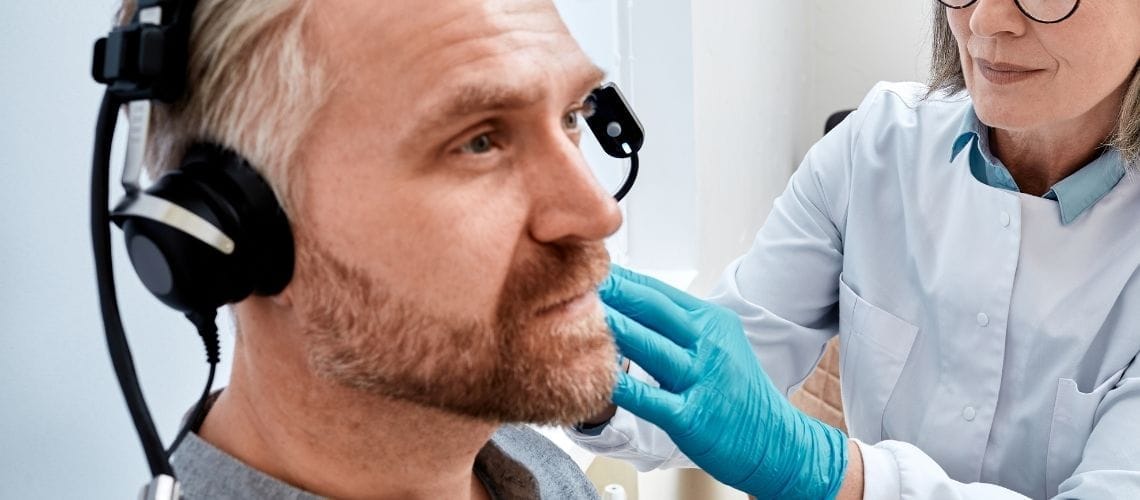
Tests are among the main reasons many people hesitate to visit a hospital or clinic. Concerns such as, “Will it hurt?” or “Will it be tiring?” may arise. Speech audiometry is generally a painless and comfortable process. The person sits in a booth, listens to words through headphones or speakers, and repeats them. No physical intervention is performed, and no needle or similar instrument is used.
The duration of the test may vary from person to person, but it generally lasts around 10–20 minutes. You can think of it as an oral examination, but there is little reason to feel stressed. Correct and incorrect responses are evaluated by the physician or audiologist to understand your hearing health. Giving an incorrect answer is not a “failure” on your part; on the contrary, it contributes to a more accurate diagnosis of your hearing condition.
In summary, there is no need to fear this test. On the contrary, speech audiometry is an extremely useful tool for determining medical approaches that may improve your hearing ability and quality of communication.
If Speech Audiometry Results Are Normal, Is Everything Fine?
A person’s speech audiometry results may fall within normal limits, but this does not always mean that they hear perfectly in every respect. In some cases, individuals with central auditory processing disorder (CAPD) may have normal pure-tone results and even normal speech audiometry results. However, they may experience difficulty in noisy environments or with rapid speech. Nevertheless, speech audiometry is an important step in identifying such conditions. If there is suspicion, more advanced tests or consultations may be performed.
On the other hand, it would not be incorrect to say that a person with good speech audiometry results is largely comfortable in terms of hearing. In other words, a result of “normal speech audiometry” often indicates that the person’s general hearing quality is good in daily life. However, if there is still any concern or the patient continues to experience communication difficulties, additional tests are performed to investigate the problem in greater depth.
How Often Should Speech Audiometry Be Performed?
For people with hearing loss or suspected hearing loss, a one-time test may not always be sufficient. Just as we protect our dental health by attending regular dental checkups, periodic evaluations may also be recommended for hearing health. In particular, patients who use hearing aids or cochlear implants should undergo speech audiometry at intervals so that device settings can be updated and changes in hearing performance can be monitored.
Regular follow-up is necessary not only to monitor the degree of hearing loss but also to determine how effective rehabilitation has been. As new technologies, new test materials, and even a person’s environmental conditions change, hearing needs may also change. Therefore, even when someone says, “Everything seems fine,” periodic checkups may still be beneficial.
How Does Speech Audiometry Improve Quality of Life?
Because speech audiometry focuses not only on the ear’s ability to hear sound but also on its ability to understand speech, it directly affects the heart of daily life. Communicating, participating in social relationships, taking an active role in professional meetings, and hearing the voices of loved ones clearly can all be improved through the data obtained from this test.
- It supports diagnosis by providing an individualized communication profile.
- It helps personalize the settings of solutions such as hearing aids or cochlear implants.
- It makes it possible to monitor language and speech development in children.
- It objectively evaluates speech-understanding ability in noisy environments.
- It provides clues about specific conditions such as central auditory processing disorder or acoustic neuroma.
In short, speech audiometry is a versatile tool that measures the quality of hearing, improves communication function, and supports participation in social and professional life. If understanding is as important as hearing in daily life, and it is, speech audiometry addresses this need at its very core.
Quality of life is often hidden in small details. Not only hearing, but also understanding the subtle meanings of words, detecting excitement in the tone of a loved one’s voice, and hearing a joke made during a toast at a group meal are all made possible by the delicate balance between hearing and speech perception. Speech audiometry is one of the most important steps in protecting, improving, and rehabilitating this balance when necessary.
It should not be forgotten that communication is one of the strongest bonds that makes us human. Speech audiometry is only one of the medical practices that strengthens this bond, but perhaps one of the most valuable. Hearing sounds, distinguishing words, and understanding them are the means through which we express our inner world and connect with others on common ground. This path can become much clearer through an accurate speech audiometry assessment.
Frequently Asked Questions
For what purpose is speech audiometry performed?
Speech audiometry determines the effect of hearing loss on speech understanding. By measuring a person’s word recognition and discrimination abilities, it identifies the need for a hearing aid or treatment.
What is the difference between speech audiometry and pure-tone audiometry?
Pure-tone audiometry determines hearing thresholds, while speech audiometry evaluates the ability to understand auditory information. Therefore, it provides more meaningful results, particularly when measuring communication ability.
Which measurements are performed during a speech audiometry test?
The Speech Reception Threshold (SRT) and Speech Discrimination Score (SDT) are measured during this test. In this way, it becomes clear how much hearing loss affects not only hearing sounds but also understanding them.
How is speech audiometry performed in children?
Age-appropriate word lists or picture-based tests are used in children. This method makes it possible to identify the effect of hearing loss on communication at an early age and provide early intervention.
Why is speech audiometry important for patients with tinnitus?
Speech-understanding ability may decrease in people with tinnitus. Speech audiometry measures this effect, contributes to diagnosis, and provides guidance when selecting a hearing aid.
How are speech audiometry results used in hearing aid selection?
Test results show the frequencies and sound levels at which the person understands speech more effectively. This information is used to adjust the hearing aid and select the appropriate model.
What advantages does speech audiometry provide for older adults?
The ability to distinguish speech decreases with age. Speech audiometry measures the impact of hearing loss on daily communication in older individuals and contributes to the rehabilitation plan.
Is speech audiometry effective in determining the type of hearing loss?
Yes, it is particularly helpful in distinguishing sensorineural hearing loss from conductive hearing loss because speech discrimination ability is affected at different levels in different types of hearing loss.
In which occupational groups should speech audiometry be performed regularly?
Speech audiometry should be performed regularly for teachers, call center employees, and people in occupations that require frequent communication. This test reveals hearing problems at an early stage.
Do incorrect responses affect the results of a speech audiometry test?
Yes, a lack of attention or fatigue may lead to incorrect responses. Therefore, the test should be performed under appropriate conditions and repeated when necessary to ensure reliability.

Dr. Audiologist Emel Uğur was born in 1982 in Çanakkale. She specialized in Pediatric Audiology, Otologic Disorders, and Vestibular System Disorders, and served for 15 years at the Istanbul Training and Research Hospital. In 2015, she joined the Acıbadem Healthcare Group. She currently works as an Audiologist at the Acıbadem Altunizade Hospital and also serves as a faculty member and program director in the Acıbadem University Vocational School of Health Services Audiometry Program.






Location of our clinic in Istanbul, Turkey