

 Türkçe
Pure Tone Average is a method used to determine the degree of hearing loss by evaluating the values obtained from hearing tests. This measurement indicates the lowest sound intensity an individual can hear and serves as an important criterion in diagnosis.
Pure Tone Average is generally calculated by averaging the hearing thresholds at the frequencies of 500, 1000, and 2000 Hz. These values directly reflect the ability to hear speech sounds. Thus, the impact of hearing loss on daily life can be determined.
Degrees of hearing loss are classified according to the Pure Tone Average. Hearing below 25 dB is considered normal, while increasing values indicate mild, moderate, severe, and profound hearing loss. This classification guides the treatment process.
Accurate calculation of the Pure Tone Average is critically important for selecting the appropriate hearing aid and planning rehabilitation. Therefore, the test should be performed by expert audiologists to ensure accurate diagnosis and treatment.
What Is Pure Tone Average?
Pure Tone Average (PTA) is the arithmetic mean of a person’s hearing thresholds at the three primary frequencies closest to speech frequencies (typically 500, 1000, and 2000 Hz) obtained during audiometric hearing tests. This value is used to determine an individual’s ability to perceive everyday speech. It is an important parameter for classifying the degree of hearing loss and evaluating the need for hearing aids.
What Are the Primary Roles of Pure Tone Average in Audiology?
Pure Tone Average (PTA), in its simplest definition, is the average of your hearing thresholds at specific frequencies that are critical for understanding everyday speech. It is the fundamental audiological measurement that summarizes the degree of your hearing loss. Imagine that each key on a piano produces a different pitch (frequency). Similarly, our hearing test uses “pure tones” at different pitches. PTA is a summary of your performance at several of these tones that are especially important for speech.
To explain the two key concepts in this test simply: “Frequency” (Hz) indicates how high-pitched (treble) or low-pitched (bass) a sound is. “Threshold,” or “Intensity,” is the lowest sound level at which you can hear a tone at that pitch. PTA combines these threshold values to provide a quick and reliable overall picture of your hearing ability.
Its primary role in audiology is to transform complex test results into a single, understandable value that both you and other healthcare professionals can easily interpret. This value allows your hearing loss to be categorized as “mild,” “moderate,” or “severe.” This classification is vital for understanding the seriousness of the condition and planning the treatment process correctly. Especially in children, since even the slightest hearing loss can affect speech development, the role of PTA in early diagnosis is invaluable. The fact that this test has been used for decades is the greatest proof of how reliable and fundamental it is.
How Is Pure Tone Average Calculated and Which Frequencies Are Used?
The calculation of Pure Tone Average is based on the data obtained during your hearing test (audiometry). During this test, the softest sound levels (thresholds) you can hear at different sound pitches (frequencies) are determined individually for each ear. The most common calculation method is to take the arithmetic mean of selected threshold values.
The primary speech frequencies used in the calculation are:
- 500 Hz (a low-pitched sound)
- 1000 Hz (a mid-frequency sound)
- 2000 Hz (a higher-pitched sound)
- 4000 Hz (a high-pitched sound important for clarity)
The selection of these frequencies is intentional because the energy of vowels and the clarity of consonants in human speech are largely concentrated within this range. Therefore, PTA focuses specifically on how much your hearing loss affects your ability to communicate. The unit of measurement is Decibels Hearing Level (dB HL).
0 dB represents the average sound level that a healthy young person with normal hearing can detect. The higher your PTA value, the greater the degree of your hearing loss.
However, it should not be forgotten that PTA is, as its name suggests, an “average.” It may not reflect all the details of your hearing loss on its own. Just as a student’s grade point average does not reveal which subjects they excel in or struggle with, PTA may conceal the frequencies at which your hearing loss is more pronounced. Therefore, specialists make decisions not only based on PTA but also by examining the audiogram, which provides a complete map of your hearing.
How Is the Pure Tone Average Test (Audiometry) Performed on a Patient?
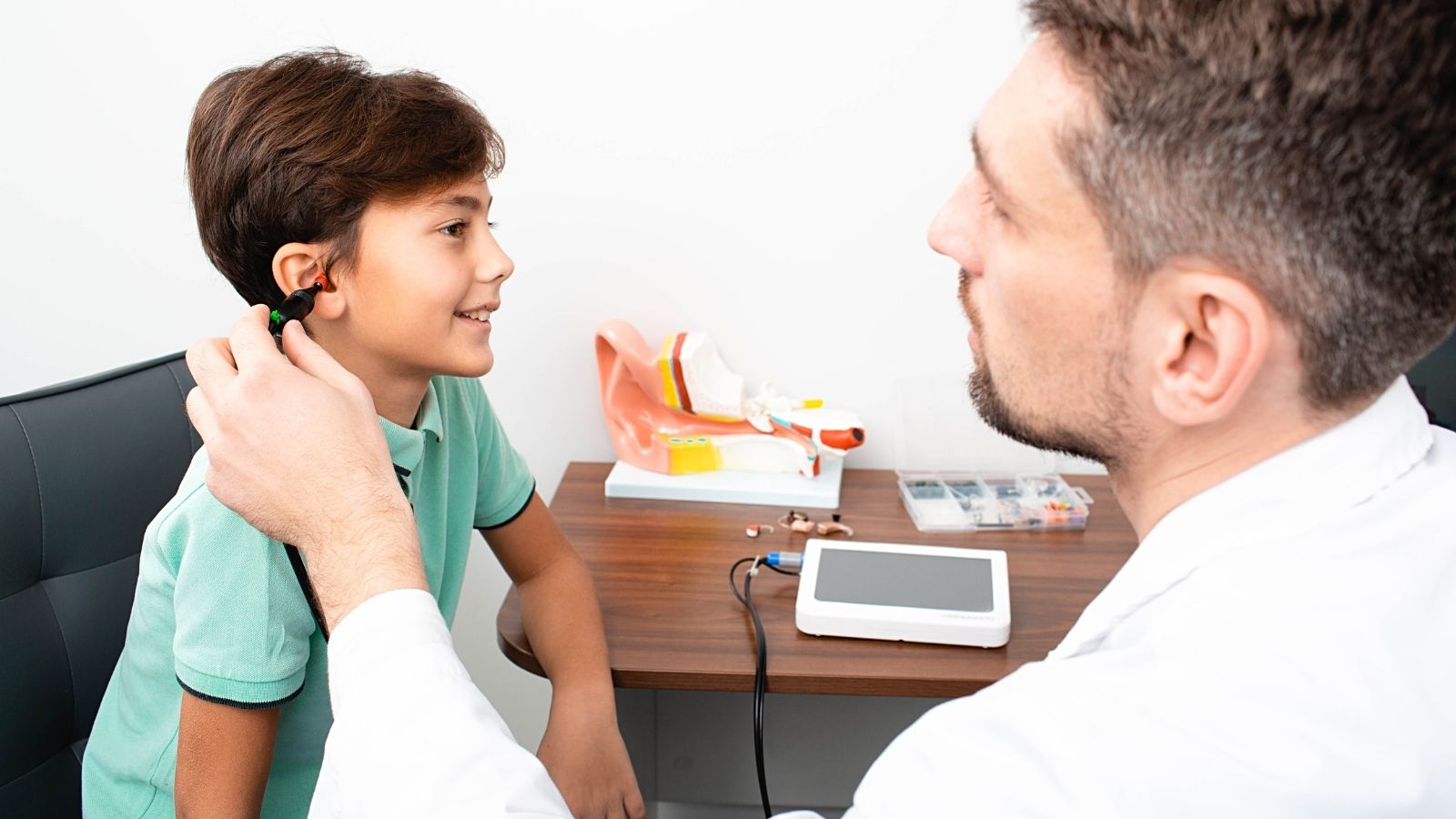
The pure tone audiometry test is designed to measure the sensitivity of your hearing in a highly quiet and controlled environment as accurately as possible. The process is generally calm and comfortable.
The test usually proceeds as follows:
- First, you are taken into a special booth that is completely isolated from outside noise.
- Comfortable headphones are placed over your ears.
- The specialist performing the test gives you simple and clear instructions: “Whenever you hear a sound, no matter how faint it is, press the button in your hand. Release the button when the sound stops.”
- During the test, you will hear various “beep” sounds of different pitches and intensities through the headphones.
- Your only task is to respond whenever you hear a sound. These responses are used to determine your hearing threshold at each frequency.
- The same procedure is sometimes repeated using a small vibrating oscillator placed behind the ear on the bone. This is the pure tone average bone conduction measurement and shows how well sound is transmitted to your inner ear.
- All these measurements are carefully recorded on a graph called an “audiogram.”
An important part of this test is the comparison between air conduction measurements obtained through headphones and bone conduction measurements. The difference between pure tone average air and bone conduction values provides critical information about the source of your hearing loss. This comparison allows us to determine whether the hearing loss originates from the outer or middle ear (conductive hearing loss) or from the inner ear (sensorineural hearing loss). Therefore, every step of the test is carried out carefully and methodically to achieve an accurate diagnosis.
How Do Pure Tone Average Results Classify Hearing Loss According to Severity?
The obtained Pure Tone Average (PTA) value is placed into standard categories that define the severity of your hearing loss. This classification is not used to label your condition but rather to help understand the challenges you experience and guide the selection of the most appropriate solution.
The degrees of hearing loss and their corresponding PTA value ranges are generally as follows:
- Normal Hearing (-10 to 15 dB HL)
- Slight Hearing Loss (16 to 25 dB HL)
- Mild Hearing Loss (26 to 40 dB HL)
- Moderate Hearing Loss (41 to 55 dB HL)
- Moderately Severe Hearing Loss (56 to 70 dB HL)
- Severe Hearing Loss (71 to 90 dB HL)
- Profound Hearing Loss (91+ dB HL)
Each of these categories corresponds to different experiences in everyday life. If you fall within the normal hearing range, you can generally hear all sounds comfortably, including whispers. A very slight hearing loss may only cause you to miss very soft sounds or speech coming from a distance.
When mild hearing loss begins, following conversations becomes more difficult, especially in environments with background noise, such as restaurants.
With moderate hearing loss, people usually need to raise their voices for you to understand normal conversation, and the television volume gradually increases.
At the moderately severe and severe levels, communication becomes a significant challenge, and only loud speech or shouting may be heard.
With profound hearing loss, speech sounds become almost impossible to hear. This classification helps translate an abstract number into the concrete reality of your daily life.
What Is the Relationship Between Pure Tone Average and Speech Understanding Ability?
Pure Tone Average provides fundamental information about your ability to “hear” sounds. However, what challenges us most in everyday life is generally not hearing sounds but “understanding” what we hear. There is a very important difference between these two abilities. While PTA measures the sensitivity of your hearing system, speech understanding depends on how clearly sounds are processed by the brain.
You can think of it as a photograph. PTA tells you how bright or dim the photograph is. If the photograph is too dim (PTA is high), you need more light (greater sound intensity) to see it. However, if the photograph is also blurry, no matter how much light you add, you still cannot distinguish the details (the clarity of speech).
To measure this level of “clarity” or “blurriness,” speech audiometry tests are performed. The most important of these is the Speech Discrimination Score (SDS). During this test, one-syllable words are presented to you at a comfortable listening level, and the percentage of words you correctly repeat is calculated.
Two people with similar PTA values may have very different speech understanding scores. One may achieve a word recognition score of 96%, while another scores only 60%. This means the first person understands speech clearly once it is amplified sufficiently, whereas the second person hears the sounds but struggles to distinguish the words. Therefore, PTA serves as the starting point for determining your hearing threshold, but your speech understanding ability must always be evaluated together with speech tests to obtain a complete picture and determine the most appropriate solution.
How Do Different Pure Tone Average Values Affect Hearing in Daily Life?
Your Pure Tone Average value is not merely a technical measurement; it directly affects your daily experiences, social relationships, and even your emotional well-being. As your PTA value increases, the challenges encountered in everyday life also increase.
Some common situations experienced at different degrees of hearing loss include:
- Missing whispered conversations
- Being unable to hear nature sounds such as birds chirping
- Being unable to participate in conversations in noisy restaurants
- Having difficulty following discussions during meetings
- Constantly needing to increase the television volume
- Frequently asking people to repeat themselves during phone conversations
- Difficulty hearing the doorbell or telephone ringing
- Failing to notice the sound of a car approaching from behind
At first, these challenges may seem minor. However, over time, they can lead to avoiding social environments, refraining from participating in conversations due to fear of misunderstanding, and social isolation. Constantly making extra effort to follow conversations may result in mental fatigue by the end of the day. Hearing loss is not simply an ear-related condition; it is a process that profoundly affects a person’s self-confidence, social connections, and overall quality of life. Understanding these practical effects clearly demonstrates why seeking help and finding a solution are so important.
What Role Does Pure Tone Average Play in Determining the Need for Hearing Aids?
Pure Tone Average (PTA) is the first and most fundamental indicator considered when deciding whether a person is likely to benefit from hearing aids. As a general guideline, when the PTA reaches the mild hearing loss range (approximately 26–40 dB) and the individual begins experiencing communication difficulties in daily life, hearing aids become a potential option. Once hearing loss reaches the moderate level, hearing aid use generally becomes a functional necessity.
However, recommending a hearing aid is not a mechanical decision based solely on the PTA value. It is the result of a comprehensive evaluation that considers your personal circumstances and needs.
In addition to PTA, the audiologist also considers the following factors:
- The overall shape of the audiogram (pattern of hearing loss in high or low frequencies)
- Your speech understanding and speech discrimination scores
- Your performance in noisy environments
- Your age and overall health status
- Your communication needs in work and social life
- Your personal expectations and motivation
Sometimes, even a person whose PTA falls within the “normal” or “slight” range may benefit greatly from hearing aids due to significant speech understanding difficulties, particularly in noisy environments. This demonstrates that numbers alone do not always tell the whole story. Ultimately, PTA opens the door to hearing aid candidacy, but it is only one of many factors considered during the decision-making process. The ultimate goal is to identify the most appropriate technology for you, eliminate communication barriers, and improve your quality of life.
According to Which Criteria Is Pure Tone Average Evaluated During Cochlear Implant Candidacy?
Cochlear implants are a technology used in cases of severe and profound hearing loss when hearing aids no longer provide sufficient benefit. During the candidacy evaluation for this important intervention, Pure Tone Average (PTA) once again plays a key role, but it is always assessed together with speech understanding and speech discrimination ability.
Several key criteria are commonly considered during the evaluation. In general, the following conditions should be present for a person to be referred for cochlear implant assessment:
- Severe or profound sensorineural (inner ear) hearing loss in both ears
- A PTA value of 70 dB or higher in the better-hearing ear
- Very poor word recognition scores (for example, below 50–60%) despite the use of optimally fitted hearing aids
As you can see, what matters is not only how high the PTA is but also how well the individual can understand speech once sounds have been made audible. If a person can hear sounds with hearing aids but cannot distinguish words or understand speech, this strongly suggests that a cochlear implant may provide greater benefit. PTA is one of the first steps in determining whether this advanced intervention may be necessary, but the final decision is made only after much more comprehensive medical and audiological evaluations.
What Are the Limitations of Using Pure Tone Average Alone to Evaluate Hearing?
Pure Tone Average (PTA) is an extremely useful starting point for summarizing the degree of hearing loss. However, reducing a complex and multidimensional process such as hearing to a single number inevitably causes certain important details to be overlooked. It is just as important to know what PTA does not show as it is to know what it does show.
Some of the critical hearing functions that PTA alone cannot evaluate include:
- The complete configuration (shape) of the hearing loss
- The ability to understand speech in noisy environments
- How clearly or distorted speech is perceived
- The speed and quality of sound processing in the brain
- The ability to determine the direction from which sound originates (localization)
- Sensitivity or tolerance to loud sounds
For example, your PTA may indicate only mild hearing loss, but if that loss is concentrated in the high frequencies that are critical for speech clarity, you may struggle to understand people even in quiet environments. Likewise, even if your PTA is normal, understanding someone in a noisy restaurant may still become extremely difficult. These limitations do not mean that PTA is an inadequate test. On the contrary, they demonstrate why comprehensive evaluation and avoiding focus on a single number are so essential.
Besides Pure Tone Average, Which Other Important Tests Are Included in a Comprehensive Hearing Evaluation?
To perform a complete analysis of your hearing health, audiologists do not focus solely on Pure Tone Average. Instead, they perform a series of tests that evaluate every part of your hearing system, from the outer ear to the brain. This comprehensive approach is called an “audiological test battery” and makes it possible to determine where the problem is located and how significant it is.
In addition to pure tone testing, which includes PTA, a comprehensive evaluation generally includes the following important tests:
- Speech Audiometry
- Tympanometry (Middle Ear Pressure Test)
- Acoustic Reflex Test
- Otoacoustic Emissions (OAE)
Each of these tests serves a different purpose. Speech audiometry measures how your hearing loss affects your daily communication and your ability to understand speech. Tympanometry and acoustic reflex testing provide detailed information about the health of your eardrum and middle ear. Otoacoustic emissions are an objective test that directly evaluates how well your inner ear (cochlea) is functioning. When the results of these tests are combined, a complete map of your hearing system emerges. This map reveals not only the degree of your hearing loss but also its type, its possible cause, and the most effective treatment options tailored specifically to you.
Frequently Asked Questions

Dr. Audiologist Emel Uğur was born in 1982 in Çanakkale. She specialized in Pediatric Audiology, Otologic Disorders, and Vestibular System Disorders, and served for 15 years at the Istanbul Training and Research Hospital. In 2015, she joined the Acıbadem Healthcare Group. She currently works as an Audiologist at the Acıbadem Altunizade Hospital and also serves as a faculty member and program director in the Acıbadem University Vocational School of Health Services Audiometry Program.









Location of our clinic in Istanbul, Turkey